


The recent Taiwan-produced hit movie Night Market Hero (雞排英雄) vividly portrays the everyday lives and resilience of the nation’s night market vendors. The fictional comedy imparts a positive, life--affirming message that has moved many audiences.
In the real world, however, a group of night market vendors in Yunlin County have long quietly practiced their own philanthropy — helping with the burials of the impoverished in their hometown.
They are all self-effacing people who shy away from the media spotlight.
“Having a kind heart and goodwill is more important, and we are ordinary people. We would rather keep a low profile and do not need fame or acclaim,” said a cofounder of the Night Market Benevolent Love Charity who goes by the nickname “Specky.”
Specky, who operates pinball games in a Yunlin night market, recalled that he joined with another night market vendor, surnamed Chen (陳), in making small donations for people in emergency need a few years ago after reading a heart-wrenching story in a newspaper.
As their incomes were limited, however, they gradually felt the pinch of their donations and decided to invite other street vendors to pitch in toward charitable causes.
Five like-minded vendors immediately joined them to become conveners of the new charitable group. About 50 other vendors also joined the organization as regular members.
“There are many people living in hardship. As we are street vendors with only limited resources, we can only help those in emergency need or impoverished families that cannot afford to bury their deceased relatives,” Specky said.
Whenever any of the conveners learned that a family cannot pay for a loved one’s funeral fees, each member donates NT$500 to help cover the charges for a coffin and cremation.
As news of the group has spread, the group’s membership has continued to rise since its formal inception last September.
“The number has exceeded 200, ranging in age from 20-something to 60 and over,” said Chen, who added that this meant each member only needed to donate NT$150 for each case.
“We tend to raise NT$30,000 to NT$40,000 per case and if we fail to collect enough, we have a 13-member team that stumps up the difference,” Chen added.
To build credibility, the donations are usually delivered to the recipients through police offices, with village or neighborhood chiefs serving as witnesses.
Asked whether they were inspired by Night Market Hero, which features scenes depicting a fried chicken vendor entertaining poor people with a good feast, Chen said most of the group’s members have not seen the movie.
“We are just doing what we feel we should do. We do not ask each of our members to make donations every time. Those whose incomes are not stable can suspend donations until they can afford to make them,” Chen said.
The group has so far helped with the funeral arrangements for 26 people, including a 14-year-old and several in their 70s, who have been laid to rest or have had their ashes interred at ossuaries.
Moved by their philanthropic low-profile efforts to help the impoverished, funeral service operators often charge them the lowest possible prices, Chen said.
Although many people have expressed interest in joining the group, Chen said, it has no intention of expanding its services at the moment and will continue to focus on those in need in Yunlin County.
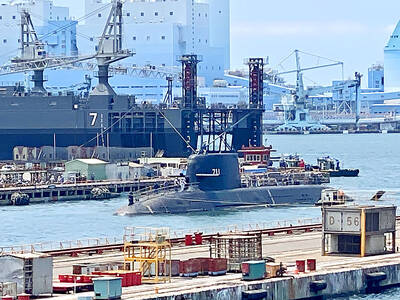
AGING: While Japan has 22 submarines, Taiwan only operates four, two of which were commissioned by the US in 1945 and 1946, and transferred to Taiwan in 1973 Taiwan would need at least 12 submarines to reach modern fleet capabilities, CSBC Corp, Taiwan chairman Chen Cheng-hung (陳政宏) said in an interview broadcast on Friday, citing a US assessment. CSBC is testing the nation’s first indigenous defense submarine, the Hai Kun (海鯤, Narwhal), which is scheduled to be delivered to the navy next month or in July. The Hai Kun has completed torpedo-firing tests and is scheduled to undergo overnight sea trials, Chen said on an SET TV military affairs program. Taiwan would require at least 12 submarines to establish a modern submarine force after assessing the nation’s operational environment and defense

A white king snake that frightened passengers and caused a stir on a Taipei MRT train on Friday evening has been claimed by its owner, who would be fined, Taipei Rapid Transit Corp (TRTC) said yesterday. A person on Threads posted that he thought he was lucky to find an empty row of seats on Friday after boarding a train on the Bannan (Blue) Line, only to spot a white snake with black stripes after sitting down. Startled, he jumped up, he wrote, describing the encounter as “terrifying.” “Taipei’s rat control plan: Release snakes on the metro,” one person wrote in reply, referring
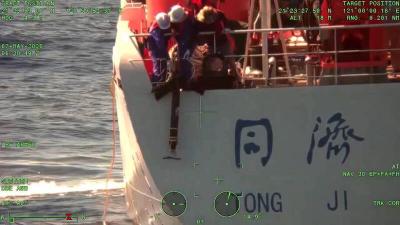
The coast guard today said that it had disrupted "illegal" operations by a Chinese research ship in waters close to the nation and driven it away, part of what Taipei sees a provocative pattern of China's stepped up maritime activities. The coast guard said that it on Thursday last week detected the Chinese ship Tongji (同濟號), which was commissioned only last year, 29 nautical miles (54km) southeast of the southern tip of Taiwan, although just outside restricted waters. The ship was observed lowering ropes into the water, suspected to be the deployment of scientific instruments for "illegal" survey operations, and the coast
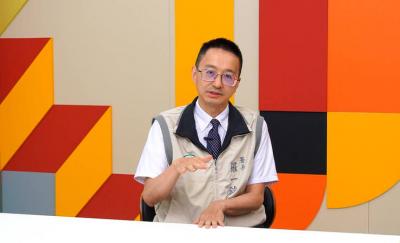
Taiwan’s two cases of hantavirus so far this year are on par with previous years’ case numbers, and the government is coordinating rat extermination work, so there should not be any outbreaks, Centers for Disease Control (CDC) Director-General Philip Lo (羅一鈞) said today in an interview with the Liberty Times (the Taipei Times’ sister newspaper). An increase in rat sightings in Taipei and New Taipei City has raised concerns about the spread of hantavirus, as rats can carry the disease. In January, a man in his 70s who lived in Taipei’s Daan District (大安) tested positive posthumously for hantavirus, Taiwan’s


 RSS
RSS