


■ LANGUAGE
Dispute rages over ‘Chinese’
The Presidential Office yesterday said it was not against calling Chinese “Huayu (華語)” or “Huawen (華文),” but said that the Executive Yuan must explain the government’s position to the public. Presidential Office Spokesman Lo Chih-chiang (羅智強) said “Guoyu (國語)” refers to the national and official language of a country, a principle that should be reflected in school textbooks. Chinese courses for elementary and junior high schools next year will still be called “Guoyuwen (國語文)” but be changed to “Huayuwen (華語文)” in guidelines for teachers and textbook writers and editors. Huang Kuang-kuo (黃光國), a national policy advisor, threatened to resign should the Ministry of Education decide to change “Guowen” to “Huawen.”
■ HEALTH
Kids stay home, get myopia
Nearly 90 percent of the school children visiting ophthalmology clinics recently have been diagnosed with worsening myopia because of excessive eye strain suffered during the summer break, an eye doctor said, adding that television and computer games could be to blame. Most students prefer indoor activities during the summer vacation, which tends to cause worsening of any existing eye problems, said Liao Chang-bin (廖昶斌), director of the Shu-tien Urology and Ophthalmology Clinic.
■ TRADE
Taipei, Manila talk pact
The Philippines is likely to sign a free-trade agreement (FTA) with Taiwan within a year on the basis of the recent trade pact between Taiwan and China, Philippine Deputy Trade Secretary Adrian Cristobal said yesterday. Although the Philippines is a member of the ASEAN plus one grouping, which includes China, and has an economic agreement with Japan, it will benefit from an FTA with Taiwan, Cristobal said. “We hope to start formal FTA negotiations with Taiwan within a year,” Cristobal said. However, the Philippine government will have to consult with the country’s parliamentarians, academics and business leaders on the issue and close internal divisions before it could hold discussions with potential FTA partners, he said. In late June, then-Secretary of the Philippine Department of Trade and Industry Jesli Lapus said that because the Philippines adheres to the “one China” policy, the issue of an FTA with Taiwan was quite sensitive.
■ RETAILING
Post office moves online
Chunghwa Post said yesterday it was considering branching out into online shopping. The company said in a presentation at the Ministry of Transportation and Communications that the move was part of a strategy to increase revenue as its mail delivery service shrinks because of the increased use of electronic mail and documents. Trumpeting the advantage of having 1,320 outlets nationwide and a comprehensive logistics network, the company said it was ready to compete with the main players in the market, including Yahoo-Kimo, PC-Home and PayEasy. To distinguish itself from competitors, Chunghwa Post said it would focus on the sale of health-related products, produce and special snacks in different localities. Based on preliminary plans, sellers would pay between 4 percent and 5 percent of the closing price as well as a NT$10,000 guarantee. The company said it would waive the annual NT$12,000 fee to use Chunghwa’s online shopping network for the first year, for those vendors that use the postal company’s boxes to package their products.
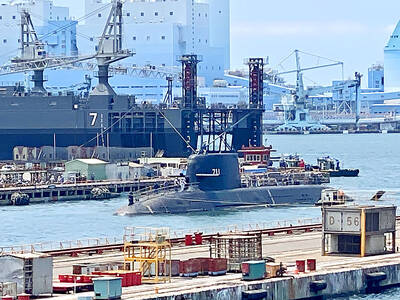
AGING: While Japan has 22 submarines, Taiwan only operates four, two of which were commissioned by the US in 1945 and 1946, and transferred to Taiwan in 1973 Taiwan would need at least 12 submarines to reach modern fleet capabilities, CSBC Corp, Taiwan chairman Chen Cheng-hung (陳政宏) said in an interview broadcast on Friday, citing a US assessment. CSBC is testing the nation’s first indigenous defense submarine, the Hai Kun (海鯤, Narwhal), which is scheduled to be delivered to the navy next month or in July. The Hai Kun has completed torpedo-firing tests and is scheduled to undergo overnight sea trials, Chen said on an SET TV military affairs program. Taiwan would require at least 12 submarines to establish a modern submarine force after assessing the nation’s operational environment and defense
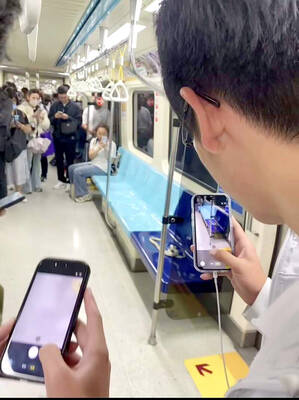
A white king snake that frightened passengers and caused a stir on a Taipei MRT train on Friday evening has been claimed by its owner, who would be fined, Taipei Rapid Transit Corp (TRTC) said yesterday. A person on Threads posted that he thought he was lucky to find an empty row of seats on Friday after boarding a train on the Bannan (Blue) Line, only to spot a white snake with black stripes after sitting down. Startled, he jumped up, he wrote, describing the encounter as “terrifying.” “Taipei’s rat control plan: Release snakes on the metro,” one person wrote in reply, referring
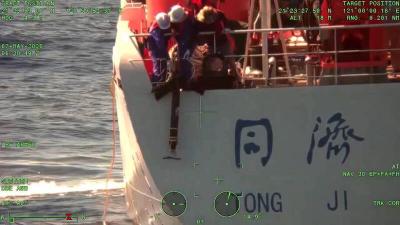
The coast guard today said that it had disrupted "illegal" operations by a Chinese research ship in waters close to the nation and driven it away, part of what Taipei sees a provocative pattern of China's stepped up maritime activities. The coast guard said that it on Thursday last week detected the Chinese ship Tongji (同濟號), which was commissioned only last year, 29 nautical miles (54km) southeast of the southern tip of Taiwan, although just outside restricted waters. The ship was observed lowering ropes into the water, suspected to be the deployment of scientific instruments for "illegal" survey operations, and the coast
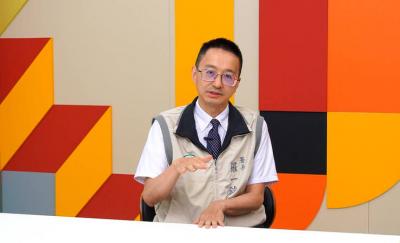
Taiwan’s two cases of hantavirus so far this year are on par with previous years’ case numbers, and the government is coordinating rat extermination work, so there should not be any outbreaks, Centers for Disease Control (CDC) Director-General Philip Lo (羅一鈞) said today in an interview with the Liberty Times (the Taipei Times’ sister newspaper). An increase in rat sightings in Taipei and New Taipei City has raised concerns about the spread of hantavirus, as rats can carry the disease. In January, a man in his 70s who lived in Taipei’s Daan District (大安) tested positive posthumously for hantavirus, Taiwan’s


 RSS
RSS