


The National Communications Commission (NCC) yesterday said it would decide next week whether to appeal its case against CTi TV to the Supreme Administrative Court after the Taipei High Administrative Court annulled part of the commission's ruling last year on a management change at the TV station.
Although the commission had approved applications by CTi and China Television (CTV) for changes in their chairpersons, board directors and supervisors, the approval came with four additional clauses and a request that CTi and CTV address a number of issues to improve their operations.
However, the two stations challenged the desirability of the additional clauses and filed administrative lawsuits. Last month, the Taipei High Administrative Court ruled against the commission in its lawsuit against CTi.
The court has yet to rule on the CTV case.
NCC spokesperson Chen Jeng-chang (陳正倉) said the verdict came in a dauntingly voluminous document. Commissioners must closely examine the verdict to determine if the NCC should appeal or simply change the content of the additional clauses, he added.
Commissioner Weng Hsiao-ling (翁曉玲), a legal expert, said the NCC decided to impose the additional clauses over concerns about the impact the China Times Group, the owner of the two stations, would have on public opinion because it simultaneously owns a newspaper, a cable TV station and a terrestrial TV station, among others.
The additional clauses, issued last year, stated that individuals serving on the CTi board of directors and supervisors cannot hold the same positions at CTV. A similar requirement applies to employees in managerial positions at CTi.
CTi and CTV must have separate advertising and programming departments, as well as separate studios, and cannot jointly bid for advertising deals, the clauses said.
Each of CTi TV network's channels, including news, entertainment and variety channels, must all have their own producers and editors and submit plans on quality content control to the NCC, the clauses said.
“The court said the NCC has the administrative authority to issue additional clauses in addition to the main ruling,” Weng said. “However, it indicated that the facts and rationales supporting each clause were inadequate.”

The military has spotted two Chinese warships operating in waters near Penghu County in the Taiwan Strait and sent its own naval and air forces to monitor the vessels, the Ministry of National Defense (MND) said. Beijing sends warships and warplanes into the waters and skies around Taiwan on an almost daily basis, drawing condemnation from Taipei. While the ministry offers daily updates on the locations of Chinese military aircraft, it only rarely gives details of where Chinese warships are operating, generally only when it detects aircraft carriers, as happened last week. A Chinese destroyer and a frigate entered waters to the southwest

A magnitude 6.1 earthquake struck off the coast of Yilan County at 8:39pm tonight, the Central Weather Administration (CWA) said, with no immediate reports of damage or injuries. The epicenter was 38.7km east-northeast of Yilan County Hall at a focal depth of 98.3km, the CWA’s Seismological Center said. The quake’s maximum intensity, which gauges the actual physical effect of a seismic event, was a level 4 on Taiwan’s 7-tier intensity scale, the center said. That intensity level was recorded in Yilan County’s Nanao Township (南澳), Hsinchu County’s Guansi Township (關西), Nantou County’s Hehuanshan (合歡山) and Hualien County’s Yanliao (鹽寮). An intensity of 3 was

Japanese Prime Minister Sanae Takaichi’s comment last year on Tokyo’s potential reaction to a Taiwan-China conflict has forced Beijing to rewrite its invasion plans, a retired Japanese general said. Takaichi told the Diet on Nov. 7 last year that a Chinese naval blockade or military attack on Taiwan could constitute a “survival-threatening situation” for Japan, potentially allowing Tokyo to exercise its right to collective self-defense. Former Japan Ground Self-Defense Force general Kiyofumi Ogawa said in a recent speech that the remark has been interpreted as meaning Japan could intervene in the early stages of a Taiwan Strait conflict, undermining China’s previous assumptions
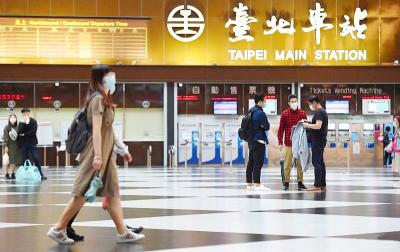
Taiwan Railways Corp (TRC) today announced that Shin Kong Mitsukoshi has been selected as the preferred bidder to operate the Taipei Railway Station shopping mall, replacing the current operator, Breeze Development Co Ltd. Among eight qualified firms that delivered presentations and were evaluated by a review committee, Shin Kong Mitsukoshi was ranked first, while Breeze was named the runner-up, the rail company said in a statement. Contract negotiations are to proceed in accordance with regulations, it said, adding that if negotiations with the top bidder fail, it could invite the second-ranked applicant to enter talks. Breeze in a statement today expressed doubts over


 RSS
RSS