


The Mainland Affairs Council (MAC) is using an online game on the social networking Web site Facebook to try to boost public support for a proposed trade agreement with China, which it hopes to sign next month.
The MAC said an online game titled ECFA (economic cooperation framework agreement) Negotiation Table will be launched on Monday as an application on the Facebook platform.
The quiz-based game will test registered users on their knowledge of the deal and provide weekly rewards.
“The idea is to let users understand more about the content of the proposal through game-playing,” MAC Deputy Chairman Liu Te-shun (劉德勳) said.
The trade agreement aims to relax trade regulations between Taiwan and China and reduce tariffs on Taiwan and China’s exports to each other’s markets.
According to the MAC’s latest public opinion poll released on May 7, 53.1 percent of respondents said they supported the deal, while 33.4 percent said they opposed signing the agreement.
Supporters of the deal believe it is necessary to keep Taiwan from becoming economically marginalized as other countries sign free-trade agreements with China.
Critics, however, say Taiwan’s workers and industries would suffer once cheaper Chinese products flood in, that Taiwan’s sovereignty would be jeopardized and that Taiwan would become too economically dependent on China.
In order to gain more public support for the deal, the MAC decided to capitalize on the power of the Internet.
Facebook, which was named the second-most popular site in Taiwan’s Top 100 Web sites in an annual survey by Business Next magazine, became a natural choice.
In Taiwan, the social networking Web site has more than 5 million users — about half of the total Internet users nationwide.
Users in the government’s game will be able to select different roles they want to play in the eight-week game and are asked to answer three questions about the ECFA each day to collect points that can be used in exchange for prizes.
They can receive extra points by inviting friends to join the game, the council said.
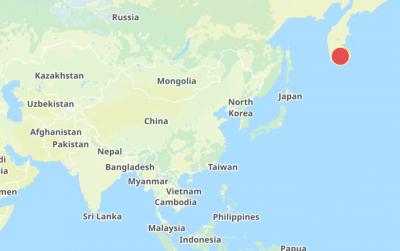
The Central Weather Administration (CWA) today issued a "tsunami watch" alert after a magnitude 8.7 earthquake struck off the Kamchatka Peninsula in northeastern Russia earlier in the morning. The quake struck off the east coast of the Kamchatka Peninsula at 7:25am (Taiwan time) at a depth of about 19km, the CWA said, citing figures from the Pacific Tsunami Warning Center. The CWA's Seismological Center said preliminary assessments indicate that a tsunami could reach Taiwan's coastal areas by 1:18pm today. The CWA urged residents along the coast to stay alert and take necessary precautions as waves as high as 1m could hit the southeastern

The National Museum of Taiwan Literature is next month to hold an exhibition in Osaka, Japan, showcasing the rich and unique history of Taiwanese folklore and literature. The exhibition, which is to run from Aug. 10 to Aug. 20 at the city’s Central Public Hall, is part of the “We Taiwan” at Expo 2025 series, highlighting Taiwan’s cultural ties with the international community, National Museum of Taiwan Literature director Chen Ying-fang (陳瑩芳) said. Folklore and literature, among Taiwan’s richest cultural heritages, naturally deserve a central place in the global dialogue, Chen said. Taiwan’s folklore would be immediately apparent at the entrance of the

Speeding and badly maintained roads were the main causes of a school bus accident on a rainy day in Taipei last year that severely injured two people and left 22 with minor injuries, the Taiwan Transportation and Safety Board said. On March 11 last year, a Kang Chiao International School bus overturned inside the Wenshan Tunnel (文山隧道) on the northbound lane of the Xinyi Expressway. The tour bus, owned by Long Lai Co, exceeded the speed limit after entering the tunnel, the board’s investigation found. Sensing that the rear of the vehicle was swaying, the driver attempted to use the service and exhaust
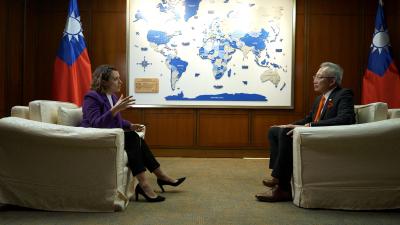
“China is preparing to invade Taiwan,” Deputy Minister of Foreign Affairs Francois Wu (吳志中) said in an exclusive interview with British media channel Sky News for a special report titled, “Is Taiwan ready for a Chinese invasion?” the Ministry of Foreign Affairs said today in a statement. The 25-minute-long special report by Helen Ann-Smith released yesterday saw Sky News travel to Penghu, Taoyuan and Taipei to discuss the possibility of a Chinese invasion and how Taiwan is preparing for an attack. The film observed emergency response drills, interviewed baseball fans at the Taipei Dome on their views of US President


 RSS
RSS