


The nation’s oldest landing craft, the LST-201 Chung Hai, will be retired today in a ceremony scheduled to take place at the Navy’s Sin Pin Pier (新濱碼頭) to mark its formal retirement.
“Those who served [on the craft] can be proud to have been part of it because of the reputation it gained through its decades of service,” said Commander Kuo Heng-wei (郭恆為), commanding officer of the Chung Hai.
Kuo said sailors onboard the 67-year-old craft faced greater challenges than those on other ships because of the outdated equipment and environment on board the Chung Hai.
“This ship is slow. There are no modern living quarters for sailors. We do not even have enough firepower or weapons on this vessel. But we still have to be as good, if not better, than sailors on board other, newer vessels,” Kuo said. “I am proud to say we never failed.”
A former boatswain’s senior chief petty officer on board the Chung Hai who wished to remain anonymous said that serving on the vessel was an unforgettable experience. There were always mice and cockroaches on the ship and it required a lot of regular maintenance.
“I mean, we hated it and will miss it all the same,” he said.
Kuo said the ship’s top speed was no more than 10 nautical miles per hour (18.5kph), adding that a total of eight 40mm and eight 20mm guns were the only weapons on the craft.
“Sailors also joked about the ‘LST’ [landing ship, tank], saying it should be an acronym for ‘large slow target.’ But we Navy men still made good use of it,” Kuo said.
Two major maintenance projects were carried out by the Navy on its LSTs in 1966 and 1990. The 1966 project refurbished the LST engines and the 1990 project replaced their electrical equipment, including installation of air conditioners.
The Chung Hai used to be called USS LST-755, a County-class tank landing craft built on July 11, 1944. It was commissioned on Aug. 3 later that year. The ship performed occupation duties in the Far East and saw service in China until May 1946, when it was still under the US Navy’s command. The LST-755 also earned two battle stars from its World War II service.
The LST-755 was decommissioned on May 29, 1946, and was transferred to the Taiwanese Navy. It was renamed LST-201 Chung Hai.
Under Taiwanese Navy command, the Chung Hai served in the Aug. 23, 1953 artillery bombardment of Kinmen and Matsu. It was struck by a torpedo that caused serious damage to the ship and killed eight sailors.
The Navy received 28 landing craft from the US Navy, 17 of which were abandoned in China during the Chinese Civil War in 1945 and later became a part of the Chinese Navy fleet. That leaves Taiwan with 10 LSTs after the Chung Hai’s retirement today.

AGING: While Japan has 22 submarines, Taiwan only operates four, two of which were commissioned by the US in 1945 and 1946, and transferred to Taiwan in 1973 Taiwan would need at least 12 submarines to reach modern fleet capabilities, CSBC Corp, Taiwan chairman Chen Cheng-hung (陳政宏) said in an interview broadcast on Friday, citing a US assessment. CSBC is testing the nation’s first indigenous defense submarine, the Hai Kun (海鯤, Narwhal), which is scheduled to be delivered to the navy next month or in July. The Hai Kun has completed torpedo-firing tests and is scheduled to undergo overnight sea trials, Chen said on an SET TV military affairs program. Taiwan would require at least 12 submarines to establish a modern submarine force after assessing the nation’s operational environment and defense

A white king snake that frightened passengers and caused a stir on a Taipei MRT train on Friday evening has been claimed by its owner, who would be fined, Taipei Rapid Transit Corp (TRTC) said yesterday. A person on Threads posted that he thought he was lucky to find an empty row of seats on Friday after boarding a train on the Bannan (Blue) Line, only to spot a white snake with black stripes after sitting down. Startled, he jumped up, he wrote, describing the encounter as “terrifying.” “Taipei’s rat control plan: Release snakes on the metro,” one person wrote in reply, referring
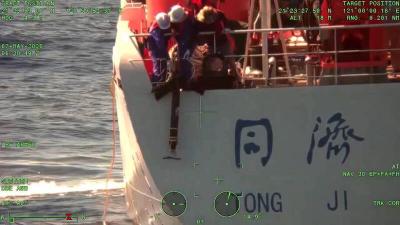
The coast guard today said that it had disrupted "illegal" operations by a Chinese research ship in waters close to the nation and driven it away, part of what Taipei sees a provocative pattern of China's stepped up maritime activities. The coast guard said that it on Thursday last week detected the Chinese ship Tongji (同濟號), which was commissioned only last year, 29 nautical miles (54km) southeast of the southern tip of Taiwan, although just outside restricted waters. The ship was observed lowering ropes into the water, suspected to be the deployment of scientific instruments for "illegal" survey operations, and the coast
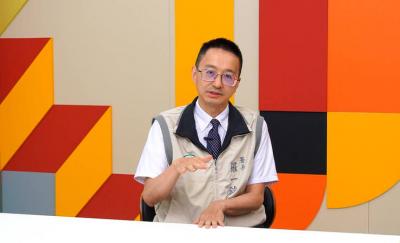
Taiwan’s two cases of hantavirus so far this year are on par with previous years’ case numbers, and the government is coordinating rat extermination work, so there should not be any outbreaks, Centers for Disease Control (CDC) Director-General Philip Lo (羅一鈞) said today in an interview with the Liberty Times (the Taipei Times’ sister newspaper). An increase in rat sightings in Taipei and New Taipei City has raised concerns about the spread of hantavirus, as rats can carry the disease. In January, a man in his 70s who lived in Taipei’s Daan District (大安) tested positive posthumously for hantavirus, Taiwan’s


 RSS
RSS