


Sexual content on popular television programs is increasing, leading to concerns of gender inequality, a new study commissioned by the National Communications Commission (NCC) showed.
The study, conducted by Huang Wei-wei (黃葳威), a professor in the Department of Radio and Television at National Chengchi University, looked into gender issues on programs. Its conclusions include a strongly worded condemnation of prime-time programs, saying that gender discrimination is becoming a serious problem, adding that many TV stations are resorting to broadcasts of sexual crimes and scantily clad women to increase ratings.
In the study, Huang said that in programs that featured especially problematic undertones, there was prevalent use of sexual innuendo and inappropriate touching.
Here Comes Kang and Xi (康熙來了), which has received two Golden Bell Awards, was singled out for a summer beach scene in which hosts Kevin Tsai (蔡康永) and Little S (小S) discussed the breast sizes, underwear and other sexual aspects of female contestants.
Another segment featuring female models included frequent references to sexual partners by the two hosts.
Chu Ko Hui She (豬哥會社), a variety show featuring TV veteran Chu Ko-liang (豬哥亮), was also singled out as another bad example.
In an interview with model Liu Zhen (劉真), Chu reportedly said: “I think only touching her legs would cost money, while touching her upper body would not.”
TV actress Rainy Kuo (郭怡伶), who goes by the nickname Little Call, said most program participants recognize their screen time as work and are not bothered by the behavior.
She said that as long as the show included no personal attacks on her or her family, she was not bothered by it or other aspects of her job.
Huang said her research showed that the reason many young girls put up with the behavior is because they are eager for a chance to star in popular shows. She referred to the process as “sexual corruption.”
Huang said the NCC should revise its ratings systems to reflect changing realities.
“Our current television ratings system rates programs pending a specific criteria … however, many episodes that include gender discrimination do so on many levels and are not as obvious or easily seen,” Huang said.
Jason Ho (何吉森), director of the NCC’s Communication Content Department, said the commission’s ratings system was focused on specific content that included nudity.
However, he said programs deemed to contain content and dialogue that go against social norms or have a negative influence on minors could result in the program being fined.
He said that previously the NCC had handed out fines only sporadically because of the “joking nature” of the programs. In response to growing calls for gender equality, however, the NCC would start to take more serious measures, he said.
ADDITIONAL REPORTING BY CHEN PEI-LING

Yangmingshan National Park authorities yesterday urged visitors to respect public spaces and obey the law after a couple was caught on a camera livestream having sex at the park’s Qingtiangang (擎天崗) earlier in the day. The Shilin Police Precinct in Taipei said it has identified a suspect and his vehicle registration number, and would summon him for questioning. The case would be handled in accordance with public indecency charges, it added. The couple entered the park at about 11pm on Thursday and began fooling around by 1am yesterday, the police said, adding that the two were unaware of the park’s all-day live

A former soldier and an active-duty army officer were yesterday indicted for allegedly selling classified military training materials to a Chinese intelligence operative for a total of NT$79,440. The Taipei District Prosecutors’ Office indicted Chen Tai-yin (陳泰尹) and Lee Chun-ta (李俊達) for contravening the National Security Act (國家安全法) and the Anti-Corruption Act (貪污治罪條例). Chen left the military in September 2013 after serving alongside then-staff sergeant Lee, now an army lieutenant, at the 21st Artillery Command of the army’s Sixth Corps from 2011 to 2013, according to the indictment. Chen met a Chinese intelligence operative identified as “Wang” (王) through a friend in November

Minister of Digital Affairs Lin Yi-ching (林宜敬) yesterday cited regulatory issues and national security concerns as an expert said that Taiwan is among the few Asian regions without Starlink. Lin made the remarks on Facebook after funP Innovation Group chief executive officer Nathan Chiu (邱繼弘) on Friday said Taiwan and four other countries in Asia — China, North Korea, Afghanistan and Syria — have no access to Starlink. Starlink has become available in 166 countries worldwide, including Ukraine, Malaysia, the Philippines and Vietnam, in the six years since it became commercial, he said. While China and North Korea block Starlink, Syria is not
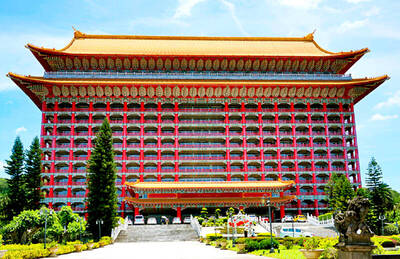
The Grand Hotel Taipei has rejected media reports claiming that the hotel had prevented CBS from broadcasting coverage of the Beijing summit between U.S. President Donald Trump and Chinese President Xi Jinping (習近平) on its premises. Media reports alleging that the hotel owner, dissatisfied with CBS’s coverage, prohibited the network from broadcasting political content on the hotel premises, are not true, the hotel said in a statement issued last night. The reports were “inconsistent with how the hotel actually handled the matter,” it said. The hotel said it received a refund request from a


 RSS
RSS