

A recent report by the Council of Labor Affairs (CLA) showed that as much as two-thirds of nail polish currently sold on the market contain chemical substances that could potentially heighten the risk of cancer.
Aided by celebrity endorsement and fashion trends, nail art has become popular among young women in recent years. However, many people are unaware that certain types of nail polish contain toxins that disrupt a person’s endocrine system and can be especially hazardous to pregnant women or nail artists who are constantly exposed to the chemicals.
A report by the council’s Institute of Occupational Safety and Health showed that a majority of the types of nail polish that are marketed or used by professional nail salons contain environmental hormones, or chemicals that act as endocrine disruptors, which can increase the risk of cancer.
The report showed that the amount of phthalate esters contained in some nail polish are 100 times higher than the maximum allowed by health authorities. Phthalates, which are sometimes added to nail polish to increase its flexibility and allow the surface of the polished nail to appear glossy and smooth, have been shown to be disruptive to hormonal levels and cause birth defects.
“Women who are over-exposed to [such chemicals] may have a higher risk of breast cancer or endometrial cancer [cancer in the lining of the uterus],” said Lin Ja-liang (林杰樑), a clinical toxicology specialist at Chang Gung Memorial Hospital in Linkou.
Lin suggests avoiding nail polish, especially those that have a stringent smell. When putting on nail polish, nail artists should wear gloves to protect their hands from over-exposure to hazardous chemicals. It is also important to avoid painting nails in a room without fresh air flow. Lin also recommends women avoid using nail polish when pregnant to minimize the chance of birth defects.
Hsieh Tien-jen (謝天仁), chairman of the Consumers’ Foundation, criticized the Department of Health for not effectively protecting consumers from harmful substances by regulating the contents of nail polish on the market. He urged health authorities to step up inspections of cosmetics and publish information on harmful brands and products.
ADDITIONAL REPORTING BY STAFF REPORTER HUNG SU-CHING
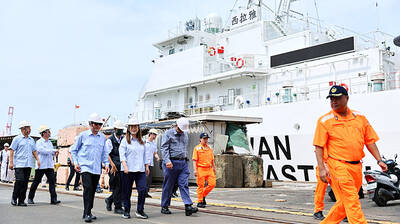
Ocean Affairs Council (OAC) Minister Kuan Bi-ling (管碧玲) on Wednesday said decommissioned coast guard vessels were given to the Philippines to enhance regional rescue capacity and would not affect Taiwanese fishers’ rights and benefits. Kuan made the remarks after confirmation on Tuesday that a 500-tonne Coast Guard Administration (CGA) patrol and rescue vessel would be given to the Philippine Coast Guard. The donation ceremony was reportedly done in Manila, but whether the vessel — previously numbered “CG123” and named Kinmen (金門) — has been handed over has yet to be confirmed. China’s Taiwan Affairs Office (TAO) on Wednesday criticized the donation for “taking
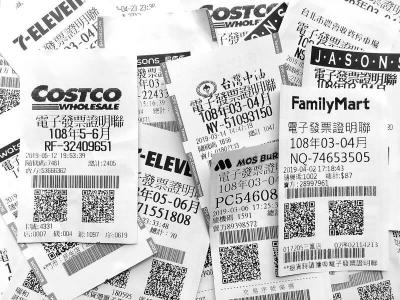
The Ministry of Finance today announced the winning numbers for the July-August uniform invoice lottery. The winning number for the NT$10 million (US$314,663) special prize is 89996565, while the winning number for the NT$2 million grand prize is 91098182. Three numbers were drawn for the NT$200,000 first prize: 54348835, 44991397 and 06595111. Those with receipts matching the last seven digits of any of the first-prize numbers can claim the NT$40,000 second prize, while those matching the last six digits qualify for the NT$10,000 third prize. Those whose receipts match the last five digits of the first-prize numbers are eligible for the NT$4,000 fourth prize,
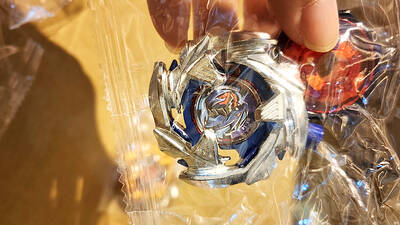
The National Police Agency’s Third Special Police Corps yesterday said that from May to July, it intercepted five smuggling operations from China, seizing more than 70,000 counterfeit Beyblades with an estimated infringement value of NT$34.45 million (US$1.08 million). It added that any bootleg unit that reached the local market could present hidden health hazards to players. Beyblades, a line of spinning toy tops used in competitive gaming and developed in Japan by toy company Takara Tomy, have become popular in Taiwan, making them a target for fraudsters. The Third Special Police Corps, dedicated to safeguarding maritime borders and trade lines,
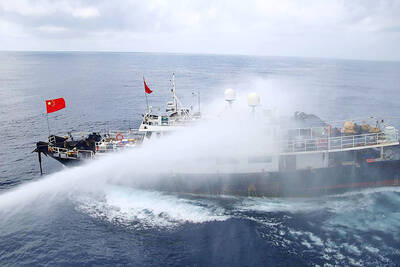
Taiwan has upgraded its maritime patrol capacity around the Pratas Islands (Dongsha Islands, 東沙群島) in the disputed South China Sea, including regularly sending larger ships there, the government said on Wednesday, responding to an increase in Chinese activities. Lying roughly between southern Taiwan and Hong Kong, the Taiwan-controlled Pratas Islands are seen by security experts as vulnerable to a Chinese attack due to their distance — more than 400km — from Taiwan. In a statement late on Wednesday, the Coast Guard Administration (CGA) said its overall patrol and enforcement capacity in Pratas waters has been “comprehensively upgraded.” With the completion of a wharf


 RSS
RSS