


Located on Ketagalan Boulevard, the Taipei Guest House has functioned as a major political site since it was established in 1901, and it is a great example of the fine European-style architecture built during the Japanese colonial era.
The building, which was built in the Renaissance style, originally served as the residence of the Japanese governor-general to Taiwan and as a venue for receptions for important guests. It later served as the venue for high-level talks on constitutional reform initiated by former president Lee Teng-hui (李登輝) and on the streamlining of the provincial government.
It was designated as a historic site in 1998 for its historical and political significance and is one of 142 historic sites in Taipei.

PHOTO COURTESY OF TAIPEI CITY’S CULTURAL AFFAIRS DEPARTMENT
Established 124 years ago, Taipei City is a relatively young metropolis. However, the city government is seeking to promote the rich historical legacy in the urban area by offering guided tours on municipal monuments scattered in 12 districts.
In celebration of annual World Monuments Day this month, Taipei City Archives, a commission under Taipei City’s Cultural Affairs Department, offered six guided tours of historic sites in Zhongzheng District (中正) last week, and will offer additional tours introducing historic sites in other districts every two months.
“Taipei City is full of stories, and we are hoping that the tours will help people understand more about the city’s history, and pay attention to the monuments that exist around them,” said Wu Chao-ming (吳昭明), a section chief of Taipei City Archives.

PHOTO COURTESY OF TAIPEI CITY’S CULTURAL AFFAIRS DEPARTMENT
The North Gate (北門), for example, is one of the most valuable historical and cultural assets in the city, Wu said. Located at the intersection of Zhongxiao W Road and Yenping S Road, the gate, also named Chengen Gate, is the best preserved part of the city wall, and the only one of the five city gates that was not torn down or reconstructed.
As the nation’s capital city, Taipei has served as a political center since Japanese colonial times. As a result, the political significance of many of the historic sites, including the 228 Memorial Museum, Taipei Zhongshan Hall (中山堂), the Presidential Office and Taipei Guest House (台北賓館), often outshines the architectural or cultural value of the monuments.
The Portrait of Water Buffalo, an art sculpture piece made of gypsum, is a masterpiece portraying scenery in rural Taiwan in the 1930s in the Taipei Zhongshan Hall collection. The piece is an example of a great part of a historic site often unnoticed by many visitors, Wu said.
In addition to introducing the municipal monuments from various perspectives, the guided tours also take visitors to “disappeared monuments” in the city, such as the original Taipei Confucius Temple (文廟) and the Guangong Temple (武廟).
The old Confucius Temple, originally in the current location of the Taipei First Girls’ High School, was built in 1884 to worship Confucius, but was demolished the next year by the Japanese.
The Guangong Temple, on the other hand, was built during the Qing Dynasty to worship Guangong, also known as God of War. The temple was demolished by the Japanese in 1934 and the site was used to construct the Taiwan High Court, which later became the current Taipei Judicial Building.
“It’s an interesting coincidence that the original Confucius Temple is now a prestigious school, and the Guangong Temple became a courthouse. The spirits of the two historic sites were passed on to the current sites in a wonderful way,” he said.
Michael Davidson, a 28-year-old English teacher from England and a member of an art group called Purplefoxleaf, was invited by the city government to lead a guided tour from the perspectives of an artist and a foreigner.
Davidson, who has been in Taipei for over three years, gave an introduction to historic sites with distinct architecture styles, such as the Chen Tien-lai Residence (陳天來故居), and focused on the European influence on the architecture of the monument.
The Chen Tien-lai Residence, established in 1920 in the Dadaocheng area, was the private residence of tea tycoon Chen Tien-lai. The three-story building offered an representative example of Chinese and European architecture styles, Davidson said.
The residence had served as a major gathering site for tea businessmen at that time, and witnessed the rise and decline of the tea industry and the Dadaocheng area in the early 20th century.
“Taipei is quite a modern city, and people may not be able to see there are also historic sites in the city,” he said, while urging the city government to step up efforts to preserve historic sites.
Teng Wen-tsung (鄧文宗), a division chief at the department, said district offices were responsible for the regular inspection of the 142 municipal monuments, and organizations in charge of the monuments need to maintain the sites. The department also allocates NT$20 million (US$620,000) annually for private organizations for the maintenance of the monuments.
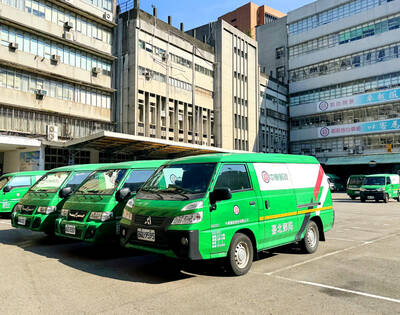
SHIPS, TRAINS AND AUTOMOBILES: The ministry has announced changes to varied transportation industries taking effect soon, with a number of effects for passengers Beginning next month, the post office is canceling signature upon delivery and written inquiry services for international registered small packets in accordance with the new policy of the Universal Postal Union, the Ministry of Transportation and Communications said yesterday. The new policy does not apply to packets that are to be delivered to China, the ministry said. Senders of international registered small packets would receive a NT$10 rebate on postage if the packets are sent from Jan. 1 to March 31, it added. The ministry said that three other policies are also scheduled to take effect next month. International cruise ship operators
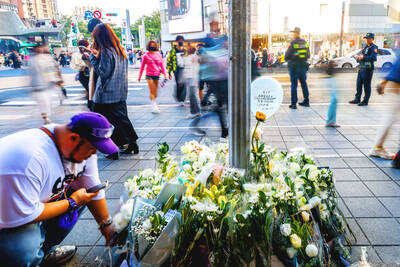
HORROR STORIES: One victim recounted not realizing they had been stabbed and seeing people bleeding, while another recalled breaking down in tears after fleeing A man on Friday died after he tried to fight the knife-wielding suspect who went on a stabbing spree near two of Taipei’s busiest metro stations, Taipei Mayor Chiang Wan-an (蔣萬安) said. The 57-year-old man, identified by his family name, Yu (余), encountered the suspect at Exit M7 of Taipei Main Station and immediately tried to stop him, but was fatally wounded and later died, Chiang said, calling the incident “heartbreaking.” Yu’s family would receive at least NT$5 million (US$158,584) in compensation through the Taipei Rapid Transit Corp’s (TRTC) insurance coverage, he said after convening an emergency security response meeting yesterday morning. National
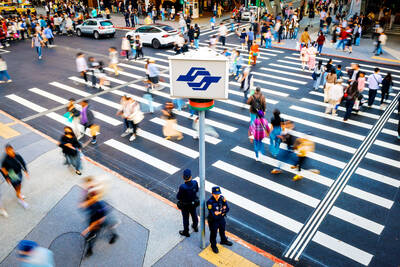
PLANNED: The suspect visited the crime scene before the killings, seeking information on how to access the roof, and had extensively researched a 2014 stabbing incident The suspect in a stabbing attack that killed three people and injured 11 in Taipei on Friday had planned the assault and set fires at other locations earlier in the day, law enforcement officials said yesterday. National Police Agency (NPA) Director-General Chang Jung-hsin (張榮興) said the suspect, a 27-year-old man named Chang Wen (張文), began the attacks at 3:40pm, first setting off smoke bombs on a road, damaging cars and motorbikes. Earlier, Chang Wen set fire to a rental room where he was staying on Gongyuan Road in Zhongzheng District (中正), Chang Jung-hsin said. The suspect later threw smoke grenades near two exits
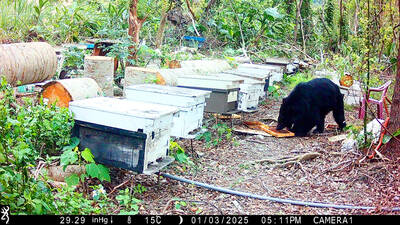
The Forestry and Nature Conservation Agency yesterday launched a gift box to market honey “certified by a Formosan black bear” in appreciation of a beekeeper’s amicable interaction with a honey-thieving bear. Beekeeper Chih Ming-chen (池明鎮) in January inspected his bee farm in Hualien County’s Jhuosi Township (卓溪) and found that more than 20 beehives had been destroyed and many hives were eaten, with bear droppings and paw prints near the destroyed hives, the agency said. Chih returned to the farm to move the remaining beehives away that evening when he encountered a Formosan black bear only 20m away, the agency said. The bear


 RSS
RSS