


The Ministry of Foreign Affairs (MOFA) is determined to seek a consensus with the new government in planning the nation's bid to take part in World Health Assembly (WHA) activities in May, a ministry spokeswoman said yesterday in Taipei.
With the inauguration of president-elect Ma Ying-jeou (馬英九) set for May 20, Premier Chang Chun-hsiung (張俊雄) said certain policies would be frozen during the transition until the new government takes over.
"Regarding Taiwan's application to join the WHO at this May's WHA, MOFA will seek consensus with president-elect Ma and his staff on how to proceed," ministry spokeswoman Phoebe Yeh (葉非比) said.
"We will respect president-elect Ma's opinion and make plans based on the latest circumstances," she said.
"However, since the WHA is slated to open on May 19, a day before the inauguration of the new government, we need to work out a consensus with the new government and devise plans carefully," Yeh said.
Taiwan has repeatedly failed in bids to become an observer or member of the WHO because of China's political intervention. As a result, it is denied direct contact with the WHO, including in the areas of disease control and prevention.
A Central News Agency report filed from Geneva on Friday said that China had requested foreign delegations in Geneva to join its efforts to block any Taiwanese activity toward accession into the WHA.
Yeh said that, judging from the result of the two referendums held alongside the presidential election on Saturday, people in Taiwan clearly want to be part of the international community.
"The question is not that people in Taiwan do not want to join the UN, but what the official name should be and how Taiwan should present its bid," Yeh said.
The 61st session of the WHA is scheduled to take place in Geneva from May 19 to May 24.
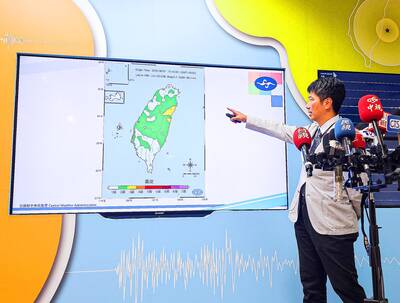
Aftershocks from a magnitude 6.2 earthquake that struck off Yilan County at 3:45pm yesterday could reach a magnitude of 5 to 5.5, the Central Weather Administration (CWA) said. Seismological Center technical officer Chiu Chun-ta (邱俊達) told a news conference that the epicenter of the temblor was more than 100km from Taiwan. Although predicted to measure between magnitude 5 and 5.5, the aftershocks would reach an intensity of 1 on Taiwan’s 7-tier scale, which gauges the actual effect of an earthquake, he said. The earthquake lasted longer in Taipei because the city is in a basin, he said. The quake’s epicenter was about 128.9km east-southeast
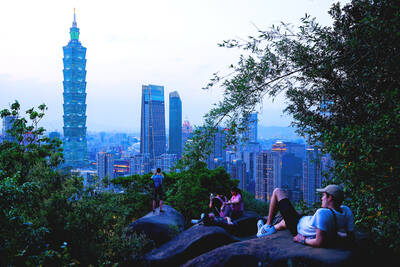
GENSLER SURVEY: ‘Economic infrastructure is not enough. A city needs to inspire pride, offer moments of joy and foster a sense of belonging,’ the company said Taipei was named the city with the “highest staying power” in the world by US-based design and architecture firm Gensler. The Taiwanese capital earned the top spot among 65 cities across six continents with 64 percent of Taipei respondents in a survey of 33,000 people saying they wanted to stay in the city. Rounding out the top five were Vietnam’s Ho Chi Minh City (61 percent), Singapore (59 percent), Sydney (58 percent) and Berlin (51 percent). Sixth to 10th place went to Monterrey, Mexico; Munich, Germany; Sao Paulo, Brazil; Vancouver; and Seoul. Cities in the US were ranked separately, with Minneapolis first at
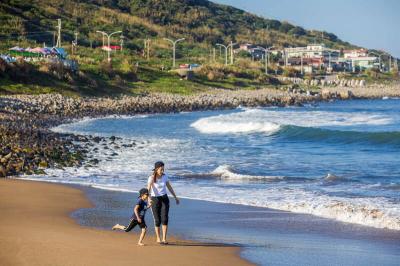
The New Taipei City Government today warned about the often-overlooked dangers of playing in water, and recommended safe swimming destinations to cool off from the summer heat. The following locations in the city as safe and fun for those looking to enjoy the water: Chienshuiwan (淺水灣), Baishawan (白沙灣), Jhongjiao Bay (中角灣), Fulong Beach Resort (福隆海水浴場) and Sansia District’s (三峽) Dabao River (大豹溪), New Taipei City Tourism and Travel Department Director-General Yang Tsung-min (楊宗珉) said. Outdoor bodies of water have variables outside of human control, such as changing currents, differing elevations and environmental hazards, all of which can lead to accidents, Yang said. Sudden
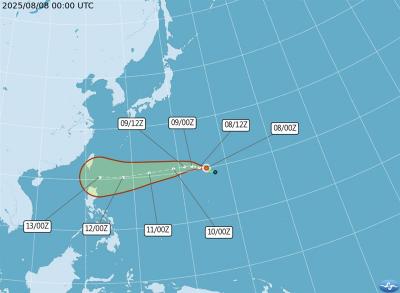
Tropical Storm Podul has formed over waters north-northeast of Guam and is expected to approach the seas southeast of Taiwan next week, the Central Weather Administration (CWA) said today. The 11th Pacific storm of the year developed at 2am over waters about 2,660km east of Oluanpi (歐鑾鼻), Pingtung County — Taiwan's southernmost tip. It is projected to move westward and could have its most significant impact on Taiwan on Wednesday and Thursday next week, the CWA said. The agency did not rule out the possibility of issuing a sea warning at that time. According to the CWA's latest update, Podul is drifting west-northwest


 RSS
RSS