


The last legislative session ended with few accomplishments, suggesting the impracticability of the "reconciliation and co-existence" approach trumpeted by Premier Frank Hsieh (
Public anticipations were high when Hsieh took office last February, with many people hoping that his "reconciliation and co-existence" policy would ease political tension and usher in rapprochement with the opposition.
However, since the beginning of the sixth legislative term last February, a record low number of bills and government initiatives were passed in the first session and only 86 cleared the legislature during the recently concluded second session.
In addition, this year's government budget proposal suffered the biggest cut in a decade at the hands of pan-blue lawmakers, and a large portion was frozen.
When Yu Shyi-kun was premier, a total of 190 bills and government initiatives were passed during the first session of the fifth legislative term and 115 passed in the second session.
Yu, who was the third premier since the Democratic Progressive Party (DPP) came to power in 2000, boasted that his team was the "combative Cabinet." He adopted a tougher stance toward the opposition parties.
Taiwan Solidarity Union (TSU) caucus whip David Huang (
"The strategy was unrealistic and ineffective," Huang said.
"It was not the right way to go and I hope the new Cabinet of Su Tseng-chang (蘇貞昌) will ditch this strategy because reconciliation with the opposition not only does not guarantee co-existence but invites insult," he said.
Even though a total of 86 bills or other items of legislative businesses were taken care of during the last legislative session, Huang said that most of the bills passed were either proposed by opposition parties or enacted or amended in such a way that they suited the opposition.
Taking the Organic Law of the National Communications Commission (國家通訊傳播委員會組織法) as an example, Huang said the law was a perfect model of legislative power encroaching on executive authority.
Although the administration had failed to stop the legislature from passing the law, the Executive Yuan launched a last-ditch effort last Friday by requesting the Council of Grand Justices to make a constitutional ruling on the legality of the commission law.
Huang said he would not encourage the new Cabinet to adopt a more belligerent approach toward the pan-blue alliance, saying that it has to stick to its own beliefs and put into practice the "effective management" policy announced by President Chen Shui-bian (陳水扁) in his New Year address.
"We'd like to see the new Cabinet continue, and facilitate, reform initiatives bearing Taiwan's interests in mind," Huang said.
Reform efforts, such as seeking to abolish the 18 percent preferential interest rate given to civil servants, teachers and military personnel must continue, he said, despite the opposition in the legislature.
The legislature resolved on Jan. 12 that a revised pension program for civil servants, teachers and military personnel must be postponed until the legislature gave it the go-ahead.
Minister of Civil Service Chu Wu-hsien (
As some KMT members have voiced displeasure over their party's knee-jerk opposition to government initiatives, Huang urged the DPP to seize the opportunity to solicit these people's support for certain bills.
"The DPP cannot pin its hope on KMT Chairman Ma Ying-jeou (
DPP caucus whip Chen Chin-jun (
As the pan-blue camp is unlikely to change its attitude, Su is bound to run into the same dilemma as his predecessors, he said.

LOUD AND PROUD Taiwan might have taken a drubbing against Australia and Japan, but you might not know it from the enthusiasm and numbers of the fans Taiwan might not be expected to win the World Baseball Classic (WBC) but their fans are making their presence felt in Tokyo, with tens of thousands decked out in the team’s blue, blowing horns and singing songs. Taiwanese fans have packed out the Tokyo Dome for all three of their games so far and even threatened to drown out home team supporters when their team played Japan on Friday. They blew trumpets, chanted for their favorite players and had their own cheerleading squad who dance on a stage during the game. The team struggled to match that exuberance on the field, with
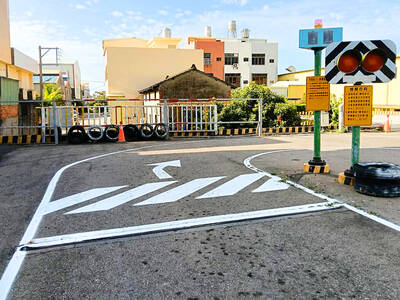
UPDATED TEST: The new rules aim to assess drivers’ awareness of risky behaviors and how they respond under certain circumstances, the Highway Bureau said Driver’s license applicants who fail to yield to pedestrians at intersections or to check blind spots, or omit pointing-and-calling procedures would fail the driving test, the Highway Bureau said yesterday. The change is set to be implemented at the end of the month, and is part of the bureau’s reform of the driving portion of the test, which has been criticized for failing to assess whether drivers can operate vehicles safely. Sedan drivers would be tested regarding yielding to pedestrians and turning their heads to check blind spots, while drivers of large vehicles would be tested on their familiarity with pointing-and-calling

A Taiwanese man apologized on Friday after saying in a social media post that he worked with Australia to provide scouting reports on Taiwan’s team, enabling Australia’s victory in this year’s World Baseball Classic (WBC), saying it was a joke and that he did not hold any position with foreign teams or Taiwan’s sports training center. Chen Po-hao (陳柏豪) drew the rage of many Taiwan baseball fans when he posted online on Thursday night, claiming credit for Australia’s 3-0 win over Taiwan in the opening game for Pool C, saying he worked as a physical therapist with the national team and
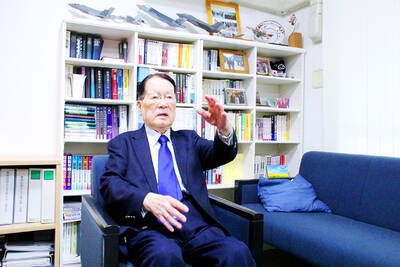
Whether Japan would help defend Taiwan in case of a cross-strait conflict would depend on the US and the extent to which Japan would be allowed to act under the US-Japan Security Treaty, former Japanese minister of defense Satoshi Morimoto said. As China has not given up on the idea of invading Taiwan by force, to what extent Japan could support US military action would hinge on Washington’s intention and its negotiation with Tokyo, Morimoto said in an interview with the Liberty Times (sister paper of the Taipei Times) yesterday. There has to be sufficient mutual recognition of how Japan could provide


 RSS
RSS