


The mounting Kaohsiung Rapid Transit Corp (KRTC) scandal, which came to light in the wake of a riot by Thai laborers building the city's MRT system, has left a cloud over the country and put acting Kaohsiung Mayor Yeh Chu-lan (
A month after taking the position left vacant by former acting mayor Chen Chi-mai (
When interviewed by the Taipei Times on Monday, for example, Yeh had been detained because the city council had to review the general budget.
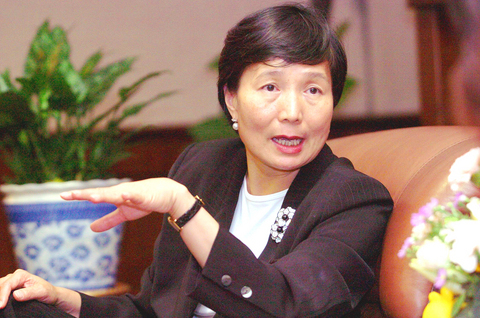
PHOTO: CHANG CHUNG-YI, TAIPEI TIMES
Yet she remained energetic and defensive, as she shared her plans and vision for the city.
"Whatever the MRT scandal and KRTC controversy may bring to an end, Kaohsiung City's MRT construction must continue, and will definitely bring greater convenience to residents when the project is completed next year," Yeh said.
Listing the MRT program as well as the whole public transportation construction plan as one of the major priorities for her administration, Yeh said she was confident that the MRT lines will be inaugurated by October next year.
"And with the completion of the Light Rail Transit Systems under the High Speed Rail Project, the two public transportation programs will connect the city very soon," she said.
In a city where there are more scooters per person than in any other part of the country (there are 120,000 scooters in Kaohsiung, a city with a population of 150,000), however, it is a daunting task to persuade citizens to leave behind their vehicles and take public transportation, especially in view of public frustration over the city's inefficient bus service over the years.
"The cultivation of citizens' habits of taking public transportation is the key factor to a successful public transportation system. Before the MRT line and Light Rail Transit System are completed, we are currently trying to improve the city's bus industry," Yeh explained.
Due to serious financial difficulties, it is almost impossible for Kaohsiung's bus industry to improve its bus service.
"The transportation bureau is working out a solution with the bus industry. We are encouraging the privatization of the industry, and are willing to provide some rights of the road and subsidies to help them improve their facilities and services," she said.
Yeh used Taipei City's experience to defend her administration's public transportation projects.
"The Taipei City Government spent more than 10 years to establish the MRT lines and create a public transportation network by connecting the system with bus routes. Residents opposed the city government's plan to open up exclusive bus lanes, but in the end, the project turned out to be successful and brought faster and better bus service to Taipei residents," she said.
"So it takes years to complete a public transportation network, and even longer for residents to trust public transportation and be willing to take advantage of it," she added.
Asked whether the MRT scandal has affected citizens' trust of the city government, Yeh paused, then said it was a misconception that the scandal frustrated citizens.
"Let me give you some figures. A recent poll showed that 87 percent of the citizens said they hope the MRT construction continues, and more than 70 percent said they are still confident in the city," Yeh said.
"Although the scandal hasn't come to an end yet, our citizens see the construction go on every day, and so they know all the MRT laborers are working hard. The MRT incident has turned into a political battle. Like I said before, we need to give MRT workers more encouragement and let investigators handle other problems," she added.
As Yeh energetically discussed many promising urban plans, it is an undeniable truth that as the country's second-largest city, Kaohsiung is still falling behind Taipei in many aspects. Yeh acknowledged that Kaohsiung is still young in terms of development, but she doesn't like it when people measure the city using "Taipei standards."
"I see Kaohsiung City as a teenager, and because it is young, the space for it to grow and develop is immeasurable. The development of Taipei City is already limited, but Kaohsiung is different. Because it is young, and has great potential, people can post different visions and dreams on this city," she said.
Although a Miaoli native, Yeh took a lot of pride in the city she has run for only a month. She said her goal is to turn Kaohsiung into a "warm and beautiful home," the "brightest star in Taiwan's landscape," and a harbor "internationally well-known."
"The Danshui River in Taipei smells bad, but Kaohsiung citizens can go sailing on our Love River. I say the Love River is a beautiful lady, who makes our residents proud. All of the city's ports will open to the public with different functions. So in the future, families and friends can listen to music at No. 12 port, maybe visit a museum next to No. 13 port and then sail to No. 14 port," she said, detailing the city government's plan to revive its 22 ports as recreational areas.
Yeh's vision of a friendly harbor city highlights Kaohsiung's efforts to transform itself from a seedy industrial dystopia to a much more livable city, with many urban renewal projects continuing. The successful experience of turning the once foul-smelling Love River into the hottest tourist spot in the city explains the trend.
Turning from "an ugly duckling into a beautiful swan," as Yeh describes it, Love River has become a successful urban planning model for many cities and counties. It has also formed a strong identity for the city.
"When our residents go to the Love River, they hear visitors applaud how wonderful the place is, and they feel proud. The great image Kaohsiung creates, I think, makes it easy for residents to identify with the city," she said.
Creating a unique city image has emerged as an important municipal issue for cities around the country. Taipei City, for example, has been trying to boost its international image and form a strong identity by promoting the idea of a "healthy city" through conferences and related events. In Kaohsiung, Yeh said, citizen participation has always been energetic, and the city's image is created by all citizens, rather than the efforts of the city government.
"Kaohsiung is enthusiastic and straightforward. These characteristics are the core values for the city's development, and these values describe Taiwan's local culture best," she said. "Kaohsiung is an industrial city which has attracted many workers from other places. As immigrants, our residents cherish what they've achieved in the city, and are willing to participate in anything that can help make the city better."
Yeh declined to elaborate on the city government's investigation report on the MRT scandal, which was criticized by the pan-blue camp as ineffective and biased.
"I said already that the report is fair and objective, and there has been absolutely no politics involved in the investigation. We made it clear from the beginning that it is an administrative investigation, and we leave problems unrelated to staff in the city government to prosecutors and courts," she said.
"Of course the report won't satisfy those who are prejudiced. I see no problems in the report. Ever since I entered politics, everything I have done has sustained many trials, and I have nothing to hide this time, as well, she added."
It is this straightforward and uncompromising personality that helped Yeh, widow of a political dissident during the White Terror -- when activists were persecuted, tortured, imprisoned and often executed by the Chinese Nationalist Party (KMT) regime -- transform herself from a simple career mother and wife into one of Taiwan's most successful female politicians.
With an immaculate political resume, Yeh is seen as a potential vice presidential candidate for the Democratic Progressive Party in the 2008 presidential election. Yet she laughed when asked to comment on the matter, and said she had never heard of such rumors.
"Right now, I only think about how to serve Kaohsiung residents better. I want to develop Kaohsiung as a beautiful ocean city with a friendly and safe living environment. I am occupied with all these municipal tasks now, and I have no time to think about other things," she said.
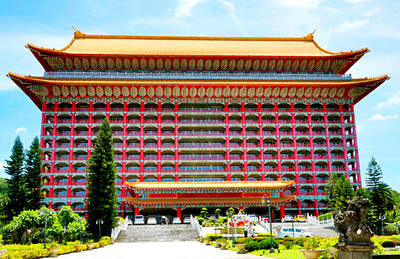
The Grand Hotel Taipei on Saturday confirmed that its information system had been illegally accessed and expressed its deepest apologies for the concern it has caused its customers, adding that the issue is being investigated by the Ministry of Justice Investigation Bureau. The hotel said that on Tuesday last week, it had discovered an external illegal intrusion into its information system. An initial digital forensic investigation confirmed that parts of the system had been accessed, it said, adding that the possibility that some customer data were stolen and leaked could not be ruled out. The actual scope and content of the affected data

DO THEY BITE IT? Cats have better memories than people might think, but their motivation is based entirely around the chance of getting fed Cats can remember the identity of the people who fed them the day before, Taipei-based veterinarians said on Friday, debunking a popular myth that cats have a short memory. If a stray does not recognize the person who fed them the previous day, it is likely because they are not carrying food and the cat has no reason to recognize them, said Wu Chou Animal Hospital head Chen Chen-huan (陳震寰). “When cats come to a human bearing food, it is coming for the food, not the person,” he said. “The food is the key.” Since the cat’s attention is on the food, it

A New York-based NGO has launched a global initiative to rename the nation’s overseas missions, most of which operate under the name "Taipei," to "Taiwan Representative Office (TRO)," according to a news release. Ming Chiang (江明信), CEO of Hello Taiwan, announced the campaign at a news conference in Berlin on Monday, coinciding with the World Forum held from Monday through Wednesday, the institution stated in the release. Speaking at the event, Democratic Progressive Party Legislator Huang Jie (黃捷) said she believed this renaming campaign would enable the international community to see Taiwan
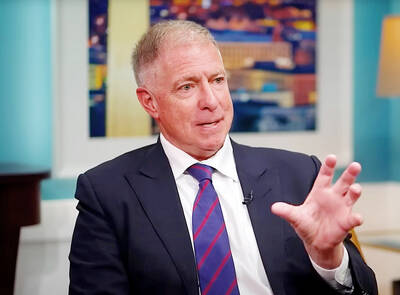
DEFENSE: The US should cancel the US visas or green cards of relatives of KMT and TPP lawmakers who have been blocking the budget, Grant Newsham said A retired US Marine Corps officer has suggested canceling the US green cards and visas of relatives of opposition Taiwanese lawmakers who have been stalling the review of a proposed NT$1.25 trillion (US$39.7 billion) special defense budget. The Executive Yuan has proposed the budget for major weapons purchases over eight years, from this year to 2033. However, opposition lawmakers have refused to review the proposal, demanding that President William Lai (賴清德) first appear before the Legislative Yuan to answer questions about the proposed budget. On Thursday last week, 37 bipartisan US lawmakers sent a letter to Legislative Speaker Han Kuo-yu (韓國瑜), the heads


 RSS
RSS