


Taiwan Solidarity Union (TSU) Chairman Shu Chin-chiang (蘇進強) yesterday announced that his party will quit its partnership with the Democratic Progressive Party (DPP) if President Chen Shui-bian (陳水扁) intends to violate former president Lee Teng-hui's (李登輝) political ideals.
"Former president Lee's political line is the Taiwanese people's line, which has been focusing on giving priority to Taiwan's interests and Taiwan's sovereignty," Shu said. "If Chen plans to deviate from this line, I would say there's no more pan-green camp."
Shu made the remarks in a press conference yesterday afternoon where the TSU formally declared its opposition to the 10-point consensus reached on Thursday between Chen and People First Party (PFP) Chairman James Soong (宋楚瑜). High-ranking TSU officials, including Shu and TSU Secretary-General Chen Chien-ming (陳建銘) and other party legislators attended the news conference and voiced their disapproval of Chen.
Shu acknowledged that it was true that former president Lee recommended Chen meet for talks with opposition leaders in the hope of building political stability and cooperation after the legislative elections, but the premise of cross-party negotiations is supposed to be based on Taiwanese identification as a on the common dominator, not based on the interests of certain individuals, Shu said.
"Lee advised Chen to drink water to quench his thirst, but he didn't suggest he drink poison," Shu said.
Shu also said that the TSU was not informed by the Presidential Office about the outcome of Chen-Soong meeting before it was announced, adding that Chen "tore down the bridge after crossing the river." The reference suggested Chen has forgotten about the pan-green partnership and the cross-party cooperation that helped last year's 228 Hand-in-Hand rally and Chen's re-election bid become a reality.
"It was so unexpected that Chen would cater to Soong's requests and concede so much of his ideals about Taiwan's sovereignty during his meeting with Soong," Shu said.
"It is said that the result of the Chen-Soong meeting met the expectations of Soong, China and the US. But ironically, it fell short of the Taiwanese people's expectations," he added.
Shu also said that Soong's insistence that maintaining the status-quo and identifying the Republic of China is "a common denominator" was incorrect.
"The TSU has to clearly state that the status-quo of the Taiwan Straits is `one country on either side' of the Taiwan Strait," Shu said.
He also said that Chen -- citing his defense of the 10-point consensus -- said Lee's appointment of ex-defense minister Hau Pei-tsun (郝柏村) to the position of premier was a "far-fetched analogy." Shu added that the events were different and could not be compared.
George Liu (劉寬平), a TSU legislator and member of the Formosan Association for Public Affairs (FAPA) said yesterday at the press conference that the Chen-Soong meeting has made a mockery of Taiwan's democratic achievements. He went on to criticize the consensus, saying that Chen broke his presidential campaign promises.
"Chen lost his integrity and dignity at that meeting," Liu said.
Meanwhile, Vice President Annette Lu (呂秀蓮) and Premier Frank Hsieh (謝長廷) yesterday evening announced that they will participate in the 228 memorial activities held by the TSU and pro-independence groups at the 228 Peace Park today. Lu and Hsieh originally said they would be absent, while the president said he will not join the memorial activities.

The military has spotted two Chinese warships operating in waters near Penghu County in the Taiwan Strait and sent its own naval and air forces to monitor the vessels, the Ministry of National Defense (MND) said. Beijing sends warships and warplanes into the waters and skies around Taiwan on an almost daily basis, drawing condemnation from Taipei. While the ministry offers daily updates on the locations of Chinese military aircraft, it only rarely gives details of where Chinese warships are operating, generally only when it detects aircraft carriers, as happened last week. A Chinese destroyer and a frigate entered waters to the southwest
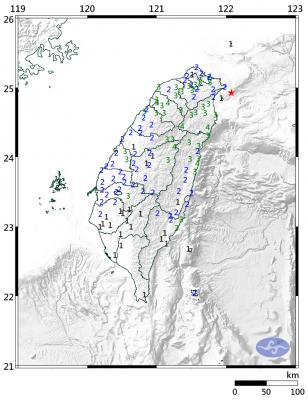
A magnitude 6.1 earthquake struck off the coast of Yilan County at 8:39pm tonight, the Central Weather Administration (CWA) said, with no immediate reports of damage or injuries. The epicenter was 38.7km east-northeast of Yilan County Hall at a focal depth of 98.3km, the CWA’s Seismological Center said. The quake’s maximum intensity, which gauges the actual physical effect of a seismic event, was a level 4 on Taiwan’s 7-tier intensity scale, the center said. That intensity level was recorded in Yilan County’s Nanao Township (南澳), Hsinchu County’s Guansi Township (關西), Nantou County’s Hehuanshan (合歡山) and Hualien County’s Yanliao (鹽寮). An intensity of 3 was

Japanese Prime Minister Sanae Takaichi’s comment last year on Tokyo’s potential reaction to a Taiwan-China conflict has forced Beijing to rewrite its invasion plans, a retired Japanese general said. Takaichi told the Diet on Nov. 7 last year that a Chinese naval blockade or military attack on Taiwan could constitute a “survival-threatening situation” for Japan, potentially allowing Tokyo to exercise its right to collective self-defense. Former Japan Ground Self-Defense Force general Kiyofumi Ogawa said in a recent speech that the remark has been interpreted as meaning Japan could intervene in the early stages of a Taiwan Strait conflict, undermining China’s previous assumptions
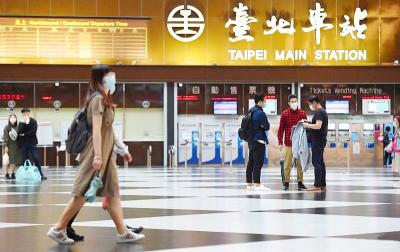
Taiwan Railways Corp (TRC) today announced that Shin Kong Mitsukoshi has been selected as the preferred bidder to operate the Taipei Railway Station shopping mall, replacing the current operator, Breeze Development Co Ltd. Among eight qualified firms that delivered presentations and were evaluated by a review committee, Shin Kong Mitsukoshi was ranked first, while Breeze was named the runner-up, the rail company said in a statement. Contract negotiations are to proceed in accordance with regulations, it said, adding that if negotiations with the top bidder fail, it could invite the second-ranked applicant to enter talks. Breeze in a statement today expressed doubts over


 RSS
RSS