


Taipei Times: What is the purpose of establishing a Hakka-language TV channel?
Yeh Chu-lan (葉菊蘭): Establishing a Hakka-language TV channel will revive the language and heritage of the Hakka people, who are fading away at the rate of 5 percent each year.

PHOTO: SEAN CHAO, TAIPEI TIMES
Statistics show that among the nation's 4 million Hakka people, only 58 percent speak the Hakka language. It gets worse for youth. Only 11 percent of Hakka under the age of 13 speak Hakka.
If we don't do anything about it now, I'm afraid Hakka language and culture would eventually become history, and it's scary.
Realizing the prevalence of TV and how it changes our everyday life -- especially that of younger generation, I thought it was a good idea to make good use of this powerful medium to reach out to the Hakka people.
As most Hakka seniors neither speak nor write Mandarin and Taiwanese, they don't know what's going on out there
As a third generation Hakka myself, I saw my grandparents and parents feeling left out when we were watching the Taiwanese- or Chinese-language TV programs. It's even more troubling that some of the younger generation that think that the Hakka language is outdated and useless.
So if you ask me why we want to set up a Hakka TV channel, the reason is very simple. We want to fulfill the decade-old dream of our parents and grandparents to be part of the society while at the same time continue our unique culture in this diverse society.
TT: What kind of programs will be running on the channel and when will it be broadcasted?
Yeh: Programs will be broadcast 24 hours a day on the channel. Everyday there will be nine hours of new programs and in Hakka with Chinese subtitles so that non-Hakka people can understand.
Programs target many age groups and cover a wide spectrum of topics ranging from talk shows, prime-time soap operas, news, variety shows, English-language-education programs, financial programs, cultural drama, music programs, etc.
In short, the programs are designed to be interesting enough to lure as many audiences, both Hakka and Taiwanese alike, as possible.
TT: What need is there for a brand-new channel while there are Hakka-language programs running on both terrestrial and cable TV channels?
Yeh: There are five terrestrial and over 100 cable TV channels in Taiwan but none of them is Hakka. TV stations are not interested in producing Hakka-language programs for commercial reasons. All of the Hakka-language TV programs showing on terrestrial and cable TV are produced by companies contracted by the council.
Under such circumstances, we feel obliged to set up a Hakka-oriented TV channel and hope more people will follow suit.
I believe there's potential in the market of Hakka TV viewers because, after all, there are about 4 million Hakka people out there. If given a chance, I'm sure the Hakka channel, and hopefully many more in the future, will become mainstream.
TT: Since the Hakka channel is established and subsidized by the government, some have questioned that its establishment violates media autonomy and that the government is vying for profits with the private sector. What are your thoughts on this?
Yeh: We venture into the media business because no private TV station is interested in producing Hakka programs, not even for charity. We're not vying for profits with the private sector, because there isn't any competitor in the market. We'd be more than happy to stay out of it if private TV stations would take over.
If the Aboriginal cultures are in the intensive care unit, the Hakka culture is in the emergency ward and the Taiwanese culture is registering at the hospital counter.
In civil societies, it is the government's responsibility to respect ethnic diversity and safeguard the culture of endangered minorities. It's so unfair to say that we are interfering in the media because what we're doing here is to support, not dominate nor rifle, the media.
TT: It takes a lot of people and money to set up a new TV channel, especially in the initial stage. However, it might not have as large an audience as the council expects. How do you deal with the problem?
Yeh: Obviously, an annual budget of NT$220 million is definitely insufficient to establish and run a TV channel in the first year. We're very appreciative of the support of our contractor, Taiwan Television (TTV), which produces Hakka programs in their own studios and with their own resources.
As the popularity of the channel is concerned, we'd like to prove that there is indeed a potential in the Hakka TV market. Do you have any idea how thrilled the Hakka people were when they saw a Hakka-language soap opera, the Frigid Night, running at prime-time on the Public Television Service?
Even if the channel is as popular as we expect, I feel we have the responsibility to entice people to start switching to the Hakka channel because the programs are well-produced, interesting and educational.
TT: Some people are worried that the establishment of the Hakka TV channel may cause a dent in state coffers. What are your thoughts on this?
Yeh: It's unfair to say that the establishment of the Hakka TV channel is wasting taxpayers' money because the NT$220 million earmarked for the station this year comes out of the council's annual budget, which is about NT$900 million -- a figure that is significantly less than the NT$5 billion the government earmarks annually to save the Aboriginal cultures.
The reason why we set aside that much money to establish a Hakka channel is because I know exactly how TV can offer value through swift and efficient transmission of the Hakka language.
TT: With the establishment of the Hakka TV channel, other minority groups such as the Aborigines might want to have a new TV channel of their own. Do you see a potential conflict looming in this regard?
Yeh: I don't. In fact, each minority ethnic group in this country deserves the government's respect and protection of their own unique language and culture. I'd really hate to see the culture or language of any of the minority groups face the danger of extinction.
I'm glad that President Chen Shui-bian (陳水扁) realizes the importance and urgency of salvaging endangered ethnic cultures such as Hakka and Aborigines. As I said earlier, the state of Hakka culture is in the emergency ward. It'd be too late for us to save it if it ends up in the intensive care unit.
TT: What do you think of criticism that the council pays more attention to the Hakka population in Taoyuan, Hsinchu and Miaoli counties, where the DPP has less support than its arch-rival the KMT?
Yeh: It's a false impression resulting from insufficient information. The public has the impression that we pay more attention to Taoyuan, Hsinchu and Miaoli counties probably because of the Tung Blossom (or Paulownia) Festival running between mid-April to early May each year.
Actually, we've planned to hold various events in southern Taiwan for the other half of the year. They include the Butterfly Festival in the traditional Hakka village of Meinnung in Kaohsiung County and the Hakka Culture Festival which travels to Pingtung County, Kaohsiung City and Kaohsiung County.
In addition to various cultural events, we've set up a Hakka Culture Park in Liutui, Pingtung County in southern Taiwan and a Hakka Culture Museum in eastern Hualien and Taitung counties.
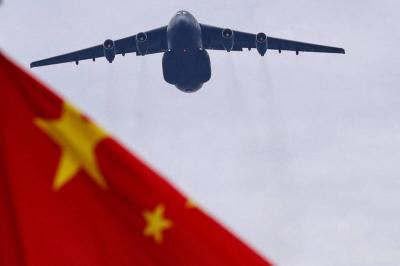
Beijing could eventually see a full amphibious invasion of Taiwan as the only "prudent" way to bring about unification, the US Department of Defense said in a newly released annual report to Congress. The Pentagon's "Annual Report to Congress: Military and Security Developments Involving the People's Republic of China 2025," was in many ways similar to last year’s report but reorganized the analysis of the options China has to take over Taiwan. Generally, according to the report, Chinese leaders view the People's Liberation Army's (PLA) capabilities for a Taiwan campaign as improving, but they remain uncertain about its readiness to successfully seize

Taiwan is getting a day off on Christmas for the first time in 25 years. The change comes after opposition parties passed a law earlier this year to add or restore five public holidays, including Constitution Day, which falls on today, Dec. 25. The day marks the 1947 adoption of the constitution of the Republic of China, as the government in Taipei is formally known. Back then the Chinese Nationalist Party (KMT) governed China from Nanjing. When the KMT, now an opposition party in Taiwan, passed the legislation on holidays, it said that they would help “commemorate the history of national development.” That

HORROR STORIES: One victim recounted not realizing they had been stabbed and seeing people bleeding, while another recalled breaking down in tears after fleeing A man on Friday died after he tried to fight the knife-wielding suspect who went on a stabbing spree near two of Taipei’s busiest metro stations, Taipei Mayor Chiang Wan-an (蔣萬安) said. The 57-year-old man, identified by his family name, Yu (余), encountered the suspect at Exit M7 of Taipei Main Station and immediately tried to stop him, but was fatally wounded and later died, Chiang said, calling the incident “heartbreaking.” Yu’s family would receive at least NT$5 million (US$158,584) in compensation through the Taipei Rapid Transit Corp’s (TRTC) insurance coverage, he said after convening an emergency security response meeting yesterday morning. National

Taiwan has overtaken South Korea this year in per capita income for the first time in 23 years, IMF data showed. Per capita income is a nation’s GDP divided by the total population, used to compare average wealth levels across countries. Taiwan also beat Japan this year on per capita income, after surpassing it for the first time last year, US magazine Newsweek reported yesterday. Across Asia, Taiwan ranked fourth for per capita income at US$37,827 this year due to sustained economic growth, the report said. In the top three spots were Singapore, Macau and Hong Kong, it said. South


 RSS
RSS