


Since Taiwan's information technology (IT) industry peaked in 2000, the nation's economy has reached a crucial point at which the transformation of traditional industries has become a must and crises loom in the IT sector.
Revitalizing the economy and boosting competitiveness is a task that must be pursued with gusto.
Many believe helping the biomedical industry is one way to turn the economy around.
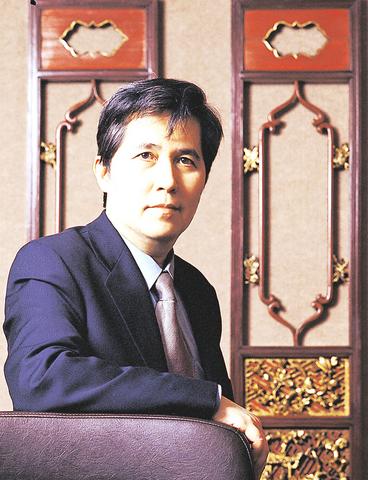
TAIPEI TIMES FILE PHOTO
In the 1980s, late presidential adviser Li Kuo-ting (李國鼎), who created the Hsinchu Science-based Industrial Park, stressed the importance of developing this industry.
However, more than 20 years later, while other Asian countries such as China, Singapore, South Korea and Japan boast of their achievements in biotechnology, Taiwan has yet to establish a biomedical science park.
When Hsu Su-ming (許世明), currently vice superintendent of National Taiwan University Hospital, returned from the US to Taiwan eight years ago, he brought with him a vision of the nation's future in biomedicine.
Hsu hopes to establish the hotly debated Hsinchu Biomedical Science Park, which will be located in the planned development zone around the Hsinchu station of the Taiwan High Speed Railway.
Construction of the science park will probably begin by the end of this year. But many difficulties still need to be overcome to make the project a success.
"The biomedical industry is risky. But Taiwan is not yet ready to tolerate a high-risk industry," Hsu said.
Hsu was born in Yunlin County in 1949. Graduating from National Taiwan University's College of Medicine in 1976, Hsu went to the US in 1977. Four years later, Hsu completed his training as a resident doctor.
From 1981 to 1984, Hsu had been a fellow of the National Institutes of Health in the US. Hsu's research in pathology and disease diagnosis, which began after his resident training, has resulted in many articles, patents and innovative discoveries.
Hsu discovered a immunohistochemical staining method that has allowed both basic research and clinical diagnosis to make great strides. It causes tissue, cancer, or virus antigens to become visible in tissue sections.
The method also allows the differentiation and diagnosis of cancer cells, the confirmation of virus infection, and rapid analysis of the distribution and function of immune cells.
The method can be applied to many sophisticated research techniques such as electron microscopy, DNA sequence analysis and biosensors. Numerous diagnostic techniques have been derived from Hsu's discovery.
While it is rare for a scientific paper produced in Taiwan to be cited more than 10 times a year, Hsu's papers have been cited more than 10,000 times between 1981 and 1992.
Within just a few years of Hsu beginning his research, he became one of the world's 100 most-cited scientists.
When the university hospital's superintendent asked him what the guidelines of the university's culture should be, Hsu proposed two Chinese words, ching and ya (
Ching means precision, professionalism and delicacy. Ya means elegance, gracefulness and gentleness. The latter reveals Hsu's expectations of an intellectual's personality.
"Many doctors and scholars might achieve ching," Hsu said. "But how many of them are able to attain ya?" he asked.
Hsu is a patient person. When he was in training at the university hospital before going to the US, he was the doctor most warmly welcomed by patients because of his kind treatment.
"I once had a child patient who needed an injection. I know the child would be hurt if I quickly finished the shot," Hsu said. In order not to hurt the child, he spent half an hour to complete a single jab.
When he returned to Taiwan in 1995, Hsu harbored the hope that he could do something for his country. The science park project displayed his commitment to realize a biomedical future for the the nation.
Hsu knows he needs to be patient to clear the hurdles that stand in the way of the park's success.
Hsu's major challenges include budget shortfalls and other universities' concerns that the project may only benefit National Taiwan University (NTU), as Hsu has proposed that NTU alone could handle the future research and development for the science park.
"Many people regard NTU as seeking its own benefit through the project. But they don't know the hard work behind the project," Hsu said.
"Perhaps only fools would still persist in doing such hard work," he added.
From the patience of Hsu's so-called "fools" may grow Taiwan's biomedical future.

NATIONAL SECURITY: Authorities are working to confirm the identities of the military personnel involved and investigating possible illegal conduct and regulatory violations Authorities are probing possible national security implications after Kinmen police and immigration officers on Sunday found a Chinese woman allegedly posing as a tourist while engaging in prostitution involving more than 10 military personnel. The woman, surnamed Chen (陳), has since been deported, authorities said, adding that investigators are still working to confirm the identities of those implicated, as the records only listed code names and aliases. The case stemmed from a report received by the Kinmen District Prosecutors’ Office on Friday last week from the Jinhu Precinct of the Kinmen County Police Bureau. On Sunday, police, along with the National Immigration

REASONS FOR TRAVEL: An assistant professor said that proposed amendments to penalize drivers if they used drugs overseas would not deter people from traveling People who operate a motor vehicle under the influence of marijuana would have their driver’s license revoked, even if they used the substance while overseas, the Ministry of Transportation and Communications said yesterday, citing proposed amendments to the Road Traffic Management and Penalty Act (道路交通管理處罰條例). The amendments would also authorize the government to revoke the licenses of people determined to have used Category 1 or Category 2 narcotics, even if they were not operating a vehicle while under the influence of drugs, as well as ban them from taking the license test for three years, the ministry said. People aged 18 or

GLOBALGIVING: ‘ Caving to external pressure is not acceptable for an organization that has cultivated justice reform and human rights for 30 years,’ one NGO said A slew of non-government organizations (NGOs) have withdrawn from the GlobalGiving fundraising platform after it announced it would use “Chinese Taipei” instead of “Taiwan” from next month. The Taiwan Good Rice Association wrote on Facebook on Friday that it was informed on April 28 via a teleconference call of the change, which was made because the platform wanted to operate in China. Taiwan Good Rice is to terminate all cooperative relationships with GlobalGiving in response to the platform’s “unilateral and non-negotiable” decision to remove references to Taiwan, the NGO said. “Taiwan is in the official name of Taiwan Good Rice Association and the

HEAVY WEATHER: Typhoon Jangmi is due to crash straight into the Ryukyus as airlines look to shift flights to larger aircraft or cancel flights to Okinawa entirely Taiwan’s international air carriers announced flight adjustments over the weekend as Typhoon Jangmi is forecast to hit the Ryukyu Islands today and tomorrow. The Central Weather Administration (CWA) upgraded Jangmi from a tropical storm to a typhoon at 8am yesterday, with the eye located 580km south of Naha city. It was moving north at 19kph. Today, China Airlines’ CI-120, CI-121, CI-122 and CI-123 flights between Taoyuan and Naha, Okinawa, have been canceled as well as CI-132 and CI-133 between Kaohsiung and Naha. EVA Air’s BR-112, BR-113, BR-186 and BR-185 flights between Taoyuan and Naha are also canceled. Low-cost carrier Tigerair Taiwan canceled IT-230,


 RSS
RSS