


On Feb. 28, 1947, at 2:40pm, 18-year-old Lin Tai-cheng (
All of a sudden, they heard gun shots firing from a distance and the crowd began to panic.
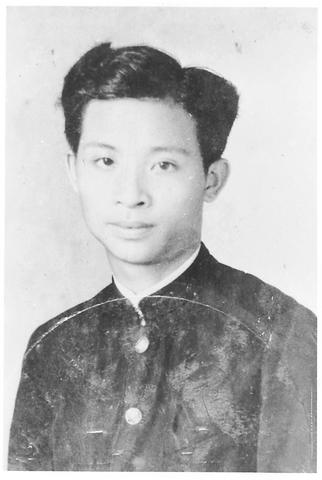
PHOTO COURTESY OF LIAO TE-SUNG
"Let's go down to the underpass and hide there, quickly," Lin told his friend.
They and some 300 other people hid there until 12:15am when they heard the broadcast calling for south-bound passengers to board the train.
As they were waiting for the train to depart, the crowd panicked again because someone was hit by stray bullets.
Lin was also shot in his left leg.
At 5:10am, the train finally started to move. They reached their destination at 6am.
After they left, KMT troops attacked the underpass from both entrances and killed 300 people seeking shelter in the 100m tunnel.
"That was one of the closest calls of my life," Lin, now 74, said.
Lin, who relocated to Japan with his uncle at the age of three, came back to Taiwan in 1947 to help his father manage the family business of a sugar processing factory.
After the Feb. 28 incident, Lin had two more close calls that would changed his life forever.
On the afternoon of March 12, 1947, Lin and Huang traipsed to their campus to have a word with one of their teachers.
As they were about to leave, a truckload of armed soldiers jumped out of the vehicle and surrounded the campus. Lin and Huang as well as five other people were asked to line up for a frisk.
"You Taiwanese jackals have been working for Japanese pigs," shouted one of the soldiers.
When the soldier eventually failed to find any firearms or valuables on them, he walked behind the group and kicked each detainee in the legs and demanded that the detainees get on their knees.
"Let's have some fun," the soldier said and ordered other soldiers to assume the firing position.
As Lin prepared to die, another soldier ran toward them and stopped the intimidation.
"Dismiss your men and get your ass back to the camp," he said.
Although Lin escaped from the campus, some members of his family were arrested on March 18, 1947.
On a sweltering afternoon, Lin, his family and their house guest, Hsu Yo-fu (
He saw two truckloads of soldiers getting out of a vehicle.
"I knew they had come to get me and Hsu because he had signed our names to a petition during a peace gathering at a nearby park about two weeks before," Lin said.
While Lin managed to escaped and hid in the house of his next-door neighbor, his father and Hsu were taken away at gun point.
Before the soldiers left, they cracked open Lin's family safe and took away 130,000 old Taiwan dollars (about NT$230,000; NT dollars were introduced after the KMT removed the sweat of government to Taiwan), 10 gold nuggets, real estate contracts and other important papers.
They also drove to their nearby sugar processing plants to take away 60 tonnes of sugar, 30 tonnes of soybeans and 30 tonnes of fine salt.
Twelve days later, they managed to come up with 200,000 old Taiwan dollars to bail out his father.
"He was so severely tortured while he was in detention that his health was seriously damaged," Lin said.
After they lost the valuables, their house was occupied by the KMT government. Lin, his parents and his grandmother were forced to move to a temporary dwelling they made out of bamboo branches near a cemetery.
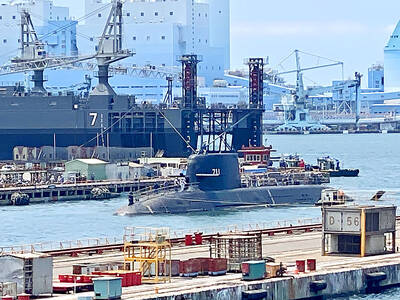
AGING: While Japan has 22 submarines, Taiwan only operates four, two of which were commissioned by the US in 1945 and 1946, and transferred to Taiwan in 1973 Taiwan would need at least 12 submarines to reach modern fleet capabilities, CSBC Corp, Taiwan chairman Chen Cheng-hung (陳政宏) said in an interview broadcast on Friday, citing a US assessment. CSBC is testing the nation’s first indigenous defense submarine, the Hai Kun (海鯤, Narwhal), which is scheduled to be delivered to the navy next month or in July. The Hai Kun has completed torpedo-firing tests and is scheduled to undergo overnight sea trials, Chen said on an SET TV military affairs program. Taiwan would require at least 12 submarines to establish a modern submarine force after assessing the nation’s operational environment and defense
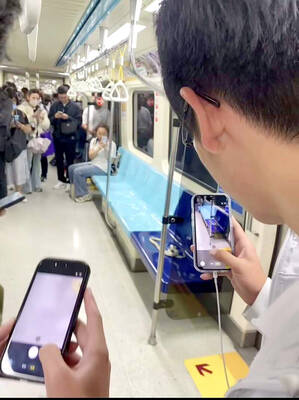
A white king snake that frightened passengers and caused a stir on a Taipei MRT train on Friday evening has been claimed by its owner, who would be fined, Taipei Rapid Transit Corp (TRTC) said yesterday. A person on Threads posted that he thought he was lucky to find an empty row of seats on Friday after boarding a train on the Bannan (Blue) Line, only to spot a white snake with black stripes after sitting down. Startled, he jumped up, he wrote, describing the encounter as “terrifying.” “Taipei’s rat control plan: Release snakes on the metro,” one person wrote in reply, referring
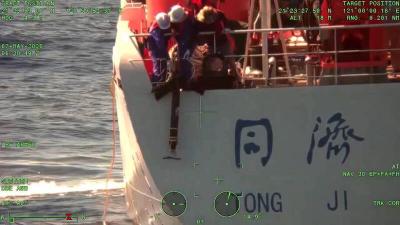
The coast guard today said that it had disrupted "illegal" operations by a Chinese research ship in waters close to the nation and driven it away, part of what Taipei sees a provocative pattern of China's stepped up maritime activities. The coast guard said that it on Thursday last week detected the Chinese ship Tongji (同濟號), which was commissioned only last year, 29 nautical miles (54km) southeast of the southern tip of Taiwan, although just outside restricted waters. The ship was observed lowering ropes into the water, suspected to be the deployment of scientific instruments for "illegal" survey operations, and the coast
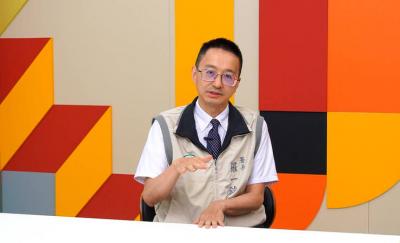
Taiwan’s two cases of hantavirus so far this year are on par with previous years’ case numbers, and the government is coordinating rat extermination work, so there should not be any outbreaks, Centers for Disease Control (CDC) Director-General Philip Lo (羅一鈞) said today in an interview with the Liberty Times (the Taipei Times’ sister newspaper). An increase in rat sightings in Taipei and New Taipei City has raised concerns about the spread of hantavirus, as rats can carry the disease. In January, a man in his 70s who lived in Taipei’s Daan District (大安) tested positive posthumously for hantavirus, Taiwan’s


 RSS
RSS