

The military has seen 20 cases of defections to China since 1949, Minister of National Defense Tang Yao-ming (湯曜明) revealed Wednesday at the legislature.
Among the cases, 17 are with the air force, two with the army and one with the navy, Tang said.
The defections took place between 1949 and 1989, and no case has been reported since.
Tang released the figure at a meeting of the Defense Committee of the legislature in response to inquiries from an opposition lawmaker about the number of defections to China.
Tang did not reveal any further details of the defections and yesterday the Ministry of National Defense refused to elaborate on the minister's figure.
The air force also declined to speak on the issue.
However a book published by Taipei-based Wings of China describes in detail most of the air force's defections.
In 1949 alone, three planes -- a C-47 transport, an AT-6 trainer and a PT-17 trainer -- were flown to China from bases in Chiayi, Kaohsiung and Taichung, according to the book Defections from Formosa. A total of six air-force personnel defected with the three planes.
Over each of the next seven years, excluding 1952, there were two to three defections on a variety of aircraft.
In 1963, Captain Hsu Ting-tse (
In 1981, Major Huang Chih-chen (黃誠) committed the first defection to China in an F-5 series plane. The plane was carrying another pilot, Hsu Chiu-lin (許秋麟). Huang forced Hsu to parachute before landing in Fujian's Fuzhou.
The most recent defection took place in 1989, when Major Lien Hsien-shun (
A defense official, who wished to remain anonymous, said it is hard to pinpoint why these military personnel betrayed their country since none of them had displayed any unusual signs prior to their defection.
"But from some of these defectors, we found clues. Huang Chih-chen, for instance, was heavily in debt for some time before he flew to China," the official said.
"Lin Hsien-shun was found to have serious family problems before he defected. We are not sure of the connections between personal problems and defections. But the finding has helped us prevent defections by plane from happening again," he said.
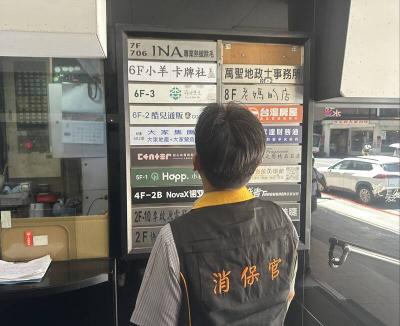
Taipei police today said they have launched an investigation into a well-known Pokemon Trading Card Game store in Taipei's Ximending (西門町) area after its sudden closure, with customers suspecting the owner absconded with up to NT$300 million (US$9.24 million). Little Sheep Card Shop (小羊卡牌社) in Wanhua District (萬華) — which specializes in card purchases and pre-orders, card grading services in Japan, submissions to the US and consignment sales — opened a physical storefront in January. Its three official Line groups, hosting up to 5,000 members each, and social media accounts on Facebook and Instagram all disappeared overnight, with the Ximending
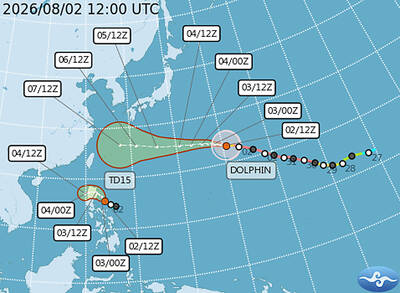
Typhoon Dolphin could bring heavy rain to northern Taiwan later this week if it tracks closer to the nation after passing the Ryukyu Islands, the Central Weather Administration (CWA) said yesterday. The CWA said forecast models agree the storm is to move toward the Ryukyu Islands through Thursday, but diverge over its path after that. One scenario has Typhoon Dolphin passing north of Taiwan, while another has it curving toward the Korean Peninsula if the Pacific high pressure system currently over the East China Sea and Taiwan weakens. Because of the uncertainty, it is still too
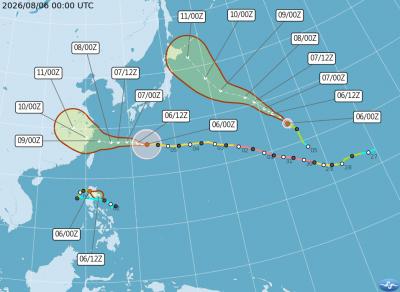
Typhoon Dolphin is expected to enter the East China Sea on Saturday and intensify rainfall in western regions over the weekend as the typhoon’s outer circulation sweeps across the sea north of Taiwan, independent meteorologist Daniel Wu (吳德榮) said today. The eastern coast should prepare for extreme heat caused by downslope winds over the weekend, while southwesterly winds from Monday would bring localized heavy rain to the southwest, he said. As Typhoon Dolphin’s outer bands move past northern Taiwan over the next couple of days, northern, central and southern areas would experience showers tomorrow, he said. Rainfall over the weekend would lead to
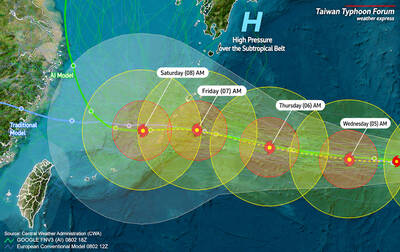
Taiwan could issue a sea warning for Typhoon Dolphin as early as Friday afternoon if the storm maintains its current westward track, the Central Weather Administration (CWA) said yesterday. As of 2pm yesterday, the center of the typhoon was about 2,590km east of Taipei and moving west at 21kph, potentially bringing hazardous conditions to waters surrounding Taiwan by Saturday. Dolphin is expected to reach waters south of the Ryukyu Islands around Saturday, but its track beyond that remains highly uncertain, CWA forecaster Lin Ping-yu (林秉煜) said. The typhoon could either continue moving westward or veer northward, Lin said. A westward track would bring


 RSS
RSS