


“It’s a lonely place,” Stephen Bunting said, as he sat quietly in Alexandra Palace on Saturday last week, the tears welling in his eyes. “If things don’t go right, you can look at your family, your management, you can look at your sponsors, but it’s down to you — and yeah, I’m getting a bit emotional.”
These are stories darts is less keen on telling. Ever since the sport burst out of the smoky pubs and on to television screens, it has possessed a kind of hedonistic, hyperreal quality, a game in which normal guys slip on their superhero suits and take a shot at unimaginable riches, unimaginable fame.
The crowds dress up, get the drinks in and chase the ultimate high. The winners are brought into the news conference room to be feted; the losers slip out through the back door. From its start, darts has been conceived as a vehicle for joy and transformation.
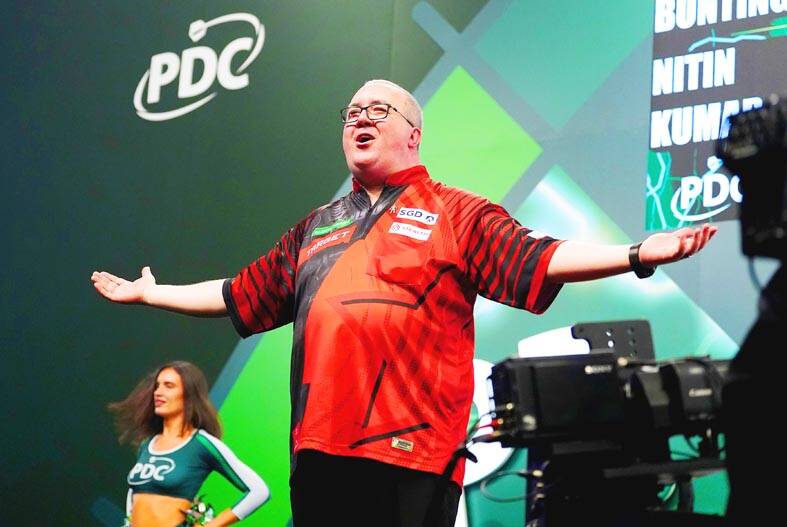
Photo: AP
However, real life has a habit of creeping through the curtains. Increased scrutiny. Social media. Merciless crowds. The temptations of alcohol and substance abuse. A brutal schedule. Time away from family and friends. The absence of a support network.
For many of the performers in the 12-month circus, there is a growing sense that the untold wealth and boundless opportunities come with certain conditions attached.
That even Bunting, one of the most successful and popular characters in the sport, occasionally feels bereft should be a warning sign in itself.
The shocking implosion of Cameron Menzies earlier in the tournament should be another. That Nathan Aspinall used his post-match interview on Saturday last week to warn that “there are a lot of guys suffering” should be another.
Indeed there are times when it is possible to survey the dreamscape of elite darts and wonder how many of them are actually enjoying themselves.
“Just the money,” Gerwyn Price said earlier this year when asked what still motivates him in this sport.
If you delve beneath the surface you will find this is an increasingly common theme: a whole cadre of elite athletes whose sole or primary motivation is to set themselves up for retirement, unable to love the thing they do, but for reasons of self-esteem or finance, unable to leave.
“Everyone thinks it’s all roses and you travel to these amazing places, but it’s very lonely,” Aspinall said in July. “I’m not a big darts fan anymore. I don’t sit at home and watch it. I treat it as my job now, and I’m here to make as much money as I can. I’m the one who has to make the sacrifices so my family can have a good life.”
Of course the money is life-changing these days, even for those who have already made a good living in the sport. This season’s world champion would take home £1 million (US$1.35 million), but given the substantial increases the Professional Darts Corp has made in the lower reaches of the game, even a solid top-64 player can expect to make six figures in prize money from next year, before you factor in the likes of exhibition revenue and commercial deals.
Yet while players in the top 16 get direct entry to most tournaments and thus a generous minimum income, for the rest, there are precious few guarantees, however much work they put in, however many miles they clock up, however much family time they miss.
“The tour is soul-destroying,” world No 41, William O’Connor, said this year. “It’s relentless. You go and play the best darts of your life and still go home and put no money in the bank.”
The darts seen on the lit stages with the bouncing crowds is really just a fraction of the darts that exists. The vast majority of the sport takes place “on the floor,” mass-start tournaments in empty leisure centers and sports halls, where journeyman players desperately try to accumulate enough ranking points to prolong their career.
It is a windowless and often thankless existence. Lose your first game and you go home with nothing.
“I used to look forward to tournaments,” world No. 32 Joe Cullen said. “Now I mainly look forward to being with the lads. There are guys with less talent than me, but who’ve got a hundred times more hunger, but you can’t force that every match, especially not on some random floor event in Leicester.”
Two-time world championship quarter-finalist Callan Rydz is another who struggles with the week-to-week demotivation of the floor.
“I did fall out of love with the game last year,” he said. “I didn’t want to play; I didn’t even want to go there, but in my head, if you just win a couple of games, there’s a good bit of money.”
At the upper echelons of the sport, there are subtly different problems to contend with. More demands — World Series, Euro Tours, Premier League — and more rewards, but often at the expense of the really important things in life.
Michael van Gerwen has said that having children has recalibrated his relationship with the sport, but with a knock-on effect on practice time and motivation.
“A lot of us are dads,” said James Wade, who was knocked out on Monday. “Family is more important, but it’s hard. I’ve really struggled.”
It is important to note that not everyone feels the same way. It is still a good life, a thrilling life and a lucrative one to boot. Most people wake up in the morning and go to jobs about which they feel, at best, ambivalent.
“I don’t see it as a job, I see it as the greatest privilege in the world,” Bunting said.
Darts did not invent depression, the jeering crowd, the social media troll or the crisis of purpose in Western capitalism. Menzies has issues with darts, but he might have had issues without it. The same goes for Rob Cross, who spoke so candidly about his own mental health struggles on Sunday night.
However, at its most extreme, darts can act as an accelerator and a multiplier, putting normal guys under deeply abnormal pressures.
Over the years, many players — too many to be a coincidence — have said they struggled with depression, despondency and even apathy.
“We are no longer dart players, we are elite sportsmen,” Aspinall said.
Perhaps the real test for the sport in the coming years is whether it can match its promise of increased prize money with increased support, increased pastoral care, the recognition above all that these guys are humans and not simply freelance performers.
So what is the secret to a happy life in darts?
World No. 54, Alan Soutar, has an answer, of sorts. Unlike most players on the tour, he maintains a full-time job as a firefighter in Scotland, fitting darts around the rest of his life.
“It’s not my job,” he said. “I’m just here for a jolly. I’m back on night shift tomorrow night, and I’m happy with that.”

Taiwan’s Lee Hao-yu on Friday went 0-for-3 in his MLB debut for the Detroit Tigers against the Boston Red Sox at Fenway Park, becoming the 19th Taiwan-born player to reach the big leagues. The Tigers ultimately lost 1-0 in 10 innings, ending their six-game winning streak. The 23-year-old started at third base and batted eighth for Detroit. He was promoted from Triple-A Toledo ahead of the four-game series against the Red Sox at the latter’s home stadium, replacing injured utility player Zach McKinstry. “Being right-handed, and given our schedule, I think six of the next 12 games are going to

When Paddy Dwyer arrived in China in 1976, crowds jostled to catch a glimpse of him and his companions — the first Western soccer team to play in the country. China was emerging from the chaos of the Cultural Revolution, and on the brink of market reforms that would take the country from economic stagnation to explosive growth. “All we could see was lines of people running beside our bus, trying to look in the windows, to see their first visual of a white person,” he said. “It was all bicycles,” he said. “There were very few cars to be seen.” Dwyer,
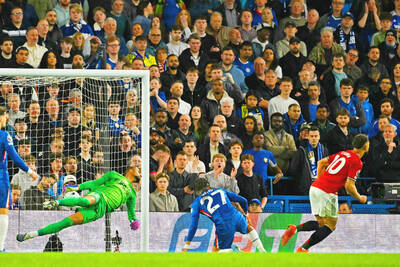
Matheus Cunha on Saturday fired Manchester United toward the UEFA Champions League with a 1-0 win at Chelsea, while Tottenham Hotspur remain in the relegation zone after twice blowing the lead to draw with Brighton & Hove Albion. Chelsea failed to take advantage of a United defense ravaged by injury and suspension as a fourth straight league defeat for the Blues left their Champions League hopes in ruins. United have missed out on the riches of Europe’s elite competition for the past two seasons, but are closing in on a return thanks to an upturn in fortunes under interim manager
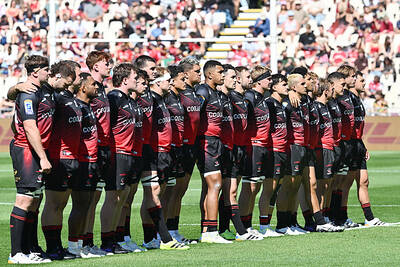
A new NZ$683 million (US$404 million) stadium that was a symbol of Christchurch’s struggle to rebuild after a deadly earthquake struck the New Zealand city is to host its first match tomorrow in front of a sellout crowd. A magnitude 6.2 earthquake killed 185 people in February 2011 and toppled or damaged buildings, including the city’s old Lancaster Park. The stadium, which hosted international rugby and cricket, and was home to the Canterbury Crusaders, was badly damaged and never reopened. It was bulldozed in 2019 and turned into sports fields, leaving the Crusaders without a permanent home. Government funding for a new stadium was


 RSS
RSS