


For female e-sports players in China, mastering the game is just the first hurdle to carving out a space for themselves in the male-dominated field.
To compete, casually but especially professionally, they must also overcome vicious trolls, gender norms, familial expectations and limited opportunities.
China has become one of the world’s largest markets for e-sports. Its teams participate in the top tier of international competitions, despite state media once dubbing video games “spiritual opium.”

Photo: AFP
E-sports in China generated more than US$3.7 billion in revenue last year and attracted 490 million viewers to sell-out tournaments with lucrative prize pools and top players, an industry report by the China Audio-Video and Digital Publishing Association showed.
However, more than 90 percent of the 195 professional e-sports clubs in China are exclusively for men, by industry insiders’ estimation.
“People wouldn’t recognize my skills, because I’m a girl,” professional e-sports player Liu Anqi, 23, said after a game with her all-women club RE-girls.

Photo: AFP
“I wanted to prove them wrong and earn the title of professional player, so they couldn’t say I cheated or wasn’t good enough,” she said.
Unsolicited, malicious comments follow them everywhere: their skills and strategies belittled, their voices and appearances picked on — even their choice of character or usernames can make them targets.
“If you make a mistake, they say you don’t deserve to play professionally,” Killer Angel Girl E-Sports Club (KA) player Wang Qianna said.
Even “Liooon” Li Xiaomeng, the country’s most prominent female e-sports player, was questioned about whether her boyfriend was secretly playing for her.
Female gamers also face misogynistic accusations that they use sex to get promotions.
“I just throw these insults right back at them,” Wang said.
The challenges extend beyond online abuse. Structural but often unspoken inequalities, like a lack of recruitment opportunities for women, make it harder for female players to progress.
Liu said a lower-tier club rejected her for a rookie training program — despite her clear over-qualification — seemingly because she was a woman.
“They asked me why I only had experience in women’s tournaments,” she said.
That reluctance by elite and more established clubs to train women has led many to start clubs of their own.
It was like “wanting to punch but finding no target,” player Wang Fei said.
“E-sports was basically just for men,” KA coach Chen Bo said, adding that official tournaments for women only began to emerge in the past few years.
Although the times are slowly changing, female players still see fewer opportunities and receive less recognition than their male counterparts.
The prize pool for last year’s Honor of Kings Women’s Open in December amounted to US$140,000. By comparison, last year’s inaugural King Pro League Grand Finals, the most prestigious championship for the same e-sports title, handed out US$9.6 million between 12 male teams.
Liu said most female players are still “generating electricity for love” — meaning they play for passion rather than financial gain.
With so few examples of prominent players, those who do seek a career in e-sports find it much harder to convince their families that what they do is worthwhile.
“I really understand nothing about this e-sports industry,” said Liu Anqi’s father, Liu Yuanjun, who did not support his daughter’s career choice at first.
He has slowly come around, but still not watched any of her professional matches.
The financial solution lies in increased investment from big gaming companies and more supportive policies from authorities, Liu Anqi and Chen said.
“Only with substantial prize money can clubs invest in top players and coaches,” she said.
“If the prize money is only US$135,000 or so, and there are only two tournaments a year or ... none at all, who will spend the money running a club?” Chen asked.
On a chilly December evening, Liu Anqi and her team battled rivals in the semi-final of last year’s Women’s Open for Honor of Kings — one of the world’s biggest mobile games.
Her opponents, the blue team, inched through the last line of defense and the red bar indicating the health of her team’s crystal became shorter and shorter until it exploded — game over.
Liu Anqi’s team lost 3:0, but she was unfazed.
“There will be next year and many other opportunities to come,” she said as she processed the defeat.
“What others think doesn’t matter as much anymore. Winning a championship isn’t as important as before,” she said. “What matters is finding self-validation.”

Yu Yao-hsing on Tuesday nabbed Taiwan’s only goal in the final round of qualifiers for the 2027 AFC Asian Cup, as they fell 3-1 to Sri Lanka at Taipei Municipal Stadium. Early goals from Sri Lanka in the first half left Taiwan struggling to get on the board, and Christopher Tiao’s own goal at 53 minutes sealed the team’s fate in the third round of qualifiers. While acknowledging that the defeat, Taiwan’s sixth in Group D, was disappointing, head coach Matt Ross said he saw reasons to stay positive about the team’s development. “There were lots of positive signs in terms of the
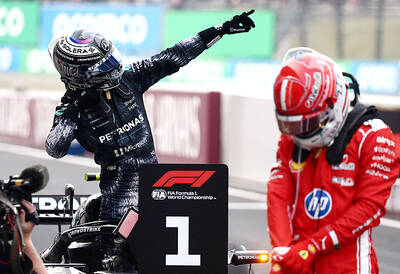
Mercedes’ Kimi Antonelli yesterday vowed to “keep raising the bar” after winning the Japanese Grand Prix to become the youngest driver in Formula One history to lead the championship standings. The 19-year-old Italian took advantage of a mid-race safety car to jump into the lead after a dreadful start from pole position, crossing the line ahead of McLaren’s Oscar Piastri and Ferrari’s Charles Leclerc. Antonelli’s Suzuka victory came two weeks after the first grand prix win of his career in China, and sent him top of the championship standings after three races, nine points ahead of team-mate George Russell. Mercedes are struggling to

INDIGESTION: Italy failed to qualify for the World Cup for a third consecutive time after a 4-1 defeat to Bosnia on penalties in a loss Gattuso said was ‘difficult to digest’ Coach Graham Arnold on Tuesday challenged his players to “shock the world” after Iraq became the 48th and final team to qualify for the FIFA World Cup with a nerve-shredding 2-1 win over Bolivia in an intercontinental playoff in Mexico, as Bosnia and Herzegovina, Turkey, the Czech Republic, Sweden and the Democratic Republic of the Congo (DRC) also secured their places at the finals. Iraq, whose preparations were disrupted by the war in the Middle East, sealed their first appearance at the finals in 40 years and are to play in Group I against France, Senegal and Norway. Goals from Ali al-Hamadi

Teng Kai-wei, the only Taiwanese player on an opening-day roster in this year’s Major League Baseball (MLB) season, took his first win of the year with the Houston Astros in his season debut. Teng entered in relief in the top of the fifth inning against the Los Angeles Angels on Saturday, with the Astros trailing 5-0. He pitched 2-1/3 scoreless innings with two strikeouts, as Houston scored 11 runs during his outing to snatch an 11-9 comeback victory. The win is the Astros’ first of the season and the third of Teng’s MLB career. “It’s my first time pitching for the Astros, so


 RSS
RSS