


For King Faisal, a 20-year-old winger from Ghana, the invitation to move to Brazil to play soccer “was a dream.”
“I believed when I came here, it would help me change the life of my family and many other people,” he said in Sao Paulo.
For the past year and a half, he has been playing on the under-20s squad for Sao Paulo FC, one of South America’s most prominent clubs.
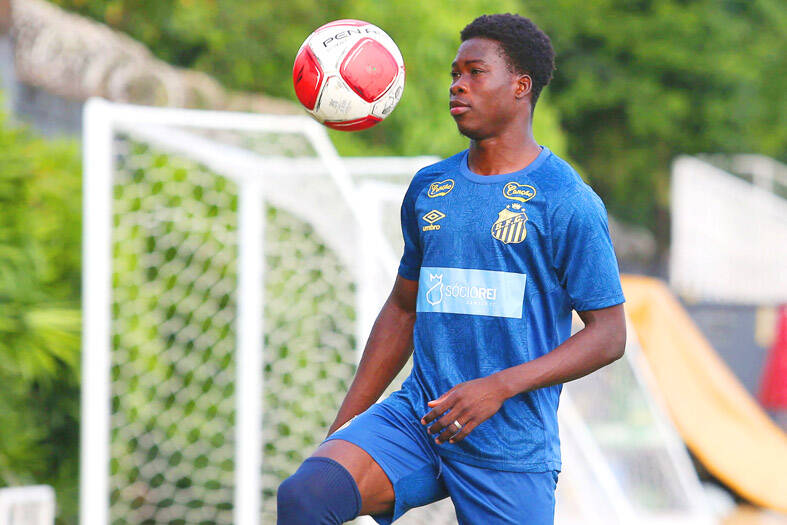
Photo: AFP
He and a small number of other Africans are tearing across pitches in a country known as the biggest producer and exporter of soccer stars in the world, from Pele to Neymar.
For at least one, the transformative opportunity has also been tinged by racism.
In Brazil, an incubator for star players bought up by Europe’s moneyed elite clubs, the benefit in return is new blood for its lower divisions, with players who are fiercely committed.
The Africans also are paid less than players from neighboring Argentina and Uruguay.
European sides also are increasingly showcasing talented Africans, burnishing their appeal and helping demolish longstanding barriers in Brazilian clubs against foreign talent.
“It’s about intensity,” said Ricardo Manfrim Goncalves, of the Quality agency representing players. “They are going to commit more than what even a Brazilian player will.”
The agent said that the young African players — usually strikers — are frequently not of interest to the European clubs, and are seen as contributing to offset what he called a “decline” in Brazilian lower-division teams.
Although the African transfer trend is relatively minor for the moment, it has picked up since last year, adding a new aspect to the sport in Brazil, where Pele stills holds demigod status, two years after dying at the age of 82.
Brazilian scouts regularly scour Africa for promising young players, finding them in Angola, Ghana, Ivory Coast and Senegal.
Since last year, at least a dozen have been signed by or tried out for youth squads, ranging from first and second-division teams to those that compete only in state championships, Agence France-Presse tally showed.
At the professional level, they include Angolan center-back Bastos, with Botafogo, which made it through to the Nov. 30 final of the Copa Libertadores. There is also Congolese winger Yannick Bolasie with Criciuma, and Gambian forward Yusupha Njie with Santos FC, the club that brought Pele and Neymar into the limelight.
For those taking up the call, the reality of moving to Brazil — the country with the biggest population of African descendants outside Africa — has its problems.
Beyond the issues of language, separation from family members and cultural differences — including, for some Muslim Africans, finding themselves in a majority-Catholic nation — there is racism.
Brazil’s classist society, in which people of European descent are often perceived as of higher status than those of African descent, can make the transition difficult.
Osvaldo Yamba Kinanga, who arrived in Sao Paulo nine years ago from Angola with his family and now plays in Santos’ under-15s, said he was initially buffeted by the racism directed at him.
“A lot of people underestimate us,” he said. “I’m proud of being African — we’re more competitive. I don’t want to speak badly of the Brazilians, but some just relax because they’re born with the ability to play football.”
Today a naturalized Brazilian citizen, Yamba Kinanga said he hopes to one day have the choice of playing for the national side of either Angola or Brazil.
For new arrivals, the financial boost of playing in Brazil can be substantial. Some of their Brazilian peers earn monthly salaries in the thousands of dollars.
“There are players aged 11, 12, 13 who are sometimes earning absurd amounts” that can “warp” their development, Manfrim Goncalves said.
For many of the African teens, the chance to develop their careers in the spiritual home of the beautiful game is the overriding appeal.
“The whole world knows Brazil as the land of football,” said Coulibaly Yeko Appolinaire, a 16-year-old who was captain of Ivory Coast’s national team in his category before starting five months ago with Santos.
His Portuguese is still coming along, but his ambition to make it big in Brazil is plain.
“We used to sit at home and watch the great players on the television. Now we’d love to be like those great players. That’s my dream,” he said.

NO HARD FEELINGS: Taiwan’s Lin Hsiang-ti and Indonesia’s Dhinda Amartya Pratiwi embraced after fighting to a tense and rare 30-29 final game in their Uber Cup match The Taiwanese men’s team on Wednesday fought back from the brink of elimination to defeat Denmark in Group C and advance to the quarter-finals of the Thomas Cup, while the women’s team were to face South Korea after press time last night in the Uber Cup quarter-finals in Horsens, Denmark. In the first match, Taiwan’s top shuttler Chou Tien-chen faced a familiar opponent in world No. 3 Anders Antonsen. It was their 16th head-to-head matchup, with the Dane taking his fourth victory in a row against former world No. 2 Chou, winning 21-14, 13-21, 21-15 in 1 hour, 22 minutes. The

Jannik Sinner continued his quest to become the first man in history to win five Masters 1000 tournaments in a row with a 6-2, 6-3 victory over Danish qualifier Elmer Moller at the Madrid Open on Sunday. The world leader extended his winning streak to 19 matches, a run that began early March in Indian Wells, and he has captured 24 consecutive victories at the Masters 1000 level, dating back to the Paris Masters last October. Searching for a maiden title at this level on clay, Sinner advanced to the round of 16 at the Caja Magica with a 77-minute performance against

When Paddy Dwyer arrived in China in 1976, crowds jostled to catch a glimpse of him and his companions — the first Western soccer team to play in the country. China was emerging from the chaos of the Cultural Revolution, and on the brink of market reforms that would take the country from economic stagnation to explosive growth. “All we could see was lines of people running beside our bus, trying to look in the windows, to see their first visual of a white person,” he said. “It was all bicycles,” he said. “There were very few cars to be seen.” Dwyer,
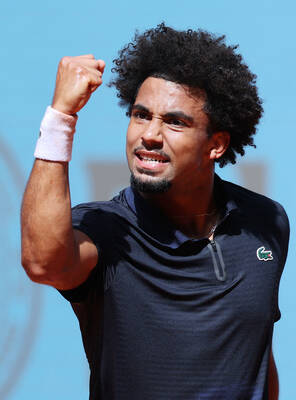
Tennis players are facing an unexpected opponent at the Madrid Open. A stomach virus or food poisoning has affected Iga Swiatek, Coco Gauff, Marin Cilic and others, raising concerns. World No. 1 Aryna Sabalenka avoided an upset by Naomi Osaka on the court on Monday and said she is trying to avoid illness by sticking to a diet of chicken breasts, rice and salad. The rumor among the players was bad shrimp tacos were to blame. Sabalenka knocked on wood for luck and said, “So far, so good. I heard that I have to avoid those tacos,” she laughed, adding “I stick to the


 RSS
RSS