


NT$500 bills carry the image of Little League baseball players in a moment of glory. That’s how serious Taiwan is about its favorite game.
At a time when Taiwan’s professional baseball elite are shaken by game-fixing allegations, the nation stays devoted to its most popular sport because it is much more than just a pastime.
“Baseball is an important part of Taiwanese identity. People are proud of their baseball,” said Scott Simon, an anthropologist at the University of Ottawa who has done extensive research in Taiwan.

PHOTO: AFP
Taiwan is a highly diverse society but collective memories about baseball form part of the glue that holds it together.
“I remember when I was a little girl, perhaps five or six years old,” said Candy Lin, now 40, about the 1970s heyday of Taiwan’s participation in the Little League, a US-based organization that brings together players aged five to 18 from across the world for tournaments.
“When they were playing overseas, we’d get up in the middle of the night because of the time difference to watch our heroes live on TV,” she said.
Taiwan is not recognized by the vast majority of nations due to China’s efforts to isolate it internationally, and in this situation baseball is a crucial way to make its presence known.
The theory is that no society that can win the Little League World Series 16 times can be a nonentity, as Beijing claims.
One of the darkest moments in Taiwan’s history came in 1971, when the Republic of China on Taiwan was forced to hand over its seat in the UN to China.
“In the years right afterwards, baseball helped restore pride,” said Yu Chun-wei, a baseball expert at the National Taiwan Sport University in Taichung.
“Whenever Taiwan won the Little League, it meant enormous national confidence,” said Yu, who has written a book about the history of baseball in Taiwan.
When Taiwan was first introduced to baseball in the early 20th century, it was not a direct import from the US but came via Japanese colonizers.
The Japanese departed at the end of World War II in 1945, but they left behind baseball, much the way the British made cricket one of their lasting legacies in South Asia.
The Chinese Nationalist Party, which took over from the Japanese, were eager to eradicate most vestiges of the colonial period but soon gave up on baseball, finding it too firmly rooted.
Even so, the lukewarm Chinese attitude to the sport is reflected in the family backgrounds of most elite players even today.
“The majority of baseball players are Taiwanese, not descendants of people from the mainland [who fled China in the late 1940s],” Yu said.
Baseball underlines the differences between Taiwan and China, unlike the other globally successful US sport, basketball.
“Baseball is especially Taiwanese. Basketball is the opposite, because it’s also a big sport in the mainland. Basketball creates a commonality,” Simon said.
For all its popularity, Taiwanese baseball has had a tumultuous history, and the suspected game-fixing driven by high stakes illegal gambling now rattling the sport is just the latest in a series of scandals.
Prosecutors last month began investigations into alleged game-fixing in Taiwan’s professional league, the fifth time that a scandal of this type has emerged.
At least a dozen players have been named as defendants, while reports have pointed to links with notorious members of the island’s criminal underworld.
A legalized sports lottery began in May last year and sales reached nearly NT$8 billion (US$247 million) from January to July this year — with 60 percent of that accounted for by baseball.
Last year, Taiwan’s baseball league banned the dmedia T-Rex team over match-fixing allegations implicating the team’s management and three players, among others.
A scandal that erupted in 1996, the worst in the history of the sport in Taiwan, led to the disbanding of the China Times Eagles.
Despite the wave of bad news, observers believe the sport still has a future in Taiwan, citing the way it continues to attract genuine enthusiasm at the grassroots level.
“You see townships organize baseball games for the villages. Everyone loves it. It brings the communities together in a meaningful way,” Simon said.

Yu Yao-hsing on Tuesday nabbed Taiwan’s only goal in the final round of qualifiers for the 2027 AFC Asian Cup, as they fell 3-1 to Sri Lanka at Taipei Municipal Stadium. Early goals from Sri Lanka in the first half left Taiwan struggling to get on the board, and Christopher Tiao’s own goal at 53 minutes sealed the team’s fate in the third round of qualifiers. While acknowledging that the defeat, Taiwan’s sixth in Group D, was disappointing, head coach Matt Ross said he saw reasons to stay positive about the team’s development. “There were lots of positive signs in terms of the
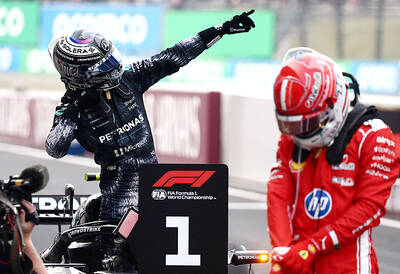
Mercedes’ Kimi Antonelli yesterday vowed to “keep raising the bar” after winning the Japanese Grand Prix to become the youngest driver in Formula One history to lead the championship standings. The 19-year-old Italian took advantage of a mid-race safety car to jump into the lead after a dreadful start from pole position, crossing the line ahead of McLaren’s Oscar Piastri and Ferrari’s Charles Leclerc. Antonelli’s Suzuka victory came two weeks after the first grand prix win of his career in China, and sent him top of the championship standings after three races, nine points ahead of team-mate George Russell. Mercedes are struggling to

INDIGESTION: Italy failed to qualify for the World Cup for a third consecutive time after a 4-1 defeat to Bosnia on penalties in a loss Gattuso said was ‘difficult to digest’ Coach Graham Arnold on Tuesday challenged his players to “shock the world” after Iraq became the 48th and final team to qualify for the FIFA World Cup with a nerve-shredding 2-1 win over Bolivia in an intercontinental playoff in Mexico, as Bosnia and Herzegovina, Turkey, the Czech Republic, Sweden and the Democratic Republic of the Congo (DRC) also secured their places at the finals. Iraq, whose preparations were disrupted by the war in the Middle East, sealed their first appearance at the finals in 40 years and are to play in Group I against France, Senegal and Norway. Goals from Ali al-Hamadi

Teng Kai-wei, the only Taiwanese player on an opening-day roster in this year’s Major League Baseball (MLB) season, took his first win of the year with the Houston Astros in his season debut. Teng entered in relief in the top of the fifth inning against the Los Angeles Angels on Saturday, with the Astros trailing 5-0. He pitched 2-1/3 scoreless innings with two strikeouts, as Houston scored 11 runs during his outing to snatch an 11-9 comeback victory. The win is the Astros’ first of the season and the third of Teng’s MLB career. “It’s my first time pitching for the Astros, so


 RSS
RSS