


Temporary housing being built for the 2010 Vancouver Olympics will be converted after the Winter Games into affordable residences for the elderly and homeless in six communities in the province.
The Olympic committee, its sponsors RONA and Britco, and an unnamed major donor are covering the US$18.2 million cost to build the modular homes in Whistler, which will provide space for 640 athletes. The province will pay about US$20 million to turn the housing into 156 apartments.
“It’s never happened that there’s been an Olympic facility that has been taken and used in this kind of manner in a variety of communities,” British Columbia Premier Gordon Campbell said on Tuesday.
“We want everyone in the province to know that this is their Olympics ... this is a legacy for people outside of the immediate vicinity where the Olympics is taking place,” he said.
Olympic organizers announced this year that to fulfill the requirements for housing athletes in Whistler, they would have to turn to a temporary facility because the town wasn’t prepared to build more permanent homes for the Winter Games.
The 320 temporary units being built in Whistler are on top of permanent space for about 2,300 athletes and officials being built by the mountain community as part of its commitment to the event.
“We went from this temporary solution to this solution that will provide a spectacular village addition for the games in Whistler but a wonderful asset and legacy for the community after the games,” said John Furlong, the chief executive officer of the Olympic organizing committee.

When Paddy Dwyer arrived in China in 1976, crowds jostled to catch a glimpse of him and his companions — the first Western soccer team to play in the country. China was emerging from the chaos of the Cultural Revolution, and on the brink of market reforms that would take the country from economic stagnation to explosive growth. “All we could see was lines of people running beside our bus, trying to look in the windows, to see their first visual of a white person,” he said. “It was all bicycles,” he said. “There were very few cars to be seen.” Dwyer,
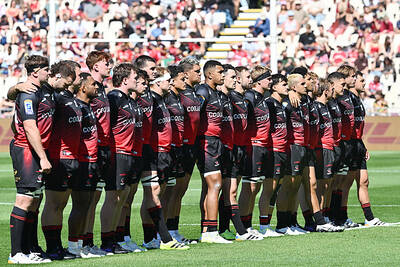
A new NZ$683 million (US$404 million) stadium that was a symbol of Christchurch’s struggle to rebuild after a deadly earthquake struck the New Zealand city is to host its first match tomorrow in front of a sellout crowd. A magnitude 6.2 earthquake killed 185 people in February 2011 and toppled or damaged buildings, including the city’s old Lancaster Park. The stadium, which hosted international rugby and cricket, and was home to the Canterbury Crusaders, was badly damaged and never reopened. It was bulldozed in 2019 and turned into sports fields, leaving the Crusaders without a permanent home. Government funding for a new stadium was

Some of Clearlake Capital Group’s largest investors are growing increasingly concerned about how much time the company’s co-founders are spending on sports investments as they have struggled to complete the fundraising for the private equity firm’s latest flagship fund. One of Clearlake’s co-founders, Behdad Eghbali, has been spending what some investors described as a disproportionate amount of time on the firm’s investment in Chelsea Football Club in recent months. Now, co-founder Jose E. Feliciano and his wife, Kwanza Jones, are nearing a record US$3.9 billion deal to acquire the San Diego Padres. That personal investment by Feliciano has set off the latest
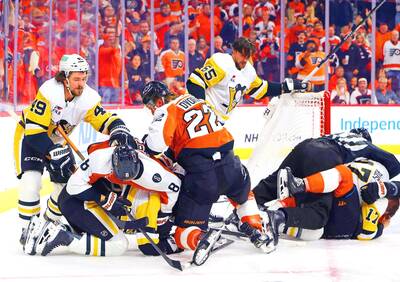
The Philadelphia Flyers and the Pittsburg Penguins on Wednesday put a squeeze on the penalty box in Game 3 of their NHL playoff series — with 11 players cramped inside their designated punishment areas. Each could have snapped a team photo after a melee broke out in the second period of the Flyers’ 5-2 win over the Penguins in their Eastern Conference first-round series. “It was a party in there,” penalized Flyers defenseman Nick Seeler said. The celebration extended into the joyous locker room after the Flyers took a 3-0 series lead. Penguins forward Bryan Rust slammed Travis Konecny to the ice behind the


 RSS
RSS