


South Korean boxer Choi Yoi-sam, who lost consciousness after winning his WBO intercontinental flyweight title fight last week, has been declared brain dead, a hospital spokesman said yesterday.
A hospital committee pronounced Choi brain dead at 1pm after conducting a series of brain tests, said Ko Seung-kwan, a spokesman at Asan Medical Center in Seoul. Choi had been in a coma since shortly after winning the fight against Indonesian challenger Heri Amol in Seoul on Dec. 25.
The 33-year-old South Korean was knocked down shortly before the end of the 12th and final round of the bout but got back up and was declared the winner on points before collapsing.
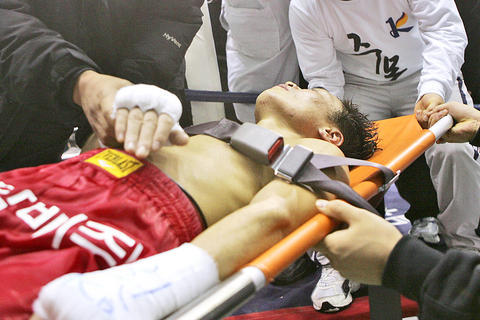
PHOTO: AP
Doctors were scheduled to remove Choi's organs for transplantation last night after getting approval from the prosecutors' office -- a legal requirement before organs can be removed -- Ko said.
Choi's family requested that he be officially pronounced dead following the removal of the organs, according to the hospital.
"He has lived a hard life," South Korea's Yonhap news agency quoted Oh Soon-hui, Choi's 65-year-old mother, as saying. "I hope he has gone to a peaceful place."
She could not immediately be reached for comment.
Choi was the WBC light flyweight world champion from Oct. 1999 to July 2002, and fought for the WBA light flyweight world title in Sept. 2004.
South Korea's boxing commission had no immediate comment.
In 1982, South Korean lightweight Kim Duk-koo died four days after being knocked out by Ray "Boom Boom" Mancini in a WBA lightweight world title fight in Las Vegas. Kim was knocked out in the 14th round, prompting the WBC to reduce the length of its bouts from 15 to 12 rounds, with the other major sanctioning bodies following later.
Another South Korean fighter, bantamweight Lee Tong-choon, died of acute swelling of the brain in 1995, four days after losing consciousness following a Japanese title fight against Setsuo Kawamasu in Tokyo.
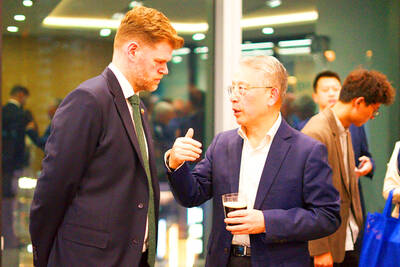
When Paddy Dwyer arrived in China in 1976, crowds jostled to catch a glimpse of him and his companions — the first Western soccer team to play in the country. China was emerging from the chaos of the Cultural Revolution, and on the brink of market reforms that would take the country from economic stagnation to explosive growth. “All we could see was lines of people running beside our bus, trying to look in the windows, to see their first visual of a white person,” he said. “It was all bicycles,” he said. “There were very few cars to be seen.” Dwyer,
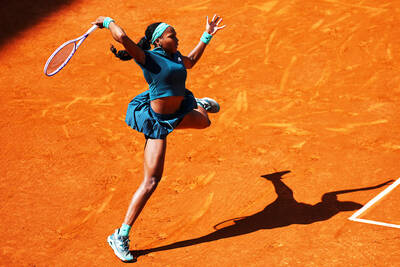
Jannik Sinner continued his quest to become the first man in history to win five Masters 1000 tournaments in a row with a 6-2, 6-3 victory over Danish qualifier Elmer Moller at the Madrid Open on Sunday. The world leader extended his winning streak to 19 matches, a run that began early March in Indian Wells, and he has captured 24 consecutive victories at the Masters 1000 level, dating back to the Paris Masters last October. Searching for a maiden title at this level on clay, Sinner advanced to the round of 16 at the Caja Magica with a 77-minute performance against

Some of Clearlake Capital Group’s largest investors are growing increasingly concerned about how much time the company’s co-founders are spending on sports investments as they have struggled to complete the fundraising for the private equity firm’s latest flagship fund. One of Clearlake’s co-founders, Behdad Eghbali, has been spending what some investors described as a disproportionate amount of time on the firm’s investment in Chelsea Football Club in recent months. Now, co-founder Jose E. Feliciano and his wife, Kwanza Jones, are nearing a record US$3.9 billion deal to acquire the San Diego Padres. That personal investment by Feliciano has set off the latest
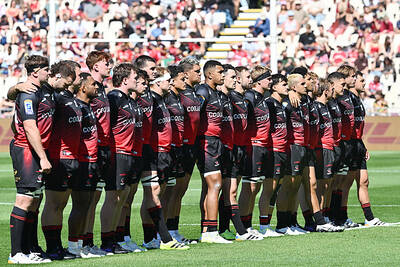
A new NZ$683 million (US$404 million) stadium that was a symbol of Christchurch’s struggle to rebuild after a deadly earthquake struck the New Zealand city is to host its first match tomorrow in front of a sellout crowd. A magnitude 6.2 earthquake killed 185 people in February 2011 and toppled or damaged buildings, including the city’s old Lancaster Park. The stadium, which hosted international rugby and cricket, and was home to the Canterbury Crusaders, was badly damaged and never reopened. It was bulldozed in 2019 and turned into sports fields, leaving the Crusaders without a permanent home. Government funding for a new stadium was


 RSS
RSS