


The Control Yuan yesterday censured the Environmental Protection Administration (EPA) for its failure to promote policies to reduce, collect and reuse leftover food over the past decade.
To prove its point, it cited that the amount of daily treated organic compost collected has dropped from 310 tonnes in 1990 to just two tonnes last year. Control Yuan Members Lin Shih-chi (林時機) and Kuo Shih-chi (郭石吉) said that the dramatic drop is due to the EPA's failure to promote uniformity in disposing of the refuse and public awareness of food waste disposal issues.
EPA officials, however, told the Taipei Times yesterday that evaluating the effectiveness of promoting the recycling of leftover food by looking only at the amount of daily treated organic compost was insufficient.
"Treated leftovers can be used as fertilizer or feeding stuffs for pigs," Chang Hoang-jang (
Chang said that food leftovers from several sites had indeed been reused -- as feeding stuffs for pigs.
"We still have many difficulties to conquer, including offering better food waste storage facilities, making special garbage trucks available, building more well-designed leftover treatment facilities and expanding markets for feeding stuffs [for pigs] made from leftovers," Chang said.
EPA officials said that they have worked hard to promote recycling of food waste not only in rural sites but also in urban areas. For example, Taichung City recycles 40 to 50 tonnes of food leftovers each day and use most of it for pig feed.
"Taichung City's success in recycling leftovers can be attributed to the offer of a lottery ticket for each bucket of leftovers to residents who recycle it," said Kao Yi-ming (
Kao said that the EPA would be promoting new strategies in Changhua and Yunlin counties this month and plans are to recycle 60 to 100 tonnes of leftovers in each county per day.
EPA officials said that local governments should have tried harder to increase residents' awareness that food leftovers are an important national resource.
The Countol Yuan also censured the environmental protection departments of several local governments yesterday, including Hsinchu County, Yunlin County, Chiayi City and Chiayi County, for officials' passive attitude toward recycling food waste.
Countol Yuan Members said that some officials blame a lack of money and manpower for the failure to promote the recycling of food leftovers. To prevent dishonest merchants from refining cooking oil from leftovers, some officials only pay attention to cases of the inappropriate recycling of leftovers reported by residents or schools rather than actively tracing food waste.
Control Yuan Members yesterday said that the EPA's failure to unify the way garbage is classified has resulted in confusion on the part of residents over how to recycle food leftovers.
Countrol Yuan Members said some counties classify garbage into recyclable and non-recyclable, while others classify garbage into flammable and nonflammable. Some counties classify recyclable garbage into three categories and others into five. Countrol Yuan members said that even colors on barrels for recyclable garbage had not been unified.
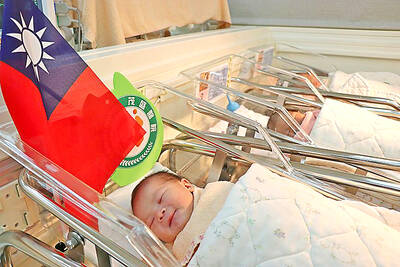
AGING: As of last month, people aged 65 or older accounted for 20.06 percent of the total population and the number of couples who got married fell by 18,685 from 2024 Taiwan has surpassed South Korea as the country least willing to have children, with an annual crude birthrate of 4.62 per 1,000 people, Ministry of the Interior data showed yesterday. The nation was previously ranked the second-lowest country in terms of total fertility rate, or the average number of children a woman has in her lifetime. However, South Korea’s fertility rate began to recover from 2023, with total fertility rate rising from 0.72 and estimated to reach 0.82 to 0.85 by last year, and the crude birthrate projected at 6.7 per 1,000 people. Japan’s crude birthrate was projected to fall below six,

Conflict with Taiwan could leave China with “massive economic disruption, catastrophic military losses, significant social unrest, and devastating sanctions,” a US think tank said in a report released on Monday. The German Marshall Fund released a report titled If China Attacks Taiwan: The Consequences for China of “Minor Conflict” and “Major War” Scenarios. The report details the “massive” economic, military, social and international costs to China in the event of a minor conflict or major war with Taiwan, estimating that the Chinese People’s Liberation Army (PLA) could sustain losses of more than half of its active-duty ground forces, including 100,000 troops. Understanding Chinese
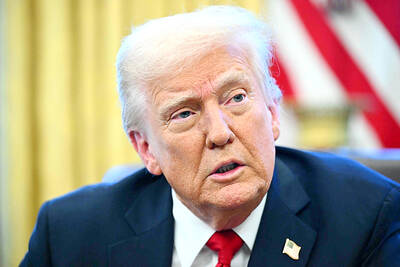
US President Donald Trump in an interview with the New York Times published on Thursday said that “it’s up to” Chinese President Xi Jinping (習近平) what China does on Taiwan, but that he would be “very unhappy” with a change in the “status quo.” “He [Xi] considers it to be a part of China, and that’s up to him what he’s going to be doing, but I’ve expressed to him that I would be very unhappy if he did that, and I don’t think he’ll do that. I hope he doesn’t do that,” Trump said. Trump made the comments in the context
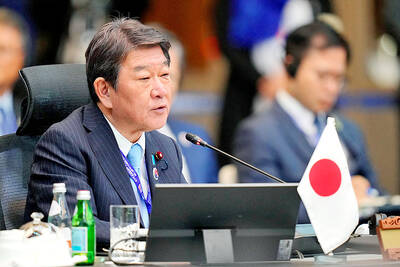
SELF-DEFENSE: Tokyo has accelerated its spending goal and its defense minister said the nation needs to discuss whether it should develop nuclear-powered submarines China is ramping up objections to what it sees as Japan’s desire to acquire nuclear weapons, despite Tokyo’s longstanding renunciation of such arms, deepening another fissure in the two neighbors’ increasingly tense ties. In what appears to be a concerted effort, China’s foreign and defense ministries issued statements on Thursday condemning alleged remilitarism efforts by Tokyo. The remarks came as two of the country’s top think tanks jointly issued a 29-page report framing actions by “right-wing forces” in Japan as posing a “serious threat” to world peace. While that report did not define “right-wing forces,” the Chinese Ministry of Foreign Affairs was


 RSS
RSS