


Jane Goodall, the pioneering scientist whose groundbreaking research changed our understanding of chimpanzees and reshaped the study of animal behavior, has died at the age of 91. The Jane Goodall Institute confirmed that she passed away from natural causes in California in October 2025 while on a speaking tour.
Born in England, Goodall gained international fame in the 1960s after traveling to Tanzania to study wild chimpanzees under the guidance of anthropologist Louis Leakey. At the time, she had no formal scientific training, yet she lived among the animals and recorded their behavior in remarkable detail. Her discovery that chimpanzees make and use tools challenged the long-held belief that tool-making was unique to humans.
Her observations revealed that chimpanzees have rich emotional lives, form strong social bonds, and sometimes engage in violent conflicts—findings that changed how scientists viewed both animals and humans. Reflecting on her influence, Robert Seyfarth, an expert in primate behavior, said that Goodall’s careful, detailed observations helped inspire a whole generation — including himself—to study primates.
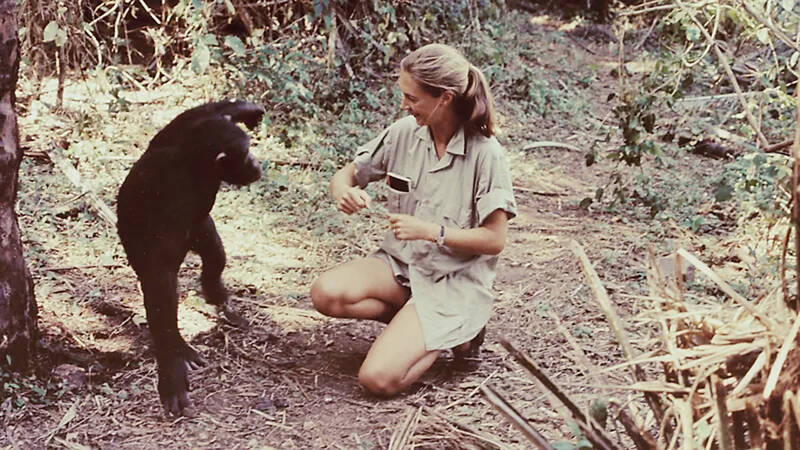
Photo: Ivy English 照片:常春藤解析英語
As deforestation and poaching increasingly threatened chimpanzee populations, Goodall shifted her focus to conservation. She founded the Jane Goodall Institute in 1977 and spent the rest of her life promoting animal welfare and environmental protection.
From a young woman quietly observing apes in the forest to a global voice for wildlife and the planet, Jane Goodall inspired millions. As her institute wrote online, “Dr. Jane Goodall went into the forest to study the remarkable lives of chimpanzees — and she came out of the forest to save them.”
珍古德是一名開創性的科學家,其突破性的研究改變了我們對黑猩猩的了解,並重塑了動物行為的研究,她於九十一歲逝世。國際珍古德協會證實她於 2025 年十月巡迴演講的途中,於加州因自然原因與世長辭。
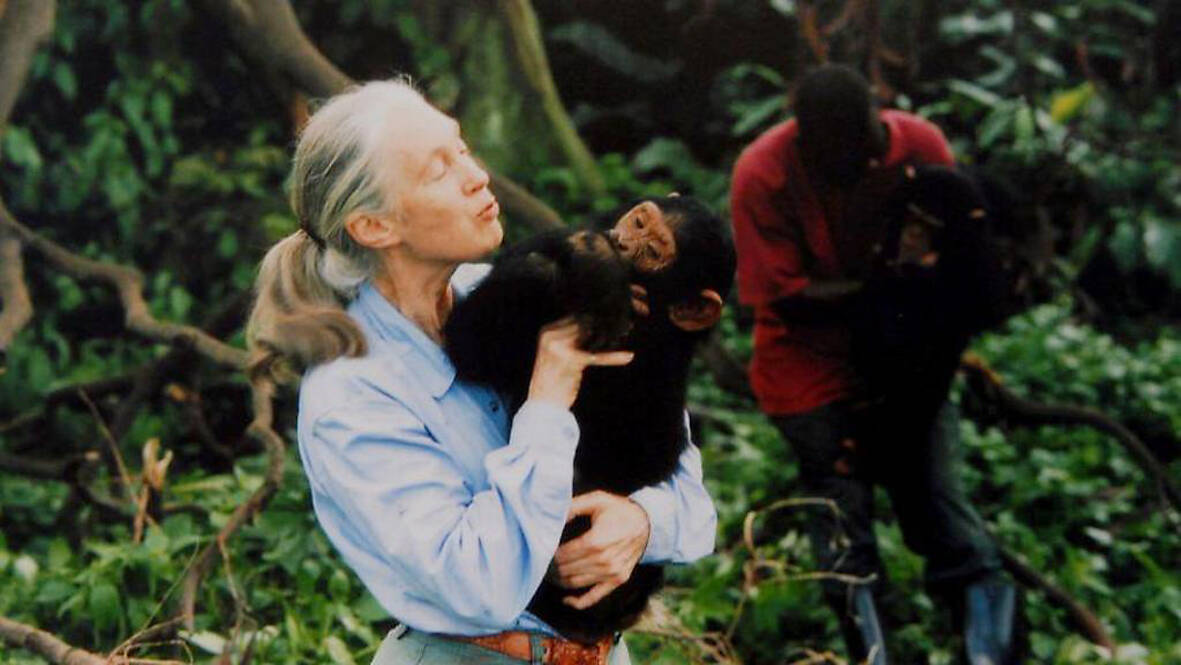
Photo: Ivy English 照片:常春藤解析英語
珍古德出生於英國,在人類學家路易斯‧利基的指導下,前往坦尚尼亞研究野生黑猩猩後,於 1960 年代獲取國際知名度。當時,她並未經過正式的科學訓練,不過她與黑猩猩住在一起,且極為詳細地記錄了牠們的行為。她發現黑猩猩會製作並使用工具,這一點挑戰了長久以來認為製作工具是人類獨有行為的想法。
她的觀察透露了黑猩猩有著豐富的情緒生活、會建立緊密的社會連結,有時還會涉入暴力衝突——這些發現改變了科學家看待動物與人類的方式。靈長類行為專家羅伯特‧塞法斯反思起她的影響,表示珍古德謹慎仔細的觀察,幫助啟發了包含他在內的整個世代來研究靈長類。
隨著森林砍伐和盜獵對黑猩猩數量的威脅漸增,珍古德將她的重心轉移到保育上。她於 1977 年創立了國際珍古德協會,接下來餘生都在提倡動物福祉與環境保護。
從一名在森林中靜靜觀察猿類的年輕女性,到為野生動物與地球發聲的全球代言人,珍古德激勵了數百萬人。就如同她的協會在網站上所寫的一樣:「珍古德博士進入森林研究黑猩猩迷人的生活——接著她走出森林來拯救牠們。」
What Did You Learn?
1. Which commonly held idea did Goodall’s discovery about chimpanzees prove wrong?
2. What cause did Goodall devote her later years to?
參考答案:
1. That tool-making was unique to humans.
2. Promoting animal welfare and environmental protection.
Words in Use
1. pioneering a. 開創的;先驅的
As one of the first women in computer science, Ada Lovelace made pioneering contributions to the field.
作為電腦科學領域最早的女性之一,艾達‧洛芙蕾絲做出了開創性的貢獻。
2. groundbreaking a. 開創性的
The groundbreaking invention of the smartphone completely changed modern life.
智慧型手機的開創性發明徹底改變了現代人的生活。
3. confirm vt. 證實
confirm + that 子句 證實……
The museum confirmed that the painting was an original work by Picasso.
博物館證實那幅畫是畢卡索的真跡。
4. guidance n. 指導
under the guidance of... 在……的指導下
Nina improved her painting skills under the guidance of a famous artist.
妮娜在一位名藝術家的指導下提升了繪畫技巧。
5. challenge vt. 挑戰,質疑
The scientist’s discovery challenged what people had long believed about space.
這位科學家的發現挑戰了人們長久以來對太空的觀點。
Practical Phrases
1. gain fame 贏得名氣
The writer gained fame through her inspiring stories about hope and courage.
這位作家透過撰寫關於希望與勇氣的勵志故事而成名。
2. in detail 詳細地
The guide described the history of the castle in detail during the tour.
導遊在導覽過程中詳細介紹了城堡的歷史。
3. be unique to. . . 是……特有的
The local dialect is unique to the people who live in this small village.
這種方言是這個小村莊居民所特有的。
4. reflect on. . . 省思∕仔細考慮……
Ben uses a journal each night to reflect on small wins and mistakes.
阿班每晚寫日記,仔細反省當天的小成就與失誤。
聽文章朗讀及講解: https://ivy.pse.is/455bfu
本文出自常春藤解析英語雜誌: www.ivy.com.tw
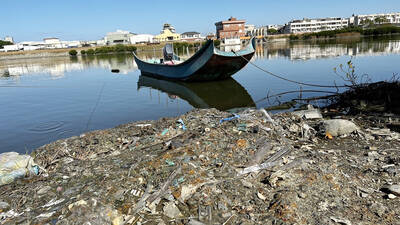
Many consumers are guilty of filling drawers or closets with old laptops, cellphones, fitness trackers and other electronic devices once they are no longer needed. It’s hard to know where to recycle such items, or it seems costly and inconvenient to do so. The world generates millions of tons of electronic waste — also called e-waste — each year. According to the UN’s most recent estimate, people worldwide produced 62 million metric tons of e-waste in 2022, and only about 22 percent of it was properly recycled. The US’ Environmental Protection Agency estimates that less than a quarter of e-waste is
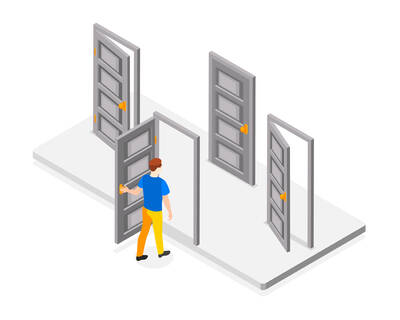
You’re sitting in class when a classmate asks to borrow a pencil. It seems like a small favor, so you agree without hesitation. The following week, the same classmate asks to share your notes. Later, they request help with a group project. You agree each time — after all, you helped out the first time — but before you know it, it has become automatic. This scenario demonstrates the “foot-in-the-door technique,” a psychological concept that shows how agreeing to small, acceptable demands makes it easier to accept larger ones later on. The name for this strategy comes from door-to-door

A: The four-day Tomb Sweeping Day long weekend begins Friday and will run until Monday. Are you going to sweep your ancestors’ tombs? B: I did in advance last weekend, so I can go to Kaohsiung to see the musical “The Phantom of the Opera.” A: Wow, is “Phantom” touring Taiwan again? It debuted in 1986, so this year marks the 40th anniversary of the show. B: And it’s not just touring Kaohsiung starting March 31, but also Taipei starting April 21 and Taichung starting May 26. A: “Phantom” is one of the world’s Four Major Musicals. I’ve seen all of them, except “Les

Dos & Don’ts — 想想看,這句話英語該怎麼說? 1. 我們很早到達電影院。 ˇ We arrived at the theater very early. χ We arrived the theater very early. 註︰arrive 為不及物動詞,後面如果有受詞要用 at 或 in。例如:They arrived in Taipei yesterday.。一般大地方,如國家、省、大城市等前面用 in,凡小地方城鎮、學校等則用 at。 2. 開車半小時以後,我們到達了海灘。 ˇ After half an hour’s drive, we got to the beach. χ After half an hour’s drive, we got the beach. 註︰come, go, get(來、去、到達)某地時,在表示地點的名詞前面應該用 to,如 go to school, go to Taipei, come to Shanghai 等。如果這些動詞後面所跟的是 here, there, home 等副詞,則不用 to。 3. 明天我會回辦公室。 ˇ I will be back in the office tomorrow. χ I will be back to office tomorrow. 註︰to be back 一語裡的 back 是副詞,不是介詞,所以後面要用 at (the market) 或 in (the office)。 假如假期結束,要回學校上課了則可說: ? Kids will be back


 RSS
RSS