


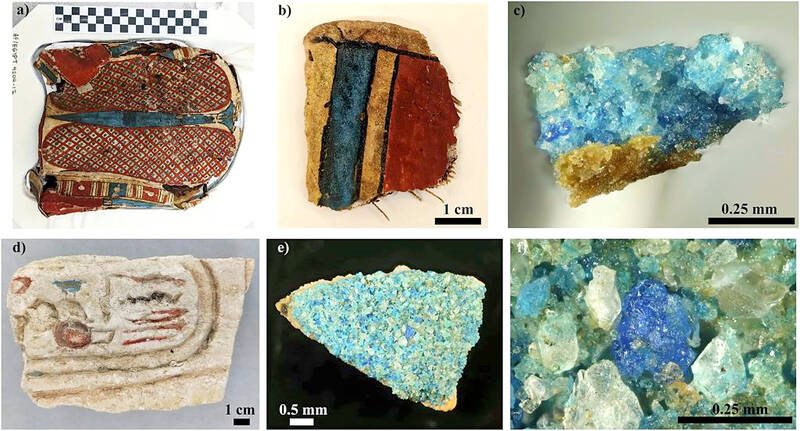
It graced statues, colored coffins, and decorated artifacts. It is Egyptian blue, the world’s oldest-known synthetic pigment born in ancient Egypt. Despite its name, it is not limited to a single hue. It ranges from deep blue to greenish tones, often glowing with an almost unearthly brilliance.
__1__ In response, the ancient Egyptians developed a synthetic alternative. Not only was it visually striking, but it was also more affordable than imported indigo or natural lapis lazuli. Traces of the pigment have been discovered far beyond Egypt, from wall paintings in Pompeii to tiles in Mesopotamia. However, Egyptian blue began to fall out of use during the time of the Roman Empire. Eventually, the formula for making it was forgotten.
Centuries later, scientists made a surprising discovery. __2__ The long-wavelength light is invisible to the naked eye but detectable under heat or through specialized cameras. This feature opens doors for modern applications such as anti-counterfeiting inks, fingerprint detection, or even medical imaging.
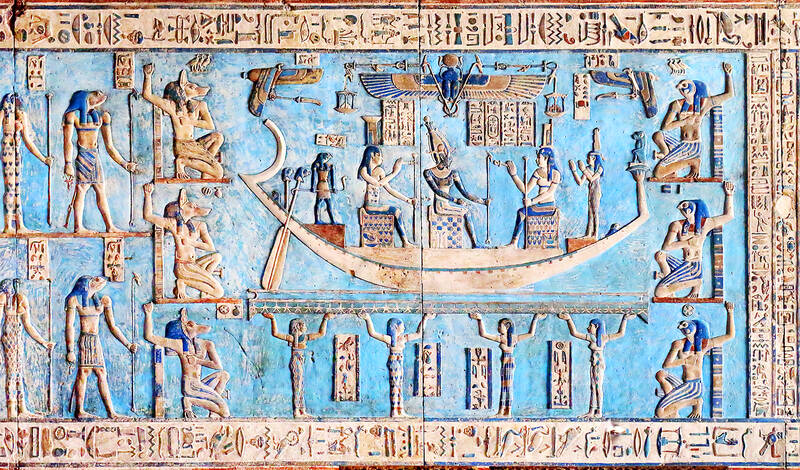
Photo: AdobeStock I 照片: AdobeStock
__3__ The team tested 12 experimental compositions using varying combinations of crystalline silicon dioxide, copper, calcium, and sodium carbonate. These mixtures were heated at around 1,000°C for hours to replicate the intense conditions likely used by ancient artisans. The result was a glassy, blue substance known as frit. Once cooled, it could be ground into a fine powder for use as paint or glaze.
Both the raw materials and the carefully controlled environment give the pigment its unique colors and near-infrared emission. __4__ A slow cool-down resulted in a deep blue, while rapid cooling produced a grayish-green. Once buried in the ruins, Egyptian blue has now been revived and reimagined for the modern world.
它曾為雕像增色、為棺材上色,還裝飾著手工藝品。它就是埃及藍,是世界上已知最古老的合成顏料,誕生於古埃及。儘管其名為埃及藍,卻不限於單一色調。其顏色範圍從深藍到淺綠色調都有,常常閃耀著近乎超凡脫俗的光輝。
hoto: Ivy English I 照片:常春藤解析英語
藍色在古埃及具有重要意義,但天然的藍色顏料卻很難取得。作為應對,古埃及人開發出合成替代品。它不僅視覺上吸引人,還比進口的靛藍或天然的青金石更實惠。埃及之外的遠處也發現了這種顏料的蹤跡,從龐貝城的壁畫到美索布達米亞的瓷磚都可以看到。然而,埃及藍在羅馬帝國時期開始不再被使用。最終,製作埃及藍的配方被遺忘了。
數世紀之後,科學家有了驚人的發現。埃及藍暴露於可見光之中時會發出近紅外線範圍的光。這種長波長的光肉眼並不可見,但在高溫下或透過專用相機可以偵測到。這項特性為現代應用打開了大門,例如防偽油墨、指紋偵測,或甚至是醫學成像。
華盛頓州立大學最近主導的一項研究破解了這種顏料失傳已久的配方。該團隊測試了十二種實驗組合,以不同的組合方式混合二氧化矽晶體、銅、鈣和碳酸鈉。這些混合物在攝氏約1000度的溫度下加熱數小時,以重現古代工匠可能使用的極端條件。最後形成了一種稱作熔塊的藍色玻璃狀物質。一旦冷卻,便可研磨成細粉,作為顏料或釉料使用。
原料和精心控制的環境賦予了這種顏料獨特的色彩和放射近紅外線的特性。冷卻過程是決定最終顏色的關鍵因素。緩慢冷卻會產生深藍色,快速冷卻則會產生灰綠色。曾被埋葬於廢墟中的埃及藍如今得以復興,並在現代世界中被重新詮釋。
What Did You Learn?
(A) The cooling process was a critical factor in determining the final color.
(B) Egyptian blue emits light in the near-infrared range when exposed to visible light.
(C) Egyptian blue was primarily made from ground gemstones and mixed with natural oils.
(D) Blue held great significance in ancient Egypt, yet natural blue pigments were hard to come by.
(E) A recent study led by Washington State University has cracked the long-lost formula of the pigment.
答案:
1. D
2. B
3. E
4. A
Words in Use
1. grace vt. 為……增色
Colorful murals grace the walls of the school, brightening the environment.
繽紛的壁畫為學校的牆面增添色彩,讓環境更有活力。
2. synthetic a. 合成的,人造的
Scientists have developed a synthetic skin for burn victims.
科學家為燒傷病患研發了一種人造皮膚。
3. brilliance n. 光輝,燦爛
The brilliance of the sunrise painted the sky in shades of gold.
日出的光輝將天空染成金色色調。
4. tile n. 瓷磚,瓦片
Archaeologists carefully preserved the tile fragments from the ancient site. 考古學家小心保存那個古遺址出土的瓷磚碎片。
5. formula n. (製作某物的)配方
composition n. 組成
The formula for the new energy drink contains natural fruit extracts and vitamins.
這款新能量飲料的配方含有天然水果萃取物和維生素。
The perfume brand experimented with different chemical compositions to create signature scents.
該香水品牌試驗不同的化學組合以製造出招牌香氣。
Practical Phrases
1. range from A to B 範圍從 A 到 B 都有
Class sizes range from 10 to 30 students in different departments.
不同系所的班級學生人數從十人到三十人不等。
2. fall out of use 不再被使用,被淘汰
Some ancient medical practices fell out of use as science advanced.
隨著科學進步,一些古老的醫療方法已被淘汰。
3. be invisible to the naked eye
肉眼所不能見
Tiny cracks in the glass may be invisible to the naked eye but can weaken the structure.
玻璃上的細小裂縫肉眼可能看不見,但會削弱結構。
4. open doors for...
開啟……之門,為……提供機會
Advances in technology open doors for new forms of communication.
科技的進步為新型態的溝通方式打開了大門。
聽文章朗讀及講解: https://ivy.pse.is/455bfu
本文出自常春藤解析英語雜誌: www.ivy.com.tw

A: Which team do you think will win the championship in the 2026 World Baseball Classic? B: The previous champion Japan and runner-up the US are exceptionally strong. A: The Taiwan team was captained by Chen Chieh-hsien with a roster of 16 pitchers, 3 catchers and 11 fielders, and was quite strong, too. B: Yeah, players like Hu Chih-wei, Lin Tzu-wei, Yu Chang and Cheng Tsung-che all played in Major League Baseball. And this tournament marked the first call-up of mixed-race talent: MLB’s Stuart Fairchild. A: There are also some Taiwanese stars playing in Japan, including

Candles were made from animal fats in ancient times. As knowledge and materials improved, people began making them with beeswax and vegetable wax, which burned more cleanly and produced less odor. Before __1__ lighting, candles were considered highly valuable. In many religions, they came to symbolize life and wisdom. Even today, candles are frequently used in religious rituals and for cultural celebrations. The __2__ toward industrial candle making began in 1834, when Joseph Morgan patented a machine that could produce molded candles without interruption. His __3__ marked the start of mechanized production, though for many decades, candles were still

A: Did you watch the preliminary games of the 2026 World Baseball Classic? Pool C included Australia, the Czech Republic, Japan, South Korea and Taiwan. All the games in Tokyo were absolutely intense. B: Of course. Many teams called up star players from Major League Baseball this time. Going up against players like Shohei Ohtani must come with enormous pressure. A: Japan and South Korea ultimately advanced to the quarterfinals, which are scheduled for March 14 and 15 in Miami. B: What about the semifinals and the final? A: The semifinals are set for the 16 and 17, followed
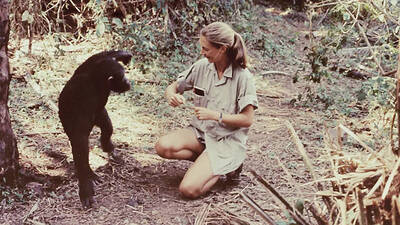
Jane Goodall, the pioneering scientist whose groundbreaking research changed our understanding of chimpanzees and reshaped the study of animal behavior, has died at the age of 91. The Jane Goodall Institute confirmed that she passed away from natural causes in California in October 2025 while on a speaking tour. Born in England, Goodall gained international fame in the 1960s after traveling to Tanzania to study wild chimpanzees under the guidance of anthropologist Louis Leakey. At the time, she had no formal scientific training, yet she lived among the animals and recorded their behavior in remarkable detail. Her discovery that


 RSS
RSS