


Anyone who has seen Disney’s The Lion King will agree that one of the movie’s most popular characters is Timon. Timon, along with his best friend Pumbaa, provides Simba, the movie’s protagonist, with what he needs the most when they first encounter him—kindness and loyalty.
While millions of young children have viewed this classic movie, many of them might not be aware that Timon is actually a real-life meerkat, a small mammal native to the desert lands of southern Africa. Meerkats have a unique and adorable appearance primarily characterized by an upright standing posture and dark patches around their eyes. Particularly, it is their standing pose that sets them apart from other mammals, most of which feel more comfortable on four legs.
Despite their cute appearance, meerkats must adopt clever strategies to survive in the harsh desert environment. They are highly cooperative and social animals living in family groups known as “mobs.” Each mob has a dominant female in charge, and the other members of the mob have defined roles to ensure that no task is left undone.
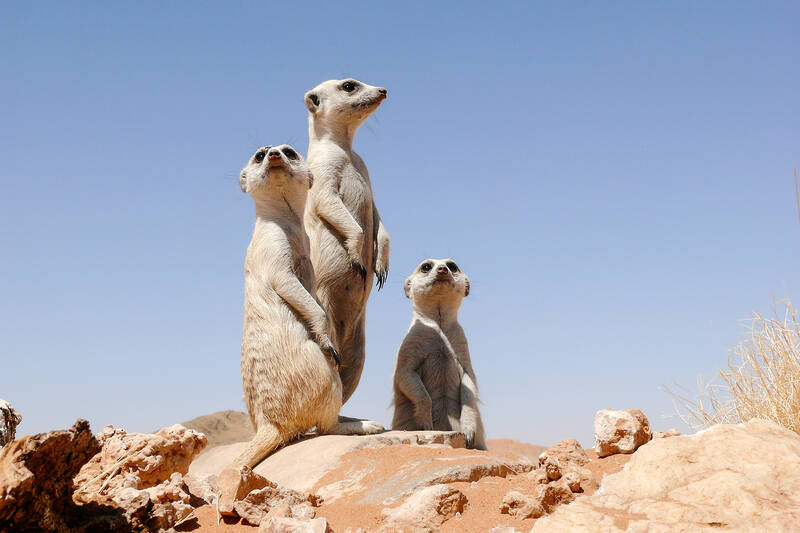
Photo courtesy of AdobeStock I 照片:AdobeStock提供
Some serve as watchers who look out for dangerous predators in the sky like eagles and hawks, while others hunt for food, including fruits, insects, small birds, rodents and lizards. Meerkat mobs live in homes called burrows, which are essentially underground tunnel systems that enable groups to keep cool in the scorching African sun.
Intelligent and loyal, meerkats are truly not too far removed from the one depicted in the Disney classic. These fascinating creatures are much more than just cute animals and can surely teach us a thing or two about standing up for one another.
任何看過迪士尼《獅子王》的人都會贊同這部電影中最受歡迎的其中一個角色就是「丁滿」。丁滿和牠最好的朋友「彭彭」在牠們初次遇見主角辛巴時,為牠提供牠最需要的東西——善良和忠誠。
雖然已有數百萬名幼童看過這部經典電影,但他們當中有許多人可能並不知道丁滿其實就是現實世界中的狐獴,狐獴是一種原生於非洲南部沙漠地區的小型哺乳動物。狐獴有著獨特而可愛的外表,主要的特徵是直立的站姿和眼睛周圍的黑色斑塊。尤其是牠們的站立姿勢使牠們有別於其他哺乳動物,大多數的哺乳動物用四隻腳行動比較輕鬆自在。
儘管牠們的外表可愛,但狐獴必須採取巧妙的策略才能在惡劣的沙漠環境中生存。牠們是合作性高且社會化的動物,生活在被稱為「mob」(編按:mob通常是指一個群體且帶有負面涵意,像是一群暴民或流氓,而在此是指狐獴群體)的家族群體之中。每個狐獴群體都有一隻主導的母狐獴負責發號施令,而狐獴群體中的其他成員都有明確的角色以確保不會有任務未被完成。
有些成員擔任看守者,注意天空中如雕和鷹等危險獵食者,而其他成員則尋找食物,包括水果、昆蟲、小鳥、囓齒動物和蜥蜴。狐獴群體生活在稱為「burrow」(編按:此指狐獴所挖的洞穴、地道)的家中,這些洞穴基本上是地下隧道系統,使狐獴群體在炎熱的非洲陽光下保持涼爽。
狐獴聰明且忠誠,牠們與迪士尼經典之作當中所描繪的狐獴相去不遠。這些迷人的生物不僅僅是可愛的動物,牠們肯定還會教我們一些關於「站起來」支持彼此的事情。
What Did You Learn?
1. What is the purpose of the first paragraph?
(A) To outline the personalities of meerkats.
(B) To introduce a Disney classic to the readers.
(C) To set the stage for the discussion of meerkats.
(D) To specify what role Timon plays in Simba’s life.
2. Which of the following aspects of meerkats are mentioned in the passage?
a. mating behavior
b. physical features
c. living habitats
d. natural enemies
e. stress response
f. dietary habits
(A) a, b, c, f
(B) b, c, d, f
(C) a, d, e, f
(D) b, d, e, f
參考答案
1. (C) 2. (B)
Word in Use
1. encounter vt.(偶然)遇見
Wendy encountered her high school teacher at the department store.
溫蒂在百貨公司遇到了她的中學老師。
2. loyalty n. 忠誠,忠心
The dog’s loyalty to its owner is one of the most heartwarming parts of the movie.
狗狗對主人的忠誠是該電影中最暖心的一部分。
3. mammal n. 哺乳動物
Dolphins are marine mammals that have adapted to living in the water.
海豚是適應水中生活的海洋哺乳動物。
4. adorable a. 可愛的
Bugcat Capoo’s adorable image has captured the hearts of many fans worldwide.
貓貓蟲咖波可愛的形象擄獲了全球眾多粉絲的心。
5. characterize vt. 是……的特色/特徵
be characterized by... 具有……的特色∕特徵
The climate of a tropical rainforest is characterized by frequent rainfall.
熱帶雨林氣候的特色是降雨頻繁。
Practical Phrases
1. compare with. . . 與……比較
Jack’s parents asked him how his new job compared with his previous one.
傑克的父母問他和前一份工作相比,新工作怎麼樣。
2. be aware + that子句 知道/明白……
John was not aware that the deadline for the project had been moved forward by a week.
約翰並不知道該企劃的最後期限已經提前了一週。
3. be native to+地方 原生於某地
Kangaroos are native to Australia and are known for their hopping.
袋鼠原生於澳洲,以其跳躍能力而聞名。
4. in charge 掌管;負責
The customer wants to talk with the person in charge and make a complaint.
那位顧客想跟負責人談話並提出客訴。
聽文章朗讀及講解: https://ivy.pse.is/455bfu
本文出自常春藤解析英語雜誌: www.ivy.com.tw
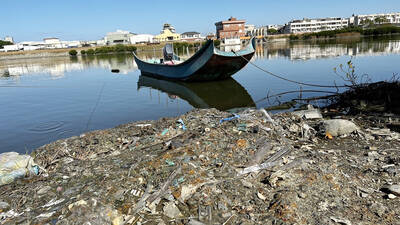
Many consumers are guilty of filling drawers or closets with old laptops, cellphones, fitness trackers and other electronic devices once they are no longer needed. It’s hard to know where to recycle such items, or it seems costly and inconvenient to do so. The world generates millions of tons of electronic waste — also called e-waste — each year. According to the UN’s most recent estimate, people worldwide produced 62 million metric tons of e-waste in 2022, and only about 22 percent of it was properly recycled. The US’ Environmental Protection Agency estimates that less than a quarter of e-waste is
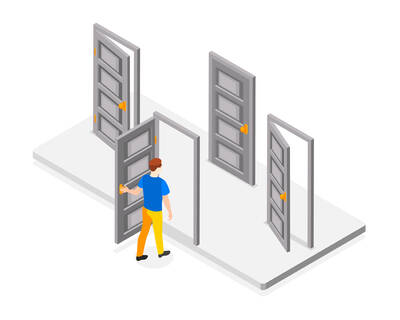
You’re sitting in class when a classmate asks to borrow a pencil. It seems like a small favor, so you agree without hesitation. The following week, the same classmate asks to share your notes. Later, they request help with a group project. You agree each time — after all, you helped out the first time — but before you know it, it has become automatic. This scenario demonstrates the “foot-in-the-door technique,” a psychological concept that shows how agreeing to small, acceptable demands makes it easier to accept larger ones later on. The name for this strategy comes from door-to-door

A: The four-day Tomb Sweeping Day long weekend begins Friday and will run until Monday. Are you going to sweep your ancestors’ tombs? B: I did in advance last weekend, so I can go to Kaohsiung to see the musical “The Phantom of the Opera.” A: Wow, is “Phantom” touring Taiwan again? It debuted in 1986, so this year marks the 40th anniversary of the show. B: And it’s not just touring Kaohsiung starting March 31, but also Taipei starting April 21 and Taichung starting May 26. A: “Phantom” is one of the world’s Four Major Musicals. I’ve seen all of them, except “Les

Dos & Don’ts — 想想看,這句話英語該怎麼說? 1. 我們很早到達電影院。 ˇ We arrived at the theater very early. χ We arrived the theater very early. 註︰arrive 為不及物動詞,後面如果有受詞要用 at 或 in。例如:They arrived in Taipei yesterday.。一般大地方,如國家、省、大城市等前面用 in,凡小地方城鎮、學校等則用 at。 2. 開車半小時以後,我們到達了海灘。 ˇ After half an hour’s drive, we got to the beach. χ After half an hour’s drive, we got the beach. 註︰come, go, get(來、去、到達)某地時,在表示地點的名詞前面應該用 to,如 go to school, go to Taipei, come to Shanghai 等。如果這些動詞後面所跟的是 here, there, home 等副詞,則不用 to。 3. 明天我會回辦公室。 ˇ I will be back in the office tomorrow. χ I will be back to office tomorrow. 註︰to be back 一語裡的 back 是副詞,不是介詞,所以後面要用 at (the market) 或 in (the office)。 假如假期結束,要回學校上課了則可說: ? Kids will be back


 RSS
RSS