


Children think farm animals deserve to be treated as well as human beings but lose this belief in adolescence, a groundbreaking study has found.
Researchers from the universities of Exeter and Oxford asked a group of British children aged nine to 11, young adults aged 18 to 21 and older men and women about their attitudes to different sorts of animals.
In general, the children said farm animals and human beings should be treated the same and found eating animals less morally acceptable than both sets of adults. The findings suggest that “speciesism” — a moral hierarchy that gives different value to different animals — is learned during adolescence, according to the study.
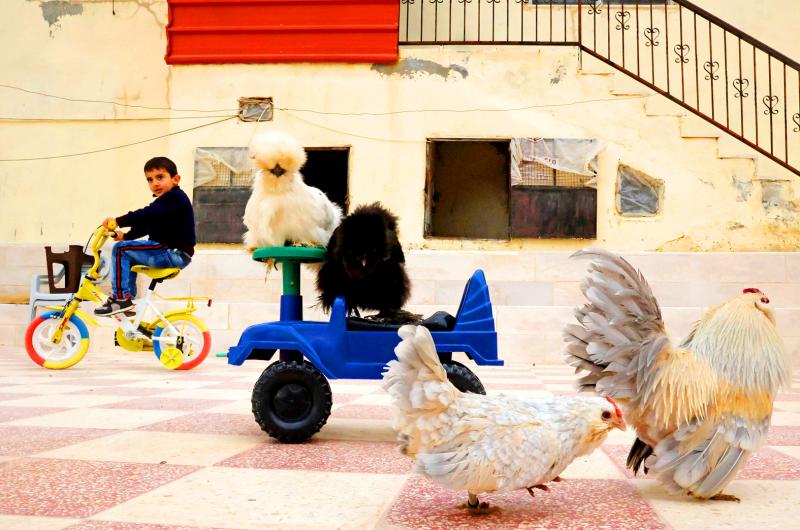
Photo: AFP 照片:法新社
“Humans’ relationship with animals is full of ethical double standards,” said the lead author, Luke McGuire, a lecturer at the University of Exeter who specializes in social and moral development. “Some animals are beloved household companions, while others are kept in factory farms for economic benefit. Judgments seem to largely depend on the species of the animal in question: dogs are our friends, pigs are food.”
The report says an important aspect of the human mind is “moral acrobatics”: people can hold ethical values that contradict each other and employ moral double standards. But the origins of moral acrobatics relating to animals is poorly understood and the researchers say this new study provides some of the first evidence examining the differences in how children and adults think about animal treatment.
Among other tasks, participants in the study were presented with pictures including a farm animal and companion animals and asked to categorize them as “food”, “pet” or “object”. They were asked how animals were treated, and how they should be treated.
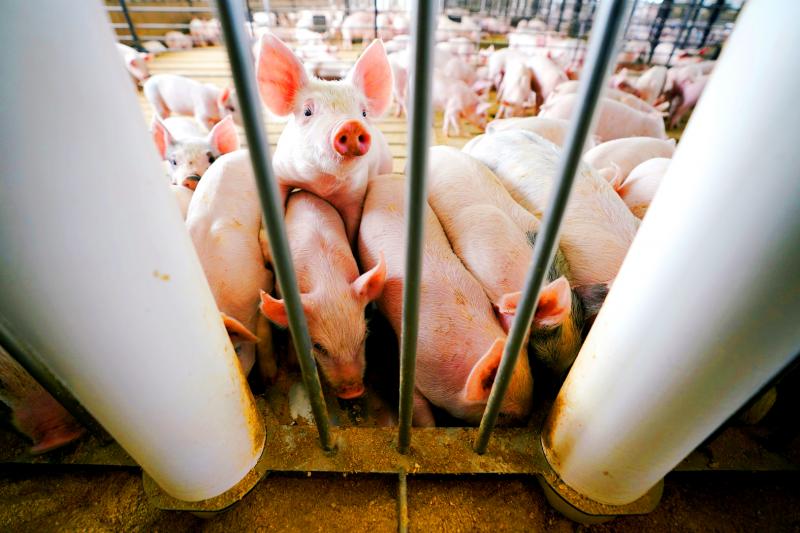
Photo: Reuters 照片:路透
Children did not judge all animals to be equal. They concluded, in fact, that dogs ought to be treated better than pigs — but also that pigs ought not to be treated differently from humans.
The two sets of adult groups said pigs ought to be treated less well than dogs, while humans and dogs ought to be treated the same.
McGuire said the study suggests that while children think farm animals and humans ought to be treated equally well, by adulthood people believe that companion animals and humans ought to be treated better. He said children rated eating animals as significantly less permissible than young adults and adults did.
The paper, published in the journal Social Psychological and Personality Science, is titled “The development of speciesism: age-related differences in the moral view of animals.”
(The Guardian)
一項開創性的研究發現,兒童認為我們應像對待人類一樣來好好對待養殖場的動物,但青少年時期以後卻不再這麼認為。
艾希特大學及牛津大學的研究人員調查了一組九到十一歲的英國兒童、十八到二十一歲的年輕人,以及老年男性與女性,詢問他們對各種動物的態度。
總體而言,兒童表示養殖場動物與人類應受同等對待,且與其他兩組相比,兒童更覺得吃動物在道德上無法接受。研究結果顯示,「物種歧視」──賦予不同動物不同價值的一種道德階級制度──是在青少年時期習得的。
「人類與動物的關係充滿了道德雙重標準」,該研究主要作者、專研社會與道德發展的艾希特大學講師路克‧麥奎爾表示。「有些動物是家中受寵愛的朋友,而別的動物則是為了經濟利益而飼養在工廠化的農場中。判斷似乎大多取決於動物的種類:狗是我們的朋友,豬是食物」。
該報告稱,人類思想的一個重要面向是「道德技巧」:人可以有相互矛盾的道德價值觀,並採取雙重道德標準。但與動物相關的道德技巧,我們對其源起知之甚少;研究人員表示,這項新研究檢驗了兒童與成人在對待動物上的觀念差異,提供了一些初步證據。
問卷其他題目還包括請受試者看圖片,其中有養殖場動物及伴侶動物,並令其將這些動物歸類為「食物」、「寵物」或「物件」。還問受試者對待動物的方式,以及該如何對待這些動物。
兒童並不認為所有動物都是平等的。他們得出的結論其實是,狗應該得到比豬更好的待遇──但豬所受的待遇不應與人類有別。
兩個成人組則表示,豬的待遇應次於狗,而人與狗應受同等待遇。
麥奎爾說,這項研究顯示,雖然兒童認為養殖場動物與人類應受同等對待,但成年後則認為伴侶動物與人類應受較好的待遇。他表示,與年輕人及成年人相比,兒童明顯較不能容忍吃動物。
該論文發表在《社會心理與人格科學》期刊上,標題為「物種歧視的發展:動物道德觀之年齡差異」。
(台北時報林俐凱編譯)
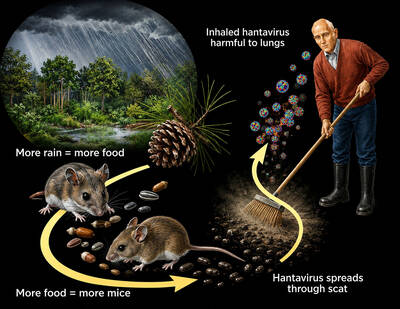
An outbreak aboard a cruise ship of a rare rodent-borne illness called hantavirus has left three passengers dead and sickened others, but global health officials say the risk to the general public remains low because the germ does not easily spread between people. “This is not the next COVID, but it is a serious infectious disease,” said Maria Van Kerkhove, director of epidemic and pandemic preparedness at the World Health Organization (WHO). “Most people will never be exposed to this.” The virus usually spreads when people inhale contaminated residue of rodent droppings. Hantaviruses have been around for centuries and are thought to

Have you ever wondered how people navigate the world when they can’t see a map? For individuals with visual impairments, conventional maps are nearly impossible to use. This is where tactile maps come in — essential tools that allow people to “see” the world through touch. A tactile map is specially designed with raised lines, textures, and symbols to represent geographical features such as roads, rivers, and buildings. Users explore it with their fingertips. However, these maps are not exclusively for people with visual disabilities. They serve as valuable multisensory learning tools that enhance spatial understanding for everyone, making

1. 他病了三天。 ˇ He has been sick for three days. χ He has been sick since three days. 註︰這裡現在完成時態 have / has been 表示從過去某一時日到現在的一段時間存在的行為或狀態,與它連用的時間副詞應為 「for +若干時」,如 for a year, for three hours 等,意思是歷時多少。 2. 他自從星期三以來都很忙。 ˇ He has been busy since Wednesday. χ He has been busy from Wednesday. 註︰「自從……以來」,該用 since。說從某一天(某一時刻)到某一天(某一時刻)才用 from,如 from Monday till Friday。 3. 房間角落裡散放著一些零星物件。 ˇ There were some odds and ends lying in the corner of the room. χ There were some odds and ends lying at the corner of the room. 註︰「在房間角落裡」該用介詞 in。例如: He stood in the corner. There is a lamp in the corner of the room. at the corner 指房子外部的拐角。例如: A little boy

A: In early May, there were concerts by Icyball, Chyi Yu, Korea’s EXO and Japan’s Anisama, but I missed them all. What a shame. B: That’s OK. There are shows coming up by various artists, including Power Station, Accusefive, Japanese singer Mika Nakashima, Chinese-Icelandic jazzer Laufey, and even Singaporean diva Stefanie Sun. A: After a 12-year hiatus, Stefanie is finally returning to Taipei again. B: In late May, there will be more shows by Crowd Lu, WeiBird, Korea’s Donghae, 2AM, EXID, and Thailand’s BUS. A: The Thai boyband is so popular. It looks like “T-pop” is catching up with J-pop


 RSS
RSS