


The British Museum is facing legal action from one of the UK’s leading heritage preservation organizations over its refusal to allow the 3D scanning of a piece in its Parthenon sculptures collection.
The Institute for Digital Archaeology (IDA) said it would serve an injunction against the museum imminently, raising the stakes in the dispute between the two.
“We will be filing a complaint by the end of the week requesting the court to order the British Museum to grant our request,” Roger Michel, the IDA’s executive director, told the Guardian. “We want them to treat our application in exactly the same fashion that they would treat similar requests. Their refusal has been capricious and arbitrary.”

Photo: AFP 照片:法新社
The Oxford-based institute had hoped, with the museum’s blessing, to reproduce one of the high relief metopes from the Acropolis temple’s south facade as “proof of concept.” In 2016 it reconstructed Syria’s Palymyra arch of triumph out of Egyptian marble based on photographs following the monument’s destruction by Islamic State.
Advocates believe 3D imaging could be employed to not only create replicas of the classical treasures but help resolve the longstanding row between Athens and London over patrimony of the Parthenon sculptures. Scans would allow a robot sculptor to reproduce the artworks with sub-millimetre accuracy using the same Pentelic marble from which the originals were chiselled, according to the IDA, a supporter of the sculptures’ repatriation to Greece.
The antiquities, regarded as the high point of classical art, have been in the British Museum’s possession since 1816 after their removal from the Parthenon at the behest of Lord Elgin, the British ambassador to the Ottoman empire, which then controlled what is now modern Greece.
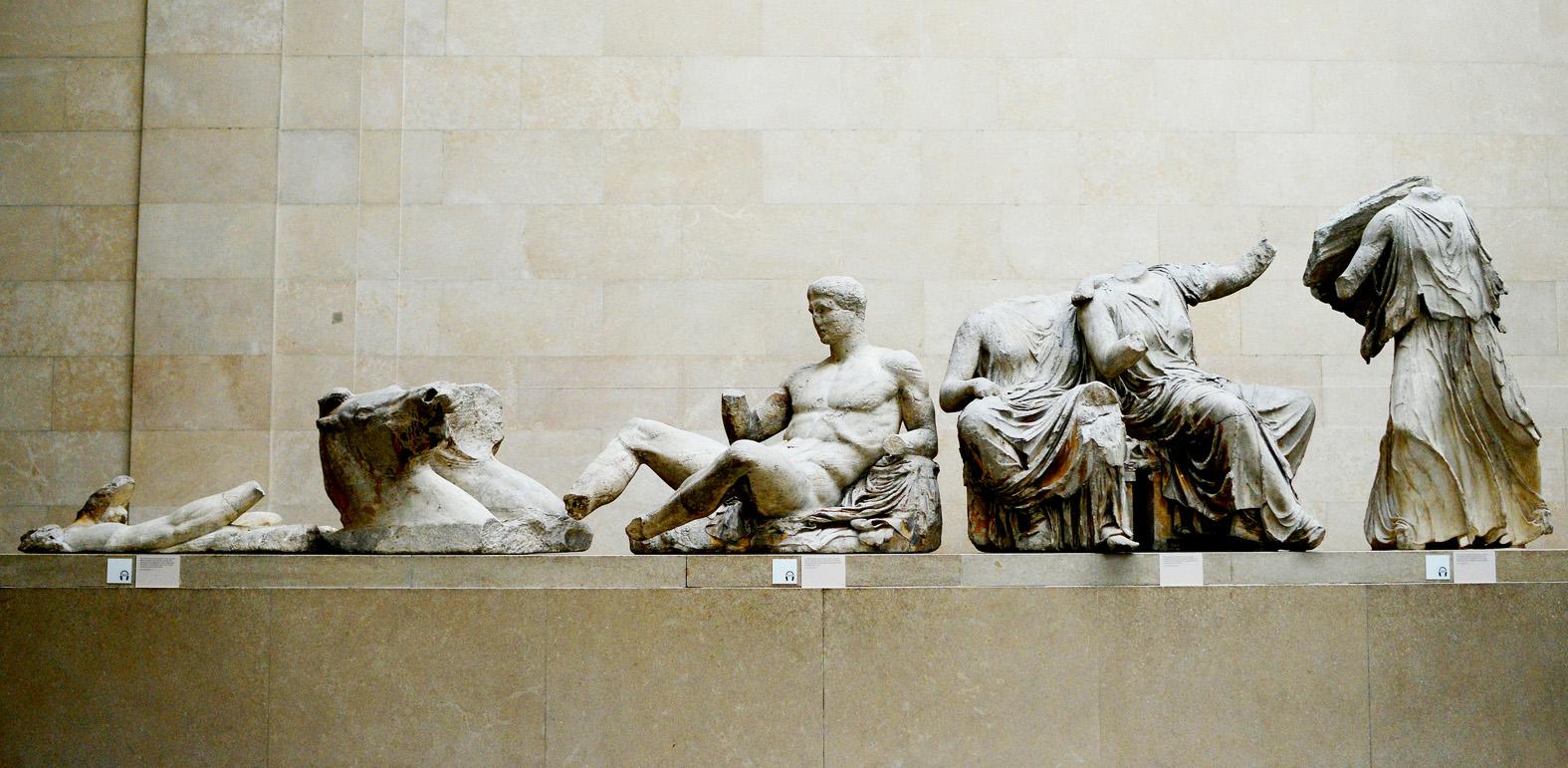
Photo: Reuters 照片:路透
Successive Greek governments have argued that the antiquities were illegally hacked from the temple at a time when it was a subject nation without voice or sovereignty. The British Museum says they were legally acquired.
(The Guardian)
大英博物館正面臨一項訴訟,因其拒絕英國一重要遺產保護組織對其館藏帕德嫩神廟雕像系列中之一件作品進行3D掃描。
數位考古研究所(IDA)表示,它將立即請求對博物館之禁令,這讓兩造之爭端加劇。
「本週末之前我們會提出申訴,要求法院命令大英博物館批准我們的請求」,IDA執行董事羅傑‧米歇爾告訴衛報。「我們希望他們用處理類似請求完全相同的方式來處理我們的申請。他們的拒絕是反覆無常和武斷的」。
這家位於牛津的研究所曾希望取得大英博物館的支持,複製雅典衛城神廟南面的一件排檔間飾高浮雕,作為「概念驗證」。敘利亞帕米拉遺跡中的凱旋門被伊斯蘭國摧毀後,IDA在二○一六年依據照片用埃及大理石將其重建。
倡導者認為,3D成像不僅可用來複製經典寶藏,還可以對解決雅典和倫敦之間長期以來對於帕德嫩神廟雕像遺產的爭執有所幫助。支持將雕像送回希臘的IDA表示,掃描將可讓雕刻機器人在與原雕像相同材質的彭特利庫斯山大理石上,以次毫米的精密度複製藝術品。
這些被視為古典藝術最高峰的文物,自一八一六年──當時希臘是由鄂圖曼土耳其帝國所控制──被英國駐鄂圖曼帝國大使埃爾金勳爵命令由帕德嫩神廟拆下後,一直收藏在大英博物館。
歷任希臘政府皆爭辯說,這些文物是趁希臘還是一個沒有發言權或主權的從屬國時,由神廟中非法盜取的。大英博物館則說它們是合法取得的。
(台北時報林俐凱編譯)
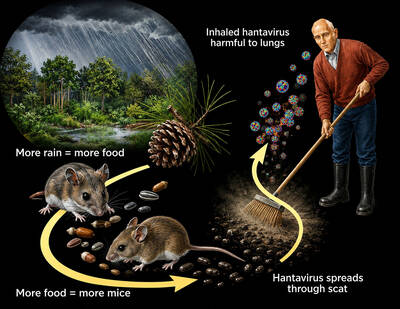
An outbreak aboard a cruise ship of a rare rodent-borne illness called hantavirus has left three passengers dead and sickened others, but global health officials say the risk to the general public remains low because the germ does not easily spread between people. “This is not the next COVID, but it is a serious infectious disease,” said Maria Van Kerkhove, director of epidemic and pandemic preparedness at the World Health Organization (WHO). “Most people will never be exposed to this.” The virus usually spreads when people inhale contaminated residue of rodent droppings. Hantaviruses have been around for centuries and are thought to

Have you ever wondered how people navigate the world when they can’t see a map? For individuals with visual impairments, conventional maps are nearly impossible to use. This is where tactile maps come in — essential tools that allow people to “see” the world through touch. A tactile map is specially designed with raised lines, textures, and symbols to represent geographical features such as roads, rivers, and buildings. Users explore it with their fingertips. However, these maps are not exclusively for people with visual disabilities. They serve as valuable multisensory learning tools that enhance spatial understanding for everyone, making

1. 他病了三天。 ˇ He has been sick for three days. χ He has been sick since three days. 註︰這裡現在完成時態 have / has been 表示從過去某一時日到現在的一段時間存在的行為或狀態,與它連用的時間副詞應為 「for +若干時」,如 for a year, for three hours 等,意思是歷時多少。 2. 他自從星期三以來都很忙。 ˇ He has been busy since Wednesday. χ He has been busy from Wednesday. 註︰「自從……以來」,該用 since。說從某一天(某一時刻)到某一天(某一時刻)才用 from,如 from Monday till Friday。 3. 房間角落裡散放著一些零星物件。 ˇ There were some odds and ends lying in the corner of the room. χ There were some odds and ends lying at the corner of the room. 註︰「在房間角落裡」該用介詞 in。例如: He stood in the corner. There is a lamp in the corner of the room. at the corner 指房子外部的拐角。例如: A little boy

A: In early May, there were concerts by Icyball, Chyi Yu, Korea’s EXO and Japan’s Anisama, but I missed them all. What a shame. B: That’s OK. There are shows coming up by various artists, including Power Station, Accusefive, Japanese singer Mika Nakashima, Chinese-Icelandic jazzer Laufey, and even Singaporean diva Stefanie Sun. A: After a 12-year hiatus, Stefanie is finally returning to Taipei again. B: In late May, there will be more shows by Crowd Lu, WeiBird, Korea’s Donghae, 2AM, EXID, and Thailand’s BUS. A: The Thai boyband is so popular. It looks like “T-pop” is catching up with J-pop


 RSS
RSS