


Russia’s invasion of Ukraine has captured the world’s attention, with anti-war sentiment spreading to the art world. In solidarity with Ukraine, Japanese contemporary artist Takashi Murakami has uploaded onto Instagram a “light-blue-over-yellow” Ukrainian flag artwork with his signature motif of smiling sunflowers, accompanied with the hashtag: #Peace. Simple yet powerful, the artwork is meant to convey his concern for the ongoing war.
Despite running a fever after getting the COVID-19 vaccine, Murakami created a sunflower-themed artwork centering on peace. Touched by his work, fans have left messages of support from around the world. The smiley rainbow-colored sunflower is Murakami’s signature motif, which the artist has previously stated represents love, hope, peace, poetic rhythm, and the wonders of the world. His latest work is to deliver a message urging for peace.
In addition to famous Japanese artists, artists worldwide have also shown their support with actions, such as putting up anti-war paintings in the world-renowned art festival Documenta or including the Ukrainian flag in street graffiti in Paris. A number of European artistic institutions, such as the Berlin International Film Festival, have lent their support to Ukraine and expressed their hope for a speedy conclusion to the war.
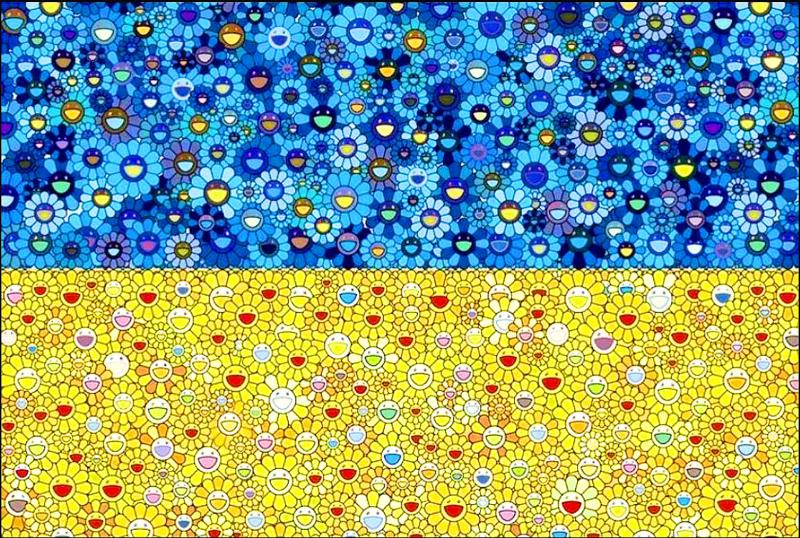
Photo: screen grab from Takashi Murakami’s Instagram page 照片︰村上隆IG
(Translated by Rita Wang, Taipei Times)
俄羅斯向烏克蘭發動戰爭成為國際焦點,反戰風潮延燒至藝術圈。日本當代藝術家村上隆透過IG發文,曬出一張以招牌太陽花作為創作主題的作品,搭配象徵烏克蘭國旗的「上黃下藍」色調,並標記「#Peace」和平一字,簡潔有力地表達出對戰事的關注。
村上隆近日因接種疫苗身體不適發高燒,仍不忘創作以招牌太陽花為主題的「和平」畫作,讓粉絲們感到暖心,來自世界各地的網友也紛紛留言應援。實際上,擁有笑臉的七彩太陽花為村上隆的標誌圖案,他先前受訪時就指出「微笑小花」代表愛、希望、和平、詩歌的脈動與世界的奇妙,新作品更是再次宣揚和平。
除了日本知名藝術家們,各國的藝術家也挺身而出,像是世界著名藝術展覽「卡塞爾文獻展」的場館就高掛著反戰繪畫的作品,巴黎街頭塗鴉彩繪也融入烏克蘭國旗,而柏林影展等歐洲各個團體機構也紛紛為烏克蘭發聲,期盼戰爭早日結束。
(自由時報)
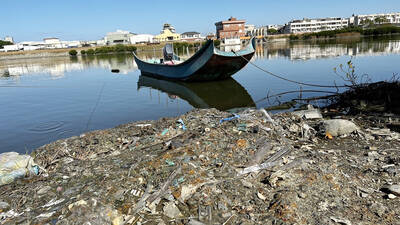
Many consumers are guilty of filling drawers or closets with old laptops, cellphones, fitness trackers and other electronic devices once they are no longer needed. It’s hard to know where to recycle such items, or it seems costly and inconvenient to do so. The world generates millions of tons of electronic waste — also called e-waste — each year. According to the UN’s most recent estimate, people worldwide produced 62 million metric tons of e-waste in 2022, and only about 22 percent of it was properly recycled. The US’ Environmental Protection Agency estimates that less than a quarter of e-waste is
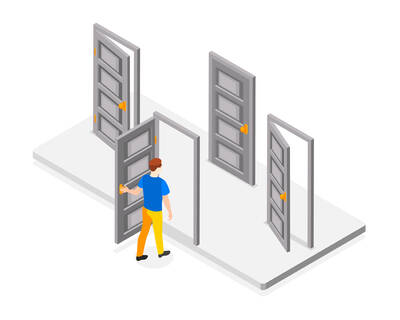
You’re sitting in class when a classmate asks to borrow a pencil. It seems like a small favor, so you agree without hesitation. The following week, the same classmate asks to share your notes. Later, they request help with a group project. You agree each time — after all, you helped out the first time — but before you know it, it has become automatic. This scenario demonstrates the “foot-in-the-door technique,” a psychological concept that shows how agreeing to small, acceptable demands makes it easier to accept larger ones later on. The name for this strategy comes from door-to-door

A: The four-day Tomb Sweeping Day long weekend begins Friday and will run until Monday. Are you going to sweep your ancestors’ tombs? B: I did in advance last weekend, so I can go to Kaohsiung to see the musical “The Phantom of the Opera.” A: Wow, is “Phantom” touring Taiwan again? It debuted in 1986, so this year marks the 40th anniversary of the show. B: And it’s not just touring Kaohsiung starting March 31, but also Taipei starting April 21 and Taichung starting May 26. A: “Phantom” is one of the world’s Four Major Musicals. I’ve seen all of them, except “Les

Dos & Don’ts — 想想看,這句話英語該怎麼說? 1. 我們很早到達電影院。 ˇ We arrived at the theater very early. χ We arrived the theater very early. 註︰arrive 為不及物動詞,後面如果有受詞要用 at 或 in。例如:They arrived in Taipei yesterday.。一般大地方,如國家、省、大城市等前面用 in,凡小地方城鎮、學校等則用 at。 2. 開車半小時以後,我們到達了海灘。 ˇ After half an hour’s drive, we got to the beach. χ After half an hour’s drive, we got the beach. 註︰come, go, get(來、去、到達)某地時,在表示地點的名詞前面應該用 to,如 go to school, go to Taipei, come to Shanghai 等。如果這些動詞後面所跟的是 here, there, home 等副詞,則不用 to。 3. 明天我會回辦公室。 ˇ I will be back in the office tomorrow. χ I will be back to office tomorrow. 註︰to be back 一語裡的 back 是副詞,不是介詞,所以後面要用 at (the market) 或 in (the office)。 假如假期結束,要回學校上課了則可說: ? Kids will be back


 RSS
RSS