


A gigantic prehistoric “sea dragon” discovered in the Midlands, UK has been described as one of the greatest finds in the history of British palaeontology.
The ichthyosaur, which is about 180 million years old with a skeleton measuring about 10m in length and a skull weighing about a tonne, is the largest and most complete fossil of its kind ever found in the UK. Joe Davis of the Leicestershire and Rutland Wildlife Trust discovered it during the routine draining of a lagoon island at the Rutland Water reservoir in February last year.
The first ichthyosaurs, which are called sea dragons because they tend to have very large teeth and eyes, were discovered by the fossil hunter and palaeontologist Mary Anning in the early 19th century.
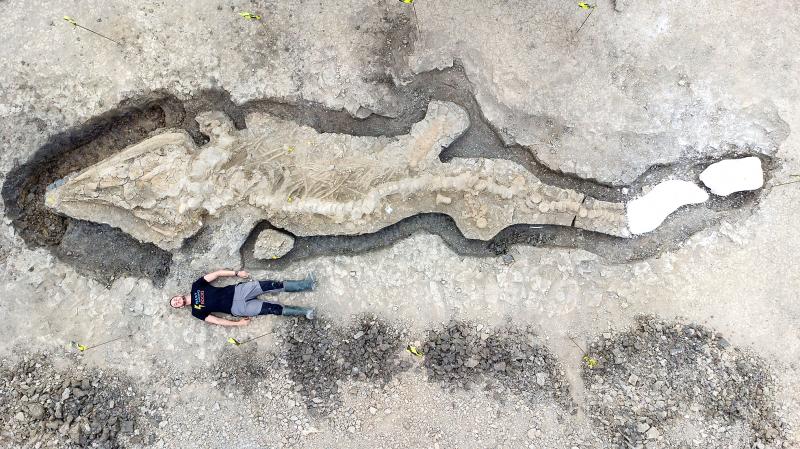
Photo: Reuters 照片:路透
Dean Lomax, a palaeontologist who has studied the species, said: “Despite the many ichthyosaur fossils found in Britain, it is remarkable to think that the Rutland ichthyosaur is the largest skeleton ever found in the UK. It is a truly unprecedented discovery and one of the greatest finds in British palaeontological history.”
Ichthyosaurs, which were marine reptiles, first appeared about 250 million years ago and went extinct 90 million years ago. They varied in size from 1m to more than 25m in length and resembled dolphins in their general body shape.
The remains were dug out by a team of experts from around the UK in August and September last year.
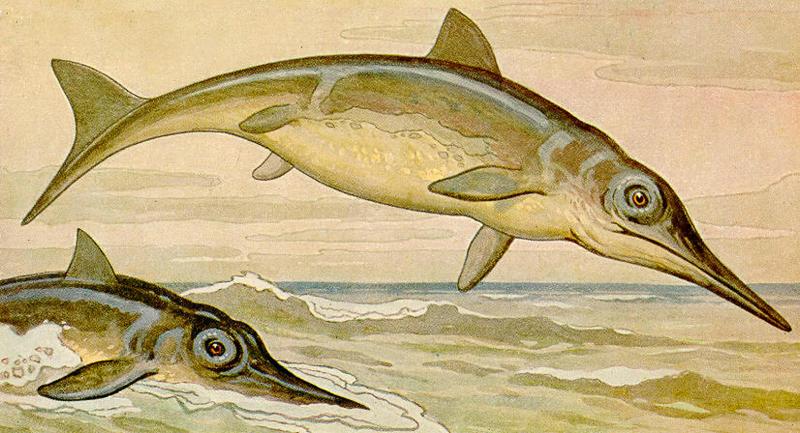
Photo: Wikimedia Commons 照片:維基共享資源
Two incomplete and much smaller ichthyosaurs were found during the construction of Rutland Water in the 1970s, but the latest discovery is the first complete skeleton.
Mark Evans of the British Antarctic Survey, who has been studying the Jurassic fossil reptiles of Rutland and Leicestershire for more than 20 years, said that even from the first glimpse of the partially exposed fossil it was clear that it was the largest ichthyosaur discovered in the region.
“However, it was only after our exploratory dig that we realized that it was practically complete to the tip of the tail,” he said. “It’s a highly significant discovery both nationally and internationally, but also of huge importance to the people of Rutland and the surrounding area.”
(The Guardian)
在英格蘭中部地區發現的巨大史前魚龍,又名「海龍」,被形容是英國古生物學史上最偉大的發現之一。
這隻一億八千萬年前的魚龍,骨骼約有十公尺長,頭骨重約一公噸,是在英國所發現同類化石中最大、最完整的。二○二一年二月,拉特蘭水庫的潟湖島進行例行排水作業時,萊斯特郡與拉特蘭野生動物信託基金的喬‧戴維斯發現了它。
魚龍也被稱為海龍,因其常有非常大的牙齒及眼睛,是在十九世紀初由化石採集者、古生物學家瑪麗‧安寧首次發現。
研究該物種的古生物學家迪恩‧洛馬克斯說:「雖然在英國所發現的魚龍化石為數不少,但一想到拉特蘭魚龍是有史以來在英國發現的最大骨骼,便覺非比尋常。這個發現的確是前所未有,也是英國古生物學史上最偉大的發現之一」。
魚龍為海生爬蟲類動物,最早約在兩億五千萬年前出現,而在九千萬年前滅絕。其大小從一公尺到二十五公尺以上不等,其外形整體而言類似海豚。
來自英國各地的專家團隊,在去年八月和九月將這些遺骸挖掘出來。
一九七○年代在建造拉特蘭湖時,發現過兩隻魚龍的化石,但不完整且小得多,這次的最新發現是第一副完整的魚龍骨骼。
英國南極調查局的馬克‧艾文斯研究拉特蘭及萊斯特郡的侏羅紀爬蟲類動物化石已有二十多年,他表示,即便是第一眼看到化石暴露出來的部分,都能明顯得知它是該地區所發現最大的魚龍。
「但在進行探勘挖掘後,我們才察覺到它是如此完整,從頂部到尾尖」,他說。「這對英國國內與國際而言,都是非常重要的發現,對拉特蘭及周邊地區的民眾也是意義重大」。
(台北時報林俐凱編譯)

Many consumers are guilty of filling drawers or closets with old laptops, cellphones, fitness trackers and other electronic devices once they are no longer needed. It’s hard to know where to recycle such items, or it seems costly and inconvenient to do so. The world generates millions of tons of electronic waste — also called e-waste — each year. According to the UN’s most recent estimate, people worldwide produced 62 million metric tons of e-waste in 2022, and only about 22 percent of it was properly recycled. The US’ Environmental Protection Agency estimates that less than a quarter of e-waste is

You’re sitting in class when a classmate asks to borrow a pencil. It seems like a small favor, so you agree without hesitation. The following week, the same classmate asks to share your notes. Later, they request help with a group project. You agree each time — after all, you helped out the first time — but before you know it, it has become automatic. This scenario demonstrates the “foot-in-the-door technique,” a psychological concept that shows how agreeing to small, acceptable demands makes it easier to accept larger ones later on. The name for this strategy comes from door-to-door

A: The four-day Tomb Sweeping Day long weekend begins Friday and will run until Monday. Are you going to sweep your ancestors’ tombs? B: I did in advance last weekend, so I can go to Kaohsiung to see the musical “The Phantom of the Opera.” A: Wow, is “Phantom” touring Taiwan again? It debuted in 1986, so this year marks the 40th anniversary of the show. B: And it’s not just touring Kaohsiung starting March 31, but also Taipei starting April 21 and Taichung starting May 26. A: “Phantom” is one of the world’s Four Major Musicals. I’ve seen all of them, except “Les

Dos & Don’ts — 想想看,這句話英語該怎麼說? 1. 我們很早到達電影院。 ˇ We arrived at the theater very early. χ We arrived the theater very early. 註︰arrive 為不及物動詞,後面如果有受詞要用 at 或 in。例如:They arrived in Taipei yesterday.。一般大地方,如國家、省、大城市等前面用 in,凡小地方城鎮、學校等則用 at。 2. 開車半小時以後,我們到達了海灘。 ˇ After half an hour’s drive, we got to the beach. χ After half an hour’s drive, we got the beach. 註︰come, go, get(來、去、到達)某地時,在表示地點的名詞前面應該用 to,如 go to school, go to Taipei, come to Shanghai 等。如果這些動詞後面所跟的是 here, there, home 等副詞,則不用 to。 3. 明天我會回辦公室。 ˇ I will be back in the office tomorrow. χ I will be back to office tomorrow. 註︰to be back 一語裡的 back 是副詞,不是介詞,所以後面要用 at (the market) 或 in (the office)。 假如假期結束,要回學校上課了則可說: ? Kids will be back


 RSS
RSS