


As we bid farewell to 2021, news agency Agence France-Presse (AFP) pointed out that even though 2021 was marred by the COVID-19 pandemic and natural disasters, it has brought with it some strange and fantastic news. The AFP has chosen a few highlights for us to recap.
Here are two whacky stories in 2021 that AFP came up with:
‧ “Salmon chaos”
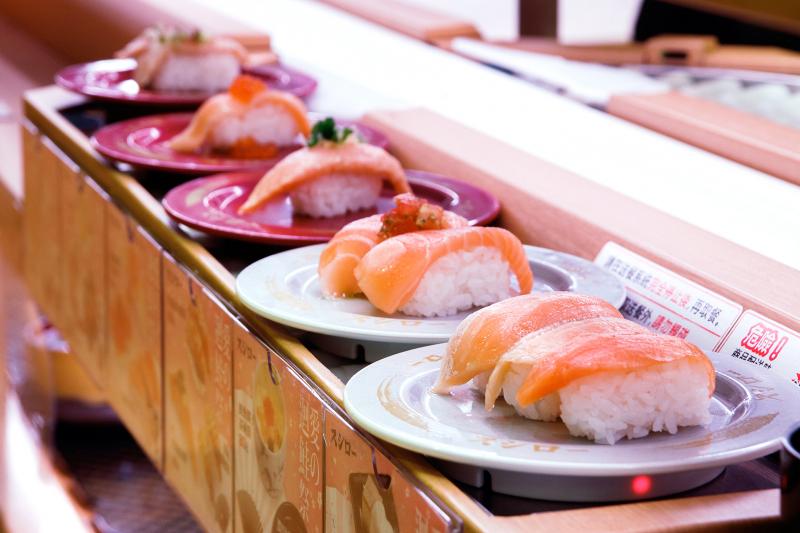
Photo: Liberty Times 照片:自由時報
Japanese sushi chain Sushiro offered free sushi for people whose name contained the Chinese characters for salmon, causing a wave of name changing to break out across Taiwan.
‧ “Four weddings”
A bank employee and his wife married four times and divorced three times over a period of 37 days. The man applied for marriage leave four times to get a total of 32 paid holidays, but the bank only granted him eight days for the first period of marriage leave. Believing that the bank owed him 24 days of leave, he filed a complaint to Taipei City’s Department of Labor. The bank was found to have violated labor laws.
(TRANSLATED BY RITA WANG, TAIPEI TIMES)
二○二一年結束之際,《法新社》指出,雖然今年受到疫情和許多天災侵擾,但仍有一些美妙有趣的新聞,他們也選出幾則新聞帶大家回顧。
以下列出兩則《法新社》選出的二○二一年新奇報導:
‧ 「鮭魚之亂」
連鎖壽司「壽司郎」台灣店為名字中有「鮭魚」中文字的人提供優惠,造成台灣人瘋狂改名。
‧ 「四場婚禮」
台灣一名銀行員在三十七天內連續跟同一個人結婚四次、離婚三次,並向公司申請四次婚假共三十二天,但銀行只准第一次結婚的八天假,行員認為公司欠他二十四天假,因此向北市勞動局提出檢舉,銀行被認為違法。
(自由時報)

A: Which TV drama series have been global hits so far this year? B: The US drama “Stranger Things 5,” South Korean drama “Can This Love Be Translated?” and Chinese megahit “Pursuit of Jade” are all popular lately. A: Isn’t “Pursuit of Jade” the costume idol drama about the romance between a charming marquis and a pig-slaughterer? Actor Zhang Linghe and actress Tian Xiwei are both so attractive. B: Plus, Netflix’s Korean-Japanese gay romance drama “Soul Mate” — starring Korea’s Ok Taec-yeon and Japan’s Hayato Isomura — is set to premiere in May. A: These hit international dramas
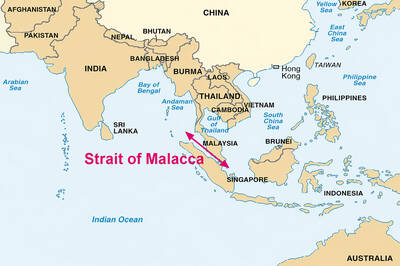
The closure of the Strait of Hormuz has forced policymakers in Asia to face questions over the security of other maritime chokepoints, including the Strait of Malacca, which is the world’s busiest waterway for international trade. WHAT IS THE MALACCA STRAIT? The 900km long Malacca Strait, bounded by Indonesia, Thailand, Malaysia and Singapore, provides the shortest sea route from East Asia to the Middle East and Europe. It carries nearly 22 percent of the world’s maritime trade, according to the Center for Strategic and International Studies (CSIS). This includes oil and gas shipments from the Middle East to the energy-hungry economies of China,
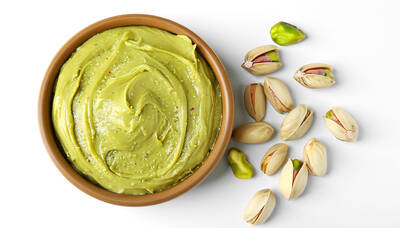
It seems like every year, new foods or drinks start trending and suddenly show up everywhere. A decade ago, avocado __1__ restaurant menus, while oat milk became the must-have addition to your coffee in cafes around five years back. The latest trend to hit this list is the pistachio. This flavorful green nut now features in everything from chocolate bars to Indian curries. While pistachios have long played a central role in certain regional cuisines, their recent global __2__ can be traced to Dubai. There, a specialty chocolate shop went __3__ on TikTok for one of its chocolate bars

One reason pistachios have taken the food world by storm compared to other nuts is their soft, green color. When ground down into a cream or butter, the green hue __6__ nicely with golden pastries or dark-brown chocolate, making it perfect for Instagram photos and TikTok videos. Their labor-intensive cultivation and __7__ also contribute to their image as a premium ingredient. Thus, buying a pistachio-based product often feels like a __8__ treat. Pistachios also stand out for their distinct flavor and health __9__. They have a subtle, sweet, earthy flavor that goes well with both sweet desserts and


 RSS
RSS