


Many people choose to drink coffee for refreshment when they feel weary, but it would be wrong to think that coffee is the only thing that contains caffeine. There is caffeine in tea, cocoa, cola drinks and so on.
Is caffeine good or bad for your health? Nutritionists say that getting an appropriate amount of caffeine can promote gastrointestinal peristalsis and perk you up, but remember not to take too much, otherwise it may put even more strain on your body.
On Aug. 24, nutritionist Yu Chu-ching wrote a post on her “Julie dietician” Facebook page, saying that the main benefits of caffeine are lifting one’s spirits, promoting gastrointestinal peristalsis, reducing fluid retention and moderating one’s appetite. Caffeine has its strongest effect about one hour after drinking, and it takes about 40 hours to fully metabolize 200 milligrams (mg) of caffeine. However, people’s metabolic responses are not all exactly the same. In addition, people should beware of consuming too much, which can cause discomfort such as anxiety, palpitations and insomnia. Healthy adults can consume up to about 300mg in one day. The average commercially available large cup of coffee contains 200mg of caffeine, so drinking two cups will take you over the limit.
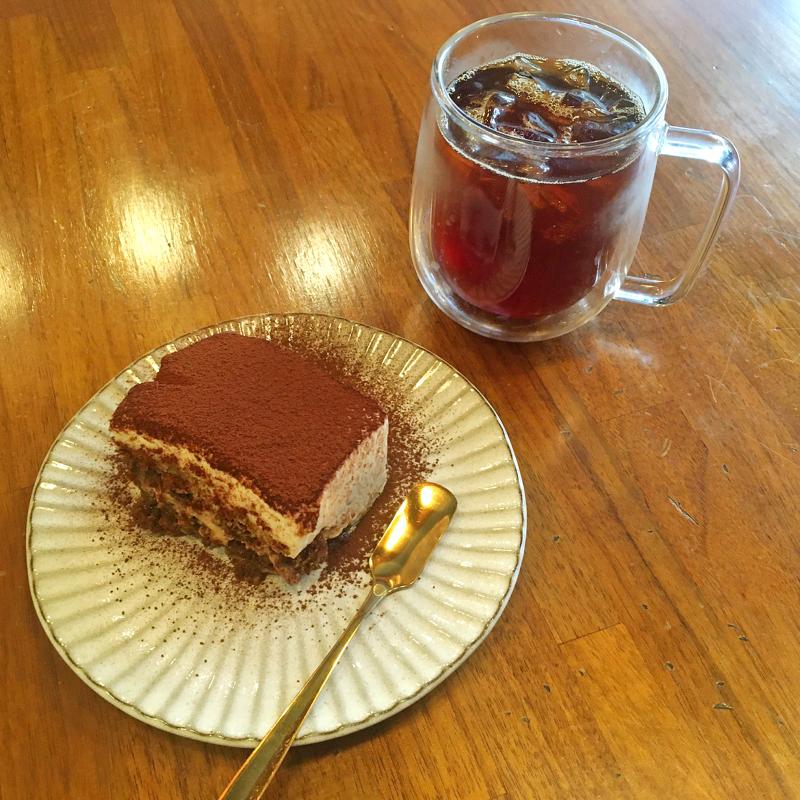
Photo courtesy of Keelung City Government 照片:基隆市政府提供
Yu said that those who suffer from heart disease should reduce this amount to about one half and not take more than 150 to 200mg of caffeine a day. Children under 12 years old should not touch caffeine, while teenagers should not exceed 100mg a day. As for pregnant women, they should go easy on it and not consume more than 100 to 200mg in one day.
Yu reminded her readers not to eat a load of excess sugar at the same time as consuming caffeine, otherwise it may cancel out many of the benefits. She also said that carbonated beverages and energy drinks contain sugar and other additives, so it is best not to drink them very often.
(Translated by Julian Clegg, Taipei Times)
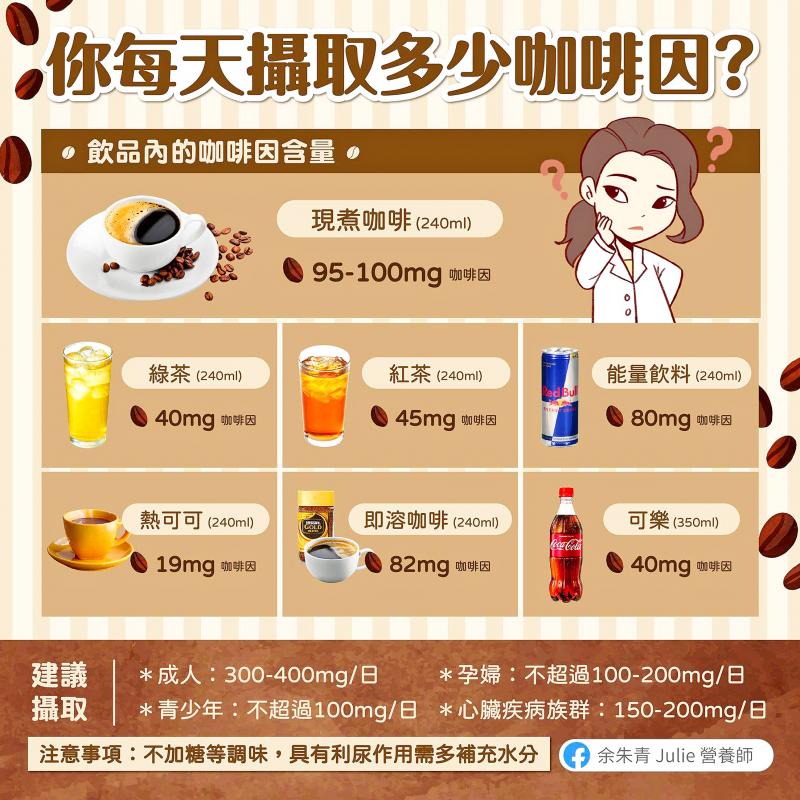
圖片擷取自「余朱青Julie營養師」臉書 Graphic from the “Julie dietician” Facebook page
許多民眾在精神不濟時,會選擇飲用咖啡來提神,但別以為咖啡因只有在咖啡、茶裡有,可可亞、可樂等都含有咖啡因。
究竟咖啡因對身體是好還是壞?營養師表示,攝取適量的咖啡因能夠有助腸胃蠕動及提振精神,但切記勿攝取過量,否則可能會造成身體更多的負擔。
營養師余朱青八月二十四日在臉書粉專「余朱青Julie營養師」發文指出,咖啡因的優點,主要是提振精神、促進腸胃蠕動、消水腫、減緩食慾。而咖啡因最強的時候是喝完一小時後,大約四十個小時才會代謝完兩百毫克的咖啡因,不過每個人新陳代謝反應並不完全相同。此外,小心攝取過量引起身體不適,如焦慮、心悸、失眠等,對健康成人而言,一天可以攝取的咖啡因量大約於三百毫克內。一般市售大杯咖啡就含有兩百毫克咖啡因,喝兩杯就會超標!
余朱青表示,如果有心臟疾病的人,份量大概是要減到一半,一天不要攝取超過一百五十到兩百毫克的咖啡因;小於十二歲不要碰咖啡因,青少年一天不要超過一百毫克;然而孕婦要比較節制,一天不要超過一百到兩百毫克。
余朱青提醒,攝取咖啡因時記得不要同時吃進一堆多餘的糖,這可能會讓咖啡因的好處大打折扣,而碳酸飲料或能量飲料,因含有糖和其他添加物,不宜常喝。
(自由時報)

In 2023, an 80-year-old woman in Taipei suffocated her paralyzed son after over five decades of caring for him. Turning herself in immediately, she confessed that worsening health and anxiety about who would care for him after her death had driven her to act. The court, acknowledging her difficult situation, sentenced her to two-and-a-half years in prison while recommending a presidential pardon. This rare judicial recommendation drew a complicated social response. Supporters argue that the mother’s half-century of caregiving renders her deserving of compassion instead of incarceration, believing that allowing her to live her final years in dignity and

★ Bilingual Story is a fictionalized account. 雙語故事部分內容純屬虛構。 The mango looked perfect. It sat on the fruit stand like a small sunset, red on one side and gold on the other. “I’ll take this one,” said Daniel. The fruit seller shook her head. “Not that one.” Daniel was surprised. “Why not? It looks beautiful.” “Yes,” she said, “but beautiful is not always ready.” She picked up another mango and held it near his nose. “First, smell here.” Daniel smelled the top of the mango. It was sweet and warm. “Good mangoes have a smell,” she said. “Next, feel the weight.”
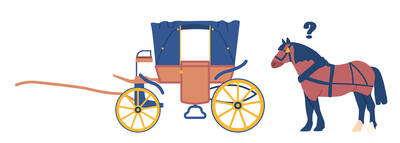
Put the Cart Before the Horse 本末倒置 Iris: I think I’m in love. Carl: What? Iris: We just have so much in common. We like all of the same things. Carl: Yes, but you’ve only chatted with him online. Iris: It doesn’t matter. I know we’ll end up getting married. Carl: I’m afraid you’re putting the cart before the horse. You should at least meet him first. Iris: OK, OK. I’ll do that. 艾瑞絲: 我想我戀愛了。 卡 爾: 什麼? 艾瑞絲: 我們就是有那麼多的共通點。我們喜歡的東西都一樣。 卡 爾: 是沒錯,不過妳和他只在網路上聊過天而已。 艾瑞絲: 那不重要。我知道我們最後一定會步入禮堂。 卡 爾: 妳恐怕是本末倒置了吧。妳至少應該先跟他見個面。 艾瑞絲: 好啦,好啦。我會的啦。 A tough cookie 強悍的人∕堅強的人 Tracy: I heard you went out with Iris last night. Justin: Yeah. We

1. 他非常討厭偽君子。 ˇ He has a deep hatred for hypocrites. χ He has a deep hatred to hypocrites. 註︰表示「對某人懷著愛、恨」等, 常用 have a love for/of, have a hatred for/of。 例如: We have a love for/of science. The working people have a hatred for/of all forms of exploitation. 2. 問題的答案其實不難找。 ˇ The answer to this question is not difficult to find. χ The answer of this question is not difficult to find. 註︰中文中的「的」在英語中不一定都用 of 來表示,有時須用 to。其他的例子如下: 我把房間的鑰匙弄丟了。 I lost the key to the room. 中間矗立著烈士紀念碑。 In the center stands the monument to the martyrs. 這部電影的續集你看過沒有? Have you seen the sequel to the movie? 3. 比起那家餐廳,他更喜歡這家。 ˇ He prefers this restaurant to that one. ˇ He likes


 RSS
RSS