


Highly-anticipated Taiwanese drama “Seqalu: Formosa 1867” has caused a buzz since its Aug. 14 premiere on Public Television Service (PTS), breaking PTS’ all-time debut ratings record for a drama in 21 years. Starring Golden Bell-winning actor Chris Wu and actress Jenny Wen, the show has also topped several streaming platforms, including Line TV, myVideo and MOD.
Directed by Tsao Jui-yuan, the historical epic has been adapted from doctor-turned-writer Chen Yao-chang’s novel “Kui Lei Hua.” The story is set in the mid-1800s, when the US merchant ship “Rover” struck a reef near self-governing Seqalu in today’s Pingtung County’s Hengchun Township. Due to conflict between American sailors and local residents, the “Rover Incident” broke out on March 12, 1867.
Despite a mostly positive reception, some viewers complained that certain characters look alike in the show, and that the storyline is confusing. Also, PTS has resized the Chinese and English subtitles so that they can be displayed simultaneously, but this has meant that they are too small to read.(Eddy Chang, Taipei Times)

Photo courtesy of PTS 照片:公視提供
備受期待的台灣連續劇《斯卡羅》,於八月十四日在公視首播後造成轟動,打破公視二十一年來戲劇首播的收視率紀錄!該劇由金鐘獎視帝吳慷仁、視后溫貞菱所主演,近日亦登上多個影音串流平台收視冠軍寶座,包括Line TV、myVideo、MOD。
曹瑞原導演的史詩台劇《斯卡羅》,改編自醫生作家陳耀昌的小說《傀儡花》。故事背景設定在一八○○年代,當時美國商船羅妹號,在自治的斯卡羅外海意外觸礁,該處也就是今日的屏東縣恆春鎮一帶。隨著美國水手和當地居民的衝突不斷,最終在一八六七年三月十二日,引爆歷史上所謂的「羅妹號事件」。
雖然播出後頗受好評,仍有觀眾抱怨劇中許多角色造型相似,劇情雜亂也令人困惑。而公視為了在螢幕上同時呈現中英雙語字幕,刻意將電視字幕縮小,讓觀眾看來特別吃力。
(台北時報張聖恩)
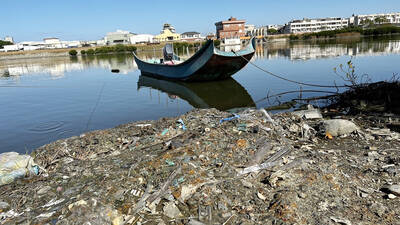
Many consumers are guilty of filling drawers or closets with old laptops, cellphones, fitness trackers and other electronic devices once they are no longer needed. It’s hard to know where to recycle such items, or it seems costly and inconvenient to do so. The world generates millions of tons of electronic waste — also called e-waste — each year. According to the UN’s most recent estimate, people worldwide produced 62 million metric tons of e-waste in 2022, and only about 22 percent of it was properly recycled. The US’ Environmental Protection Agency estimates that less than a quarter of e-waste is
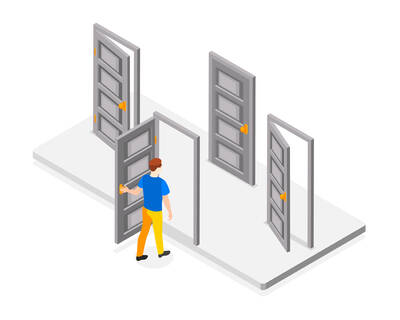
You’re sitting in class when a classmate asks to borrow a pencil. It seems like a small favor, so you agree without hesitation. The following week, the same classmate asks to share your notes. Later, they request help with a group project. You agree each time — after all, you helped out the first time — but before you know it, it has become automatic. This scenario demonstrates the “foot-in-the-door technique,” a psychological concept that shows how agreeing to small, acceptable demands makes it easier to accept larger ones later on. The name for this strategy comes from door-to-door

A: The four-day Tomb Sweeping Day long weekend begins Friday and will run until Monday. Are you going to sweep your ancestors’ tombs? B: I did in advance last weekend, so I can go to Kaohsiung to see the musical “The Phantom of the Opera.” A: Wow, is “Phantom” touring Taiwan again? It debuted in 1986, so this year marks the 40th anniversary of the show. B: And it’s not just touring Kaohsiung starting March 31, but also Taipei starting April 21 and Taichung starting May 26. A: “Phantom” is one of the world’s Four Major Musicals. I’ve seen all of them, except “Les

Dos & Don’ts — 想想看,這句話英語該怎麼說? 1. 我們很早到達電影院。 ˇ We arrived at the theater very early. χ We arrived the theater very early. 註︰arrive 為不及物動詞,後面如果有受詞要用 at 或 in。例如:They arrived in Taipei yesterday.。一般大地方,如國家、省、大城市等前面用 in,凡小地方城鎮、學校等則用 at。 2. 開車半小時以後,我們到達了海灘。 ˇ After half an hour’s drive, we got to the beach. χ After half an hour’s drive, we got the beach. 註︰come, go, get(來、去、到達)某地時,在表示地點的名詞前面應該用 to,如 go to school, go to Taipei, come to Shanghai 等。如果這些動詞後面所跟的是 here, there, home 等副詞,則不用 to。 3. 明天我會回辦公室。 ˇ I will be back in the office tomorrow. χ I will be back to office tomorrow. 註︰to be back 一語裡的 back 是副詞,不是介詞,所以後面要用 at (the market) 或 in (the office)。 假如假期結束,要回學校上課了則可說: ? Kids will be back


 RSS
RSS