


Remnants of China’s biggest rocket landed in the Indian Ocean on May 9, ending days of speculation over where the debris would hit and drawing US criticism over a lack of transparency.
But the fiery fate of a booster rocket, wherever it comes down, speaks to the larger issue of space debris and space sustainability, especially as space becomes a target not just for national space programs but also increasingly the private sector. Under international treaty, private space actors, who are expected to put 45,000 satellites in low Earth orbit over the next several years, are under the legal responsibility of their host nations.
Add to that an estimated 9,300 tonnes of space junk that is already orbiting the planet and the probability of space collisions and debris pollution is an issue of concern.
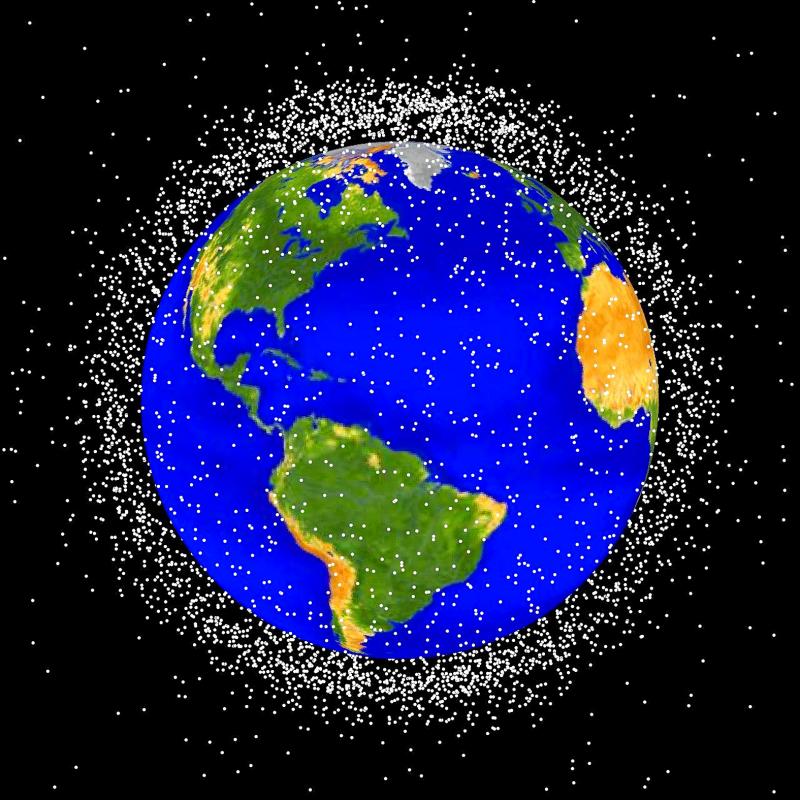
Photo: NASA via Wikimedia Commons 照片:美國太空總署∕維基共享資源
Previously, a piece of paint the size of a fingernail struck the windscreen of a space shuttle, piercing two of three layers of glass.
The fate of Long March 5B could refocus governments and international bodies on the issue of space sustainability, and that could provide more opportunity to firms like UK-based Astroscale that are preparing to tackle the debris problem with commercial junk-collecting services.
Astroscale is currently demonstrating a vehicle called “ELSA-d” in lower Earth orbit to show that space debris clean-up is indeed possible. It is a fiendishly difficult task, especially if the target satellite is spinning and tumbling. The test is using a satellite to capture a test drone with a magnet. In time, larger objects will require a robotic arm.
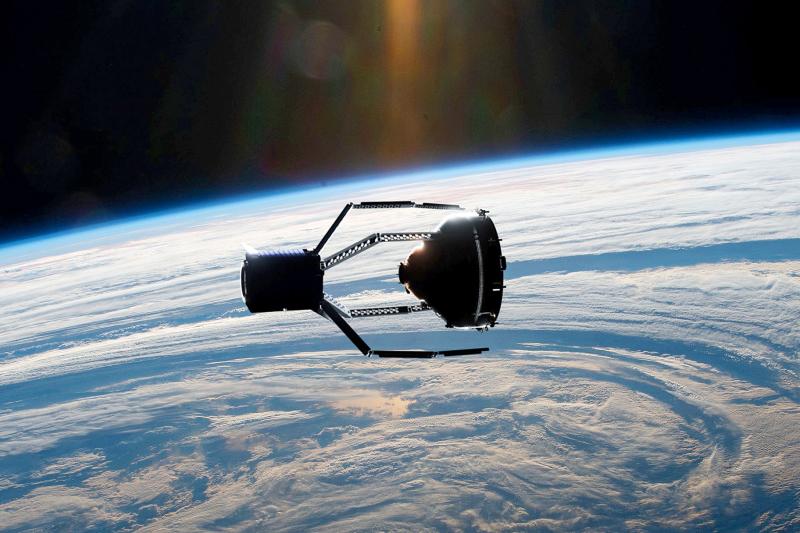
Photo: AFP 照片:法新社
(The Guardian)
中國最大火箭之殘骸已在五月九日墜落印度洋,讓數天來對殘骸究竟將撞擊何處的猜測告一段落,也引起美國對此事缺乏透明度的批評。
火箭推進器在熊熊烈焰中的宿命,無論它掉在哪裡,都觸及太空垃圾與太空永續性這更大的問題,尤其此時太空不僅成為國家太空計畫之標的,也愈趨成為私有公司之標的。在未來幾年中,經營太空業務的私有公司將把四萬五千顆衛星送入低空地球軌道,而根據國際條約規定,法律責任是由其東道國所承擔。
此外,據估計,現已有九千三百噸太空垃圾在繞著地球轉,太空中的碰撞與垃圾污染問題令人關注。
此前,一塊指甲大小的油漆打到一艘太空船的擋風玻璃,刺穿了三層厚玻璃的其中兩層。
長征五號的命運可能使政府及國際組織重新關注太空的永續性問題,而可能給像英國的Astroscale這樣的公司帶來更多機會,這些公司正準備提供收集垃圾之商業化服務,以解決太空垃圾問題。
Astroscale正在地球較低軌道展示一種名為「ELSA-d」的運載工具,以證明清除太空垃圾的確可行。這是一項艱鉅的任務,尤其是目標衛星處於旋轉與翻滾的情況時。該測試透過衛星進行,以磁鐵來捕獲測試用無人機,最後也會需要用到機械臂來抓取較大的物體。
(台北時報林俐凱編譯)
Many consumers are guilty of filling drawers or closets with old laptops, cellphones, fitness trackers and other electronic devices once they are no longer needed. It’s hard to know where to recycle such items, or it seems costly and inconvenient to do so. The world generates millions of tons of electronic waste — also called e-waste — each year. According to the UN’s most recent estimate, people worldwide produced 62 million metric tons of e-waste in 2022, and only about 22 percent of it was properly recycled. The US’ Environmental Protection Agency estimates that less than a quarter of e-waste is
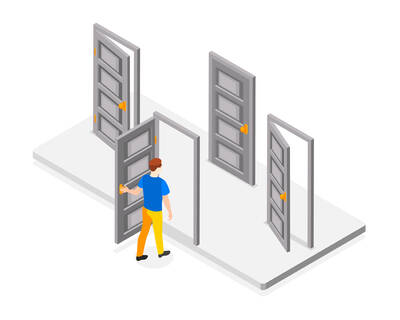
You’re sitting in class when a classmate asks to borrow a pencil. It seems like a small favor, so you agree without hesitation. The following week, the same classmate asks to share your notes. Later, they request help with a group project. You agree each time — after all, you helped out the first time — but before you know it, it has become automatic. This scenario demonstrates the “foot-in-the-door technique,” a psychological concept that shows how agreeing to small, acceptable demands makes it easier to accept larger ones later on. The name for this strategy comes from door-to-door

A: The four-day Tomb Sweeping Day long weekend begins Friday and will run until Monday. Are you going to sweep your ancestors’ tombs? B: I did in advance last weekend, so I can go to Kaohsiung to see the musical “The Phantom of the Opera.” A: Wow, is “Phantom” touring Taiwan again? It debuted in 1986, so this year marks the 40th anniversary of the show. B: And it’s not just touring Kaohsiung starting March 31, but also Taipei starting April 21 and Taichung starting May 26. A: “Phantom” is one of the world’s Four Major Musicals. I’ve seen all of them, except “Les
Dos & Don’ts — 想想看,這句話英語該怎麼說? 1. 我們很早到達電影院。 ˇ We arrived at the theater very early. χ We arrived the theater very early. 註︰arrive 為不及物動詞,後面如果有受詞要用 at 或 in。例如:They arrived in Taipei yesterday.。一般大地方,如國家、省、大城市等前面用 in,凡小地方城鎮、學校等則用 at。 2. 開車半小時以後,我們到達了海灘。 ˇ After half an hour’s drive, we got to the beach. χ After half an hour’s drive, we got the beach. 註︰come, go, get(來、去、到達)某地時,在表示地點的名詞前面應該用 to,如 go to school, go to Taipei, come to Shanghai 等。如果這些動詞後面所跟的是 here, there, home 等副詞,則不用 to。 3. 明天我會回辦公室。 ˇ I will be back in the office tomorrow. χ I will be back to office tomorrow. 註︰to be back 一語裡的 back 是副詞,不是介詞,所以後面要用 at (the market) 或 in (the office)。 假如假期結束,要回學校上課了則可說: ? Kids will be back


 RSS
RSS