


At 1:45pm on Wednesday afternoon in Hualien County’s Taroko Gorge National Park, the alarm was sounded after a tourist was seen to plunge over the edge of Cingshuei Cliff. A 74-year-old man surnamed Hu from Yilan County was taking a photograph next to an observation platform when, during a moment of inattention, he slipped over the cliff’s edge and plummeted 15m. Fortunately, Hu’s dexterity and physical strength allowed him to grab hold of a tree branch on the way down, which broke his fall and saved his life. After being rescued, Hu displayed no obvious external injuries and he refused treatment at hospital.
On Wednesday afternoon, Hu was walking along Huide Trail when the view from Cingshuei Cliff caught his attention. In order to take a picturesque photograph, Hu decided to risk sitting on a protective fence at the cliff’s edge. However, a large gust of wind pushed Hu off his center of gravity, causing the septuagenarian to tumble over the precipice. Hu’s shocked traveling companion immediately called the emergency services for assistance.
Fortunately, as Hu fell he was able to clamber onto a tree branch while thick undergrowth also helped to cushion his fall. Although Hu tumbled 15m, he was unscathed from the fall and was left suffering only from shock. Rescue workers were dispatched to the scene and used a mobile crane to winch him to safety. Although still traumatized by the accident, Hu kept thanking the police and firefighters with an apologetic look on his face.
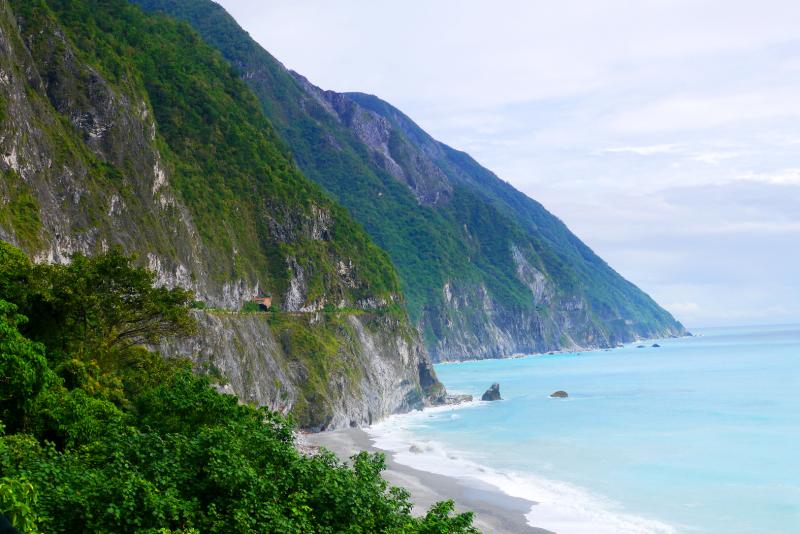
Photo: Wang Chun-chi, Taipei Times 照片:自由時報記者王峻祺
The Taroko Gorge National Park Administration says it installed “no climbing” warning signs within the Cingshuei Cliff recreation area a few years ago following a previous similar incident with a visitor falling over the edge while taking a photograph. The administration reminds visitors to heed the warning signs so as to avoid any regrettable incidents from occurring. The police also warn visitors not to squat on raised ground near the cliff’s edge or stretch forward through the railings while taking photographs or taking in the view.
(Liberty Times, translated by Edward Jones)
花蓮縣太魯閣國家公園清水斷崖週三下午一點四十五分驚傳遊客墜崖,來自宜蘭的七十四歲胡姓老翁在清水斷崖觀景平台附近拍照,不慎墜落山崖,深達十五公尺,所幸他身手矯健,及時抓住樹枝緩衝才保住一命,被救出時無明顯外傷,婉拒送醫。
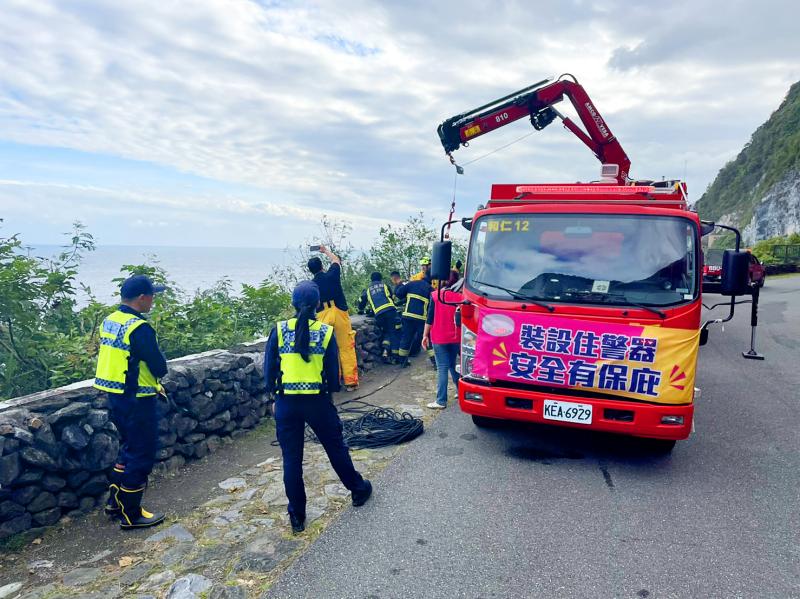
Photo courtesy of a member of the public 照片:民眾提供
胡姓老翁週三下午到匯德步道遊玩,當下被台灣十大美景之一的清水斷崖景色吸引,為了拍「美照」,他冒險坐上懸崖圍牆取景,但崖邊陣陣強風,老翁重心不穩墜落懸崖,隨行友人見狀嚇得大叫,趕緊報案聯繫警消救援。
所幸老翁墜落過程攀住樹枝,加上樹叢緩衝力道,雖深達十五公尺,仍毫髮無傷,僅受驚嚇,救護人員出動吊臂器材車協助老翁脫困,利用架設拖吊系統將他吊起,老翁獲救後心有餘悸,一臉歉意連忙向警消道謝。
太魯閣國家公園管理處提醒,過去曾有民眾拍照墜落懸崖事件,多年來已在清水斷崖遊憩區設立禁止攀爬告示牌,盼遊客遵守避免再有憾事發生。警方則呼籲,拍照取景,切勿站立或蹲坐在緊鄰懸崖的高地上,或將身體探出欄杆外取景。
(自由時報記者王峻祺)
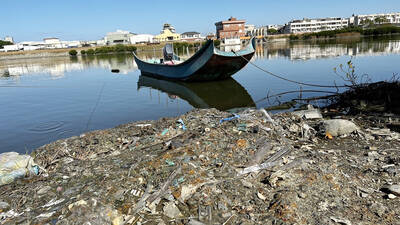
Many consumers are guilty of filling drawers or closets with old laptops, cellphones, fitness trackers and other electronic devices once they are no longer needed. It’s hard to know where to recycle such items, or it seems costly and inconvenient to do so. The world generates millions of tons of electronic waste — also called e-waste — each year. According to the UN’s most recent estimate, people worldwide produced 62 million metric tons of e-waste in 2022, and only about 22 percent of it was properly recycled. The US’ Environmental Protection Agency estimates that less than a quarter of e-waste is

You’re sitting in class when a classmate asks to borrow a pencil. It seems like a small favor, so you agree without hesitation. The following week, the same classmate asks to share your notes. Later, they request help with a group project. You agree each time — after all, you helped out the first time — but before you know it, it has become automatic. This scenario demonstrates the “foot-in-the-door technique,” a psychological concept that shows how agreeing to small, acceptable demands makes it easier to accept larger ones later on. The name for this strategy comes from door-to-door

A: The four-day Tomb Sweeping Day long weekend begins Friday and will run until Monday. Are you going to sweep your ancestors’ tombs? B: I did in advance last weekend, so I can go to Kaohsiung to see the musical “The Phantom of the Opera.” A: Wow, is “Phantom” touring Taiwan again? It debuted in 1986, so this year marks the 40th anniversary of the show. B: And it’s not just touring Kaohsiung starting March 31, but also Taipei starting April 21 and Taichung starting May 26. A: “Phantom” is one of the world’s Four Major Musicals. I’ve seen all of them, except “Les

Dos & Don’ts — 想想看,這句話英語該怎麼說? 1. 我們很早到達電影院。 ˇ We arrived at the theater very early. χ We arrived the theater very early. 註︰arrive 為不及物動詞,後面如果有受詞要用 at 或 in。例如:They arrived in Taipei yesterday.。一般大地方,如國家、省、大城市等前面用 in,凡小地方城鎮、學校等則用 at。 2. 開車半小時以後,我們到達了海灘。 ˇ After half an hour’s drive, we got to the beach. χ After half an hour’s drive, we got the beach. 註︰come, go, get(來、去、到達)某地時,在表示地點的名詞前面應該用 to,如 go to school, go to Taipei, come to Shanghai 等。如果這些動詞後面所跟的是 here, there, home 等副詞,則不用 to。 3. 明天我會回辦公室。 ˇ I will be back in the office tomorrow. χ I will be back to office tomorrow. 註︰to be back 一語裡的 back 是副詞,不是介詞,所以後面要用 at (the market) 或 in (the office)。 假如假期結束,要回學校上課了則可說: ? Kids will be back


 RSS
RSS