


After Taiwanese veteran singer Fei Yu-ching retired from showbiz late last year, the popularity of his classic song “Yi Jian Mei,” literally “a twig of plum blossoms,” has surged worldwide in recent months. The 1983 hit even won the top spot on Spotify in Norway and New Zealand and the second spot in Finland and Sweden.
It all started with a video, as Chinese entertainer Zhang Aiqin, nicknamed “Egg Brother,” posted a clip of him singing the chorus of the song. After the clip was reposted to major social media, the song has gone viral on the Internet as foreign netizens try to sing the Chinese lyrics “xue hua piao piao, bei feng xiao xiao,” which literally means: the snowflakes are falling and the north wind is blowing.
Fei’s manager responded that the 65-year-old singer was surprised about this, saying Fei has felt blessed before and after retirement but has no plan to stage a comeback, despite the global sensation.
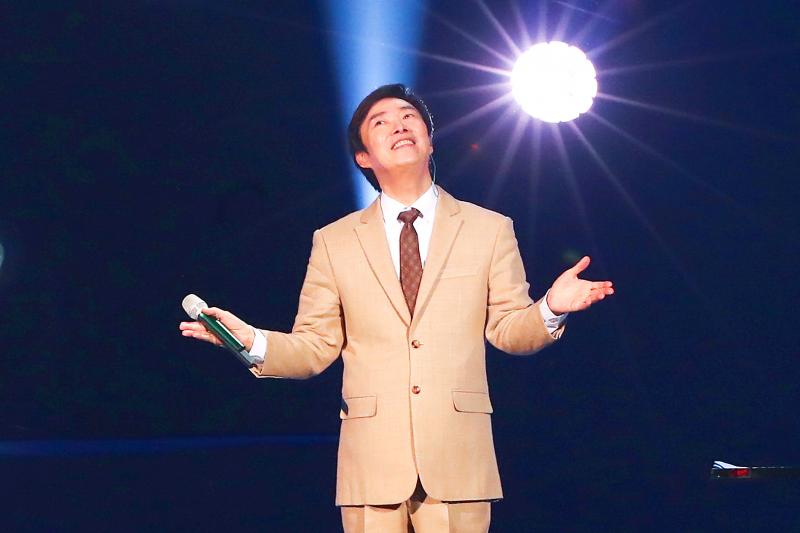
Photo: CNA 照片︰中央社
(Eddy Chang, Taipei Times)
台灣資深歌手費玉清去年底封麥退出演藝圈,然而他演唱的經典名曲《一剪梅》近月來在全球大受歡迎。這首一九八三年的金曲甚至還登上Spotify排行榜,在挪威、紐西蘭均榮獲冠軍,在芬蘭、瑞典亦高居第二。
這一切都是從某段影片開始的,日前中國藝人「蛋哥」張愛欽上傳一段自己演唱該曲副歌的片段,影片被轉傳至各大社群媒體後,歌曲就在網路上爆紅。外國網友紛紛唱起中文歌詞︰「雪花飄飄,北風蕭蕭」。
費玉清的經紀人則透露,他得知後覺得很驚喜,並表示不論是在封麥前後,老天爺對他都很好。不過雖然歌曲在全球造成轟動,並無重新復出的打算。
(台北時報張聖恩)

The debate surrounding Taipower’s recent corporate identity reboot has gone well beyond the design community. The controversy began after Taipower replaced the familiar “Taiwan Power Company” wording — widely regarded as the calligraphy of Yu You-ren (1879-1964), former Control Yuan president and master calligrapher — with a modern logotype by designer Aaron Nieh’s team, Aaron Nieh Workshop. Taipower said the change was not a wholesale replacement of old signage, but an “optimization of its identity system,” aimed at meeting the needs of digital media, electronic bills, apps, social media graphics and various small-format applications. Existing physical markings, such as building

Since 2005, the third Monday in January has come to be known as “Blue Monday.” In other words, that day is believed to be the most depressing day of the year. This concept seems logical at first. After all, Monday marks the start of the school or workweek after two days of rest and fun. Also, blue is a color that is often associated with sadness. Furthermore, in many parts of the world, January is a time when the weather is cold, rainy, and gloomy. But is there any scientific proof that this January day is truly sadder than any of

Continued from yesterday(延續自昨日) https://www.taipeitimes.com/News/lang For the most part, the idea of “Blue Monday” has been rejected as a myth. Some mental health experts also say there is a danger in labeling a certain day as the most depressing time of the entire year. Some argue that if people expect to feel sadder on the third Monday in January, this belief alone may increase their anxiety. One group that is worried about the negative effect of believing in Blue Monday is Samaritans. A mental health charity based in the UK, Samaritans is working to turn Blue Monday into “Brew Monday.” In this
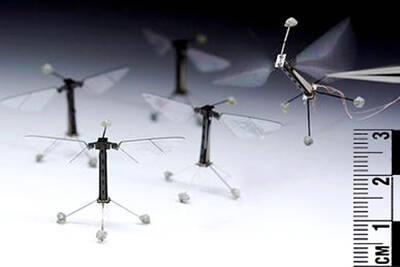
As bee populations around the world continue to decline at an alarming rate, scientists are developing an innovative solution: robotic bees. Recent advances at research institutions like Massachusetts Institute of Technology (MIT) in the US have produced tiny flying robots capable of performing pollination tasks similar to those of real bees. These tiny machines represent an impressive technological achievement. MIT’s latest models can hover in the air for over 1,000 seconds and perform complex movements, demonstrating the agility needed for successful pollination. The robots are designed to mimic the flight patterns of natural bees, offering potential support to agriculture


 RSS
RSS