


With the arrival of spring weather and flowers in full blossom, Taipei Zoo’s female giant panda, Yuan Yuan, is in estrus (on heat). Zoo keepers began to detect a series of signs starting from Feb. 9 when they noticed Yuan Yuan was rubbing her vulva, which they observed was swollen and secreting fluid. Zoo keepers also noticed other tell-tale signs, including pacing around her enclosure, running about and bathing in the water pools. As the indications became increasingly apparent, zoo keepers’ statistical modeling, using a range of indices including an analysis of hormone levels, determined that Yuan Yuan would be in “peak estrus” on Thursday last week. Zoo veterinarians carried out two rounds of artificial insemination last Wednesday afternoon and Thursday morning to take advantage of the small window of opportunity in which pandas are able to conceive.
Breeding specialists from the Bifengxia Giant Panda Base research and breeding center in China’s Sichuan Province would usually visit the zoo every year during Yuan Yuan’s estrus period. However, due to the COVID-19 epidemic, no specialists from the center were able to travel to Taiwan this year. As a workaround, once Yuan Yuan was confirmed to be in estrus, veterinarians held a video conference to discuss her condition with the center’s Wang Chengdong.
According to the zoo, this year’s artificial insemination operation was carried out by a team of zoo veterinarians under the guidance of medical experts from the Wild Animal Healthcare and Treatment Group, including professor Liu Chen-hsuan, veterinarian Chang Chih-hua, doctors Sun Wei-zen and Wang Yi-chia from National Taiwan University’s Department of Anesthesiology and Wei Ling-ying from the hospital’s Department of Dentistry. In addition to carrying out artificial insemination, the team performed an annual health check up on Yuan Yuan and her mate, Tuan Tuan, which included carrying out ultrasound tests on their teeth and abdomens to gain a complete picture of the pandas’ overall health.
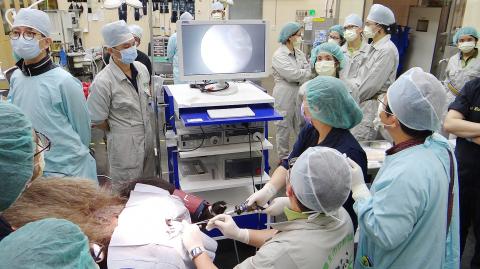
Photo courtesy of Taipei Zoo
照片:台北市立動物園提供
(Translated by Edward Jones, Taipei Times)
春暖花開的季節,台北市立動物園大貓熊「圓圓」發情期也開始。園方表示,從二月九日開始,保育員陸續觀察到「圓圓」出現外陰腫、蹭陰、過水、來回走動、奔跑、泡水等行為,進入發情期的跡象越來越明顯,從各項指標及荷爾蒙指數等專業數值研判,上週四達到發情高峰,園方分別在上週三下午、上週四上午為「圓圓」進行人工授精,把握住最佳繁殖時機。
以往每年大貓熊繁殖季節,中國大熊貓保護研究中心專家都會親赴北市動物園現場。園方表示,今年因為新型冠狀病毒疫情的關係,研究中心專家無法到現場來指導。但「圓圓」開始有發情行為,園方便與大熊貓研究中心專家王承東,使用視訊會議,共同討論大貓熊的繁殖大事。
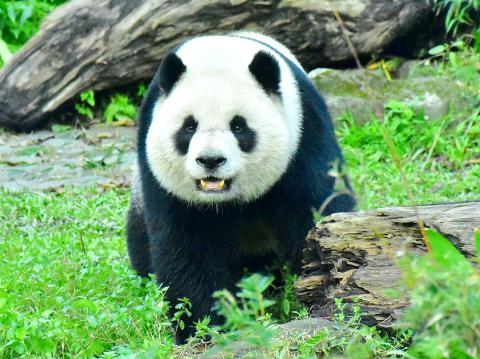
Photo courtesy of Taipei Zoo
照片:台北市立動物園提供
園方表示,這次大貓熊繁殖工作,特別感謝「野生動物健康照護與醫療小組」劉振軒教授、張志華獸醫、台大醫院麻醉部孫維仁醫師、王憶嘉醫師、牙科部魏鈴穎醫師等專家到場指導,與動物園獸醫師共同完成任務。除了進行人工繁殖作業外,同時為「團團」和「圓圓」進行牙齒及腹部超音波等年度檢查,以了解並掌握動物整體的健康狀況。
(自由時報記者蔡亞樺)
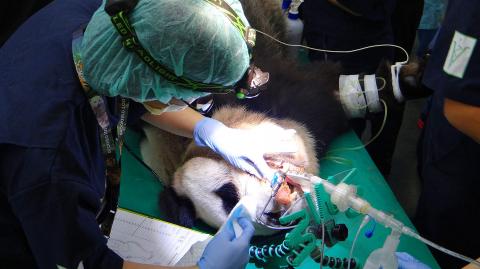
Photo courtesy of Taipei Zoo
照片:台北市立動物園提供
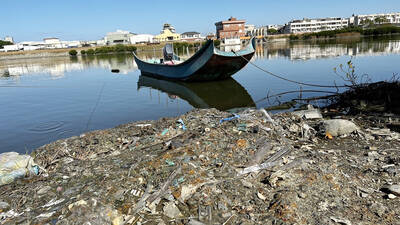
Many consumers are guilty of filling drawers or closets with old laptops, cellphones, fitness trackers and other electronic devices once they are no longer needed. It’s hard to know where to recycle such items, or it seems costly and inconvenient to do so. The world generates millions of tons of electronic waste — also called e-waste — each year. According to the UN’s most recent estimate, people worldwide produced 62 million metric tons of e-waste in 2022, and only about 22 percent of it was properly recycled. The US’ Environmental Protection Agency estimates that less than a quarter of e-waste is

You’re sitting in class when a classmate asks to borrow a pencil. It seems like a small favor, so you agree without hesitation. The following week, the same classmate asks to share your notes. Later, they request help with a group project. You agree each time — after all, you helped out the first time — but before you know it, it has become automatic. This scenario demonstrates the “foot-in-the-door technique,” a psychological concept that shows how agreeing to small, acceptable demands makes it easier to accept larger ones later on. The name for this strategy comes from door-to-door

A: The four-day Tomb Sweeping Day long weekend begins Friday and will run until Monday. Are you going to sweep your ancestors’ tombs? B: I did in advance last weekend, so I can go to Kaohsiung to see the musical “The Phantom of the Opera.” A: Wow, is “Phantom” touring Taiwan again? It debuted in 1986, so this year marks the 40th anniversary of the show. B: And it’s not just touring Kaohsiung starting March 31, but also Taipei starting April 21 and Taichung starting May 26. A: “Phantom” is one of the world’s Four Major Musicals. I’ve seen all of them, except “Les

Dos & Don’ts — 想想看,這句話英語該怎麼說? 1. 我們很早到達電影院。 ˇ We arrived at the theater very early. χ We arrived the theater very early. 註︰arrive 為不及物動詞,後面如果有受詞要用 at 或 in。例如:They arrived in Taipei yesterday.。一般大地方,如國家、省、大城市等前面用 in,凡小地方城鎮、學校等則用 at。 2. 開車半小時以後,我們到達了海灘。 ˇ After half an hour’s drive, we got to the beach. χ After half an hour’s drive, we got the beach. 註︰come, go, get(來、去、到達)某地時,在表示地點的名詞前面應該用 to,如 go to school, go to Taipei, come to Shanghai 等。如果這些動詞後面所跟的是 here, there, home 等副詞,則不用 to。 3. 明天我會回辦公室。 ˇ I will be back in the office tomorrow. χ I will be back to office tomorrow. 註︰to be back 一語裡的 back 是副詞,不是介詞,所以後面要用 at (the market) 或 in (the office)。 假如假期結束,要回學校上課了則可說: ? Kids will be back


 RSS
RSS