


A pygmy hippopotamus at Kaohsiung’s Shoushan Zoo recently gave birth to a male calf and following a highly successful naming competition, with voting from visitors and netizens, the infant hippo has been christened “Yuanbao.” In a joint celebration of Double Ten National Day and a “coming out party” for Yuanbao, the zoo granted free admission to members of the public on Thursday, also distributing 600 pygmy hippopotamus-themed “shouxian” cookies and exclusive gifts to visitors on the day.
According to Kaohsiung City Government Tourism Bureau acting director Chiu Chun-long, after more than 700 days of waiting and the strenuous efforts of zoo keepers, Yuanbao was finally born in June. Chiu says it is the first time that the zoo has unveiled an animal to the public on National Day, and holding a “shouxian” ceremony is also a first.
“Shouxian” is an ancient custom which involves holding a special ceremony to pray for the health and safety of a child when it reaches exactly four months old. The zoo came up with a novel twist on the traditional “shouxian” cookies, preparing Yuanbao’s favorite snack of carrots and forage grass in the shape of a carved Halloween pumpkin to represent the outer pastry of a cookie. Staff prayed for Yuanbao’s good health and invited the zoo’s director Chuang Hsuan-chih to share his knowledge and experience of caring for the zoo’s animals. There was also a question-and-answer session for young visitors, who received exclusive gifts for answering questions correctly.
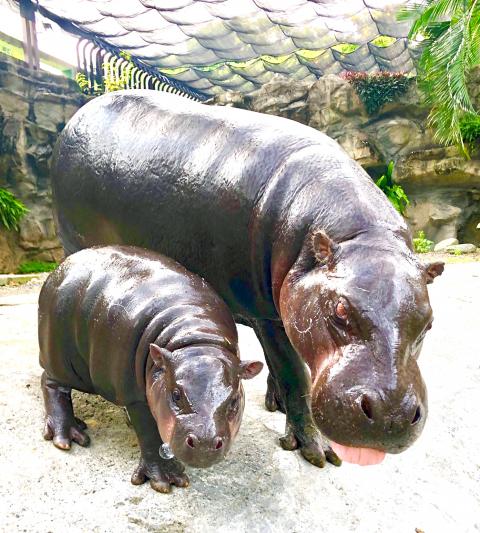
Photo courtesy of Shoushan Zoo
照片:壽山動物園提供
In addition, the company Taiwan Go designed a special augmented reality activity for the occasion, which children were given to test out for the first time. First drawing Yuanbao on paper, children added colors and wrote a message, and then, using the app on a tablet computer, produced a 3D animation to bring the hippo to life and create their own “personalized” Yuanbao.
(Translated by Edward Jones, Taipei Times)
高雄市壽山動物園新生兒侏儒河馬寶寶,經過激烈的網路及現場票選命名活動後,正式取名為「圓寶」,為歡慶雙十節及動物園侏儒河馬寶寶「圓寶」首度亮相,雙十國慶當日開放免費入園同樂,還送出六百份侏儒河馬收涎餅乾及獨家精美小禮品。
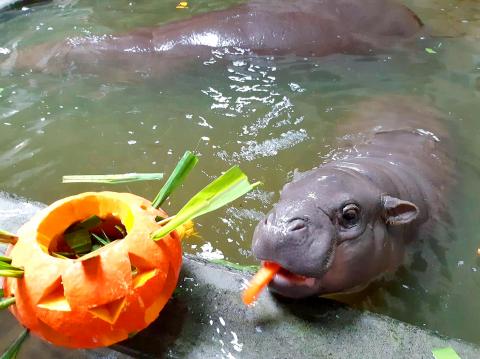
Photo courtesy of Shoushan Zoo
照片:壽山動物園提供
高雄市政府觀光局代理局長邱俊龍說,壽山動物園經過七百多個日子期待及努力,終於在今年六月迎來侏儒河馬寶寶「圓寶」誕生,首度在國慶日公開亮相,還為「圓寶」辦收涎。
收涎為古早習俗,在囝仔滿四個月時為祈求平安健康長大所進行的儀式,壽山動物園創全台先例,首次仿照舉辦製作「獨家收涎餅」,以「圓寶」最愛吃的紅蘿蔔及牧草當食材,搭配萬聖節造型的南瓜當餅皮製作而成,一起為侏儒河馬寶寶祈福,同時邀請動物園主任莊絢智解說侏儒河馬知識及照養心得,現場問答活動答對的小朋友,可以獲得精美獎品!
此外,Taiwan Go特別為動物園設計一款專屬AR塗鴉,活動當日搶先開放給小朋友體驗,在著色紙塗上心目中侏儒河馬「圓寶」的顏色,並寫上祝福的話。透過平板將以3D立體呈現。新穎的AR技術使畫筆下的侏儒河馬栩栩如生的出現在眼前,讓小朋友能擁有屬於自己的「圓寶」。
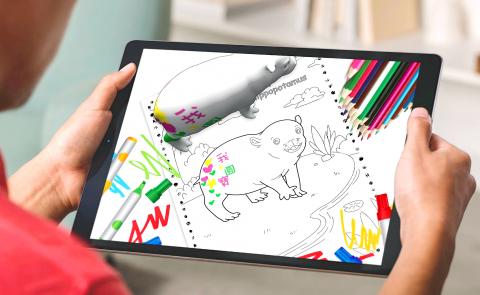
Photo courtesy of Shoushan Zoo
照片:壽山動物園提供
(自由時報記者張忠義)
Many consumers are guilty of filling drawers or closets with old laptops, cellphones, fitness trackers and other electronic devices once they are no longer needed. It’s hard to know where to recycle such items, or it seems costly and inconvenient to do so. The world generates millions of tons of electronic waste — also called e-waste — each year. According to the UN’s most recent estimate, people worldwide produced 62 million metric tons of e-waste in 2022, and only about 22 percent of it was properly recycled. The US’ Environmental Protection Agency estimates that less than a quarter of e-waste is

You’re sitting in class when a classmate asks to borrow a pencil. It seems like a small favor, so you agree without hesitation. The following week, the same classmate asks to share your notes. Later, they request help with a group project. You agree each time — after all, you helped out the first time — but before you know it, it has become automatic. This scenario demonstrates the “foot-in-the-door technique,” a psychological concept that shows how agreeing to small, acceptable demands makes it easier to accept larger ones later on. The name for this strategy comes from door-to-door

A: The four-day Tomb Sweeping Day long weekend begins Friday and will run until Monday. Are you going to sweep your ancestors’ tombs? B: I did in advance last weekend, so I can go to Kaohsiung to see the musical “The Phantom of the Opera.” A: Wow, is “Phantom” touring Taiwan again? It debuted in 1986, so this year marks the 40th anniversary of the show. B: And it’s not just touring Kaohsiung starting March 31, but also Taipei starting April 21 and Taichung starting May 26. A: “Phantom” is one of the world’s Four Major Musicals. I’ve seen all of them, except “Les

Dos & Don’ts — 想想看,這句話英語該怎麼說? 1. 我們很早到達電影院。 ˇ We arrived at the theater very early. χ We arrived the theater very early. 註︰arrive 為不及物動詞,後面如果有受詞要用 at 或 in。例如:They arrived in Taipei yesterday.。一般大地方,如國家、省、大城市等前面用 in,凡小地方城鎮、學校等則用 at。 2. 開車半小時以後,我們到達了海灘。 ˇ After half an hour’s drive, we got to the beach. χ After half an hour’s drive, we got the beach. 註︰come, go, get(來、去、到達)某地時,在表示地點的名詞前面應該用 to,如 go to school, go to Taipei, come to Shanghai 等。如果這些動詞後面所跟的是 here, there, home 等副詞,則不用 to。 3. 明天我會回辦公室。 ˇ I will be back in the office tomorrow. χ I will be back to office tomorrow. 註︰to be back 一語裡的 back 是副詞,不是介詞,所以後面要用 at (the market) 或 in (the office)。 假如假期結束,要回學校上課了則可說: ? Kids will be back


 RSS
RSS