


Organized by the Taipei Film Festival to honor achievements in Taiwanese cinema, the 21st Taipei Film Awards ceremony will take place at Taipei Zhongshan Hall tomorrow. This year’s Yang Shih-chi Outstanding Contribution Award will go to documentary film director Mickey Chen, who died of "cardiogenic shock" late last year at the age of 51.
Chen, often nicknamed "Sister Key" after his English name "Mickey", will be given the award for providing a voice to minorities. The gay director was known for his LGBT-themed documentaries such as the 1999 Boys for Beauty. He also won a China Times Literature Award with his essay in memory of “Rose Boy” Yeh Yung-chih, a student who had been constantly bullied by his schoolmates due to his effeminate behavior before he died mysteriously.
For this year’s Taipei Film Awards, director Huang Chao-liang’s Han Dan and Hung Po-hao’s Dad’s Suit lead the nominees with 11 nominations each — followed by Wi Ding Ho’s Cities of Last Things and Zoe Lin’s Secrets in the Hot Spring with nine nods each.
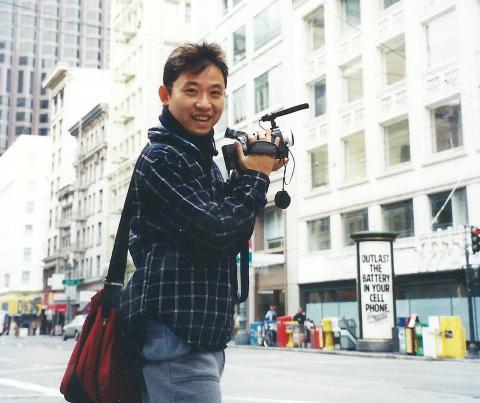
Photo: CNA
照片︰中央社
(Eddy Chang, Taipei Times)
台北電影節主辦的台北電影獎,是為了表揚台灣電影業的成就而設立,第二十一屆頒獎典禮明日在中山堂盛大登場。今年的「楊士琪卓越貢獻獎」將頒發給紀錄片導演陳俊志,他去年底因「心因性休克」而驟逝,享年五十一歲。
因英文名字「米奇」而常被暱稱為「琪姐」的陳導演,是因為替少數族群發聲而獲獎。這位同志導演以一九九九年的《美麗少年》等同志題材紀錄片聞名,他也曾以紀念「玫瑰男孩」葉永鋕的文章,榮獲時報文學獎首獎。葉同學因較女性化的行為舉止,持續遭受同學們霸凌,後來離奇死亡。
而今年的台北電影獎,導演黃朝亮的《寒單》、洪伯豪的《老大人》各入圍十一項領先。何蔚庭的《幸福城市》、林冠慧的《切小金家的旅館》各提名九項居次。
(台北時報張聖恩〉
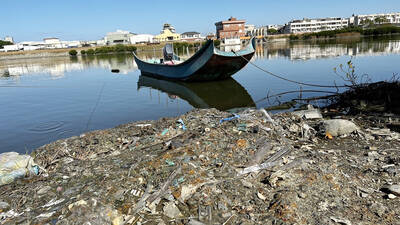
Many consumers are guilty of filling drawers or closets with old laptops, cellphones, fitness trackers and other electronic devices once they are no longer needed. It’s hard to know where to recycle such items, or it seems costly and inconvenient to do so. The world generates millions of tons of electronic waste — also called e-waste — each year. According to the UN’s most recent estimate, people worldwide produced 62 million metric tons of e-waste in 2022, and only about 22 percent of it was properly recycled. The US’ Environmental Protection Agency estimates that less than a quarter of e-waste is

You’re sitting in class when a classmate asks to borrow a pencil. It seems like a small favor, so you agree without hesitation. The following week, the same classmate asks to share your notes. Later, they request help with a group project. You agree each time — after all, you helped out the first time — but before you know it, it has become automatic. This scenario demonstrates the “foot-in-the-door technique,” a psychological concept that shows how agreeing to small, acceptable demands makes it easier to accept larger ones later on. The name for this strategy comes from door-to-door

A: The four-day Tomb Sweeping Day long weekend begins Friday and will run until Monday. Are you going to sweep your ancestors’ tombs? B: I did in advance last weekend, so I can go to Kaohsiung to see the musical “The Phantom of the Opera.” A: Wow, is “Phantom” touring Taiwan again? It debuted in 1986, so this year marks the 40th anniversary of the show. B: And it’s not just touring Kaohsiung starting March 31, but also Taipei starting April 21 and Taichung starting May 26. A: “Phantom” is one of the world’s Four Major Musicals. I’ve seen all of them, except “Les

Dos & Don’ts — 想想看,這句話英語該怎麼說? 1. 我們很早到達電影院。 ˇ We arrived at the theater very early. χ We arrived the theater very early. 註︰arrive 為不及物動詞,後面如果有受詞要用 at 或 in。例如:They arrived in Taipei yesterday.。一般大地方,如國家、省、大城市等前面用 in,凡小地方城鎮、學校等則用 at。 2. 開車半小時以後,我們到達了海灘。 ˇ After half an hour’s drive, we got to the beach. χ After half an hour’s drive, we got the beach. 註︰come, go, get(來、去、到達)某地時,在表示地點的名詞前面應該用 to,如 go to school, go to Taipei, come to Shanghai 等。如果這些動詞後面所跟的是 here, there, home 等副詞,則不用 to。 3. 明天我會回辦公室。 ˇ I will be back in the office tomorrow. χ I will be back to office tomorrow. 註︰to be back 一語裡的 back 是副詞,不是介詞,所以後面要用 at (the market) 或 in (the office)。 假如假期結束,要回學校上課了則可說: ? Kids will be back


 RSS
RSS