


Chinese practice
破釜沉舟;焚舟破釜;過河拆橋
destroy the cooking pots and sink the boats;
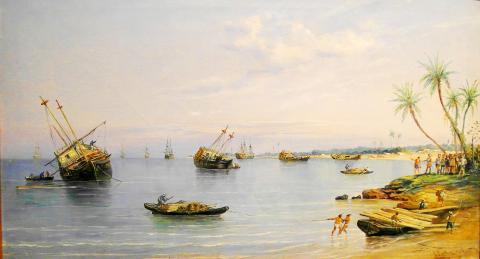
Photo: Wikimedia Commons
照片:維基共享資源
burn the boats and destroy the cooking pots;
cross the river and dismantle the bridge
(po4 fu3 chen2 zhou1; fen2 zhou1 po4 fu3; guo4 he2 chai1 qiao2)
古羅馬軍隊行軍常在離開時把橋樑燒毀,以切斷敵人的對外聯繫,也是撤退的手段,但這同時也讓他們沒有逃脫的餘地。這做法傳達給部隊這樣的訊息:在這險境,你不是戰勝,就是滅亡。在古代,把船燒掉的做法也很常見,亦出於相同的原因。西班牙征服者艾爾南‧柯提斯一五一九年四月在今墨西哥韋拉克魯斯州附近海域,將其艦隊鑿沉,以避免他登陸揮軍特諾奇蒂特蘭前發生兵變。有兩個中文成語跟這做法直接相關:「破釜沉舟」(把飯鍋打破、把船鑿沉),以及「焚舟破釜」(燒毀船隻、打破飯鍋)。
第一個成語「破釜沉舟」,典出《史記‧項羽本紀》。項羽的兵力遠不及敵軍,於是他命令士卒將退路摧毀,以激勵軍心:「項羽乃悉引兵渡河,皆沉船,破釜甑,燒廬舍,持三日糧,以示士卒必死,無一還心」(項羽便率領全部軍隊過河,把船隻全部弄沉、把鍋碗全都砸破、把軍營全部燒毀,只帶了三天的軍糧,以此向士卒展現一定要決死戰鬥,毫無退還之決心)。現今的成語「破釜沉舟」,是以「沉舟」一詞替換了「沉船」。
第二個成語「焚舟破釜」,源自古中國軍事論著《孫子兵法》。在〈九地〉一章,作者描述了戰技高超將領的做法:「易其事,革其謀,使人無識,易其居,迂其途,使人不得慮。帥與之期,如登高而去其梯,帥與之深,入諸侯之地而發其機。焚舟破釜,若驅群羊,驅而往,驅而來,莫知所之」(變更作戰部署,改變原定計劃,〔將帥〕使敵人無法識破真相;不時變換駐地,故意迂回前進,讓敵人無從推測其意圖。將帥給軍隊作戰任務,要像使其登高而抽去梯子一樣。將帥率領士卒深入敵方諸侯國土後,才會現出底牌的實力。將帥把船焚毀、把煮飯鍋打破,對待士卒要能像驅趕羊群一樣,趕過去又趕過來,使他們不知道要到哪裡去)。
「破釜沉舟」和「焚舟破釜」都是表示完成任務的決心。英文成語「to burn one’s boats」(把自己的船燒掉)和「to burn one’s bridges」(燒掉一座橋)也表示沒有回頭路,但其意通常是負面的,例如「be careful not to burn your bridges」(小心別燒掉你的橋樑),是用來勸人小心謹慎,或是警告。
「to burn one’s bridges」的意義,反倒類似中文成語「過河拆橋」──過了河之後,就把橋給拆了。此語典出《元史》的〈徹里帖木兒列傳〉。元朝最後一位皇帝元順帝下令取消科舉制度,大臣徐有壬表示反對,徐有壬他自己便是通過科舉才做了官的。廢除科舉的詔令頒布時,徐有壬被安排跪在官員最前面,備受羞辱。他知道自己不能忤逆皇帝,只好默認這廢除科舉的政令。在場的治書侍御史普化看到了,便譏諷徐有壬說:「參政可謂過河拆橋者矣」(你是通過科舉考試才飛黃騰達的人,現在卻要廢除科舉制度,可說是過了河,就把橋給拆了)。這便是成語「過河拆橋」的由來,比喻人不念舊情、忘恩負義。
(台北時報林俐凱譯)
他宣布參選市長,同時辭去議員的職務,展現破釜沉舟的必勝決心。
(He announced his intention to run for mayor, and at the same time resigned his position as city councilor, to demonstrate his resolve to win.)
英文練習
don’t burn your boats/ bridges
Ancient Roman armies on the march would often burn bridges behind them in order to cut off their enemy’s lines of communication and means of retreat, but also to deny themselves the possibility of escape. This denial sent a message to the troops: either be victorious or perish in hostile lands. The practice of burning boats was common in ancient times, and for the same reason. The Spanish Conquistador Hernan Cortes, too, scuttled his fleet off the coast of the present day Mexican state of Veracruz in April 1519 to prevent a mutiny before he led his forces inland to Tenochtitlan. There are two Chinese idioms that refer directly to this practice: 破釜沉舟 (destroy the cooking pots and sink the boats) and 焚舟破釜 (burn the boats and destroy the cooking pots).
The first, 破釜沉舟, derives from the xiangyu benji (Annals of Xiang Yu) of the shiji (Records of the Grand Historian), in which the outnumbered general Xiang Yu galvanizes his forces’ resolve by having them destroy their means of escape. The text contains the sentence 項羽乃悉引兵渡河,皆沈船,破釜甑,燒廬舍,持三日糧,以示士卒必死,無一還心 (Xiang Yu then had his entire force cross the river, and then made them sink their boats, destroy their cooking pots and stoves, burn their shelters and carry with them only three days’ worth of provisions, to demonstrate that they would not be returning). In the modern idiom, the characters “沈船” are replaced by “沉舟.”
The second comes from the ancient Chinese military treatise the sunzi bingfa (Sunzi’s the Art of War), where, in the section jiudi (Nine Situations), the writer describes the characteristics of the skillful general, saying 易其事,革其謀,使人無識,易其居,迂其途,使人不得慮。帥與之期,如登高而去其梯,帥與之深,入諸侯之地而發其機。焚舟破釜,若驅群羊,驅而往,驅而來,莫知所之 (By altering his arrangements and changing his plans, [the general] keeps the enemy without knowledge. By shifting his camp and taking circuitous routes, he prevents the enemy from anticipating his purpose. The leader of an army acts like one who has climbed up a height and then kicks away the ladder behind him. He carries his men deep into hostile territory before he shows his hand. He burns his boats and breaks his cooking pots; like a shepherd driving a flock of sheep, he drives his men this way and that, and nobody knows where he is going).
Both 破釜沉舟 and 焚舟破釜 indicate one’s resolve in completing a task. The English idioms “to burn one’s boats” and “to burn one’s bridges” also mean that there is no turning back, but are generally used in the negative sense, as in “be careful not to burn your bridges” as a note of caution, or as an admonishment.
There is also a Chinese idiom 過河拆橋, meaning “to cross the river and dismantle the bridge.” This idiom derives from the Biography of Chelitiemuer in the yuanshi (History of the Yuan Dynasty). During the reign of the last Yuan emperor, Yuan Shundi, the emperor decreed that the imperial examinations system was to be abolished. An official named Xu Youren, who had himself reached his government position through passing the imperial examinations, opposed the policy. Xu was humiliated, forced to kneel in front of the other officials when the announcement of the abolition was made. He knew he could not defy the emperor, and said nothing in defiance of the decree. An official present, Secretarial Censor Pu Hua, called Xu out on his apparent hypocrisy, saying 參政可謂過河拆橋者矣 (Having attained your government position, you dismantle the bridge that carried you this far). This gives us the Chinese idiom 過河拆橋, refering to somebody who has forgotten one’s past benefactors, and who is ungrateful.
(Paul Cooper, Taipei Times)
Remember to be nice to your boss when you resign. You don’t want to burn your bridges.
(你辭職的時候,記得也要對上司有禮貌。你別過河拆橋。)
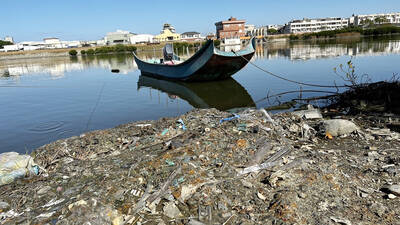
Many consumers are guilty of filling drawers or closets with old laptops, cellphones, fitness trackers and other electronic devices once they are no longer needed. It’s hard to know where to recycle such items, or it seems costly and inconvenient to do so. The world generates millions of tons of electronic waste — also called e-waste — each year. According to the UN’s most recent estimate, people worldwide produced 62 million metric tons of e-waste in 2022, and only about 22 percent of it was properly recycled. The US’ Environmental Protection Agency estimates that less than a quarter of e-waste is
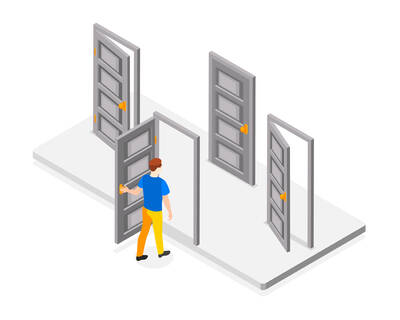
You’re sitting in class when a classmate asks to borrow a pencil. It seems like a small favor, so you agree without hesitation. The following week, the same classmate asks to share your notes. Later, they request help with a group project. You agree each time — after all, you helped out the first time — but before you know it, it has become automatic. This scenario demonstrates the “foot-in-the-door technique,” a psychological concept that shows how agreeing to small, acceptable demands makes it easier to accept larger ones later on. The name for this strategy comes from door-to-door

A: The four-day Tomb Sweeping Day long weekend begins Friday and will run until Monday. Are you going to sweep your ancestors’ tombs? B: I did in advance last weekend, so I can go to Kaohsiung to see the musical “The Phantom of the Opera.” A: Wow, is “Phantom” touring Taiwan again? It debuted in 1986, so this year marks the 40th anniversary of the show. B: And it’s not just touring Kaohsiung starting March 31, but also Taipei starting April 21 and Taichung starting May 26. A: “Phantom” is one of the world’s Four Major Musicals. I’ve seen all of them, except “Les

Dos & Don’ts — 想想看,這句話英語該怎麼說? 1. 我們很早到達電影院。 ˇ We arrived at the theater very early. χ We arrived the theater very early. 註︰arrive 為不及物動詞,後面如果有受詞要用 at 或 in。例如:They arrived in Taipei yesterday.。一般大地方,如國家、省、大城市等前面用 in,凡小地方城鎮、學校等則用 at。 2. 開車半小時以後,我們到達了海灘。 ˇ After half an hour’s drive, we got to the beach. χ After half an hour’s drive, we got the beach. 註︰come, go, get(來、去、到達)某地時,在表示地點的名詞前面應該用 to,如 go to school, go to Taipei, come to Shanghai 等。如果這些動詞後面所跟的是 here, there, home 等副詞,則不用 to。 3. 明天我會回辦公室。 ˇ I will be back in the office tomorrow. χ I will be back to office tomorrow. 註︰to be back 一語裡的 back 是副詞,不是介詞,所以後面要用 at (the market) 或 in (the office)。 假如假期結束,要回學校上課了則可說: ? Kids will be back


 RSS
RSS