


The European carnival season was in full swing Sunday, with revelers from east to west hurling fruit, lampooning political characters or simply giving free rein to their inner child.
The Christian and Orthodox tradition occurs before Lent and also often includes depictions of death or the afterlife while turning conventional rules and customs on their head. It was often a way to shake off the gloom of long winters with reminders that spring would come again.
Creative costumes level the social playing field, as anonymity is another recurring theme. Food and drink are often consumed in great quantities before the pious give up treats for the long weeks of Lent that end with Easter.

Photo: AFP
照片:法新社
Italy
Teams threw oranges at each other during the traditional “battle of the oranges” held in Ivrea, near Turin. During the event, which marks the people’s rebellion against tyrannical lords who ruled the town in the Middle Ages, revelers parading on floats represented guards of the tyrant, while those on foot were the townsfolk.
Spain

Photo: AP
照片:美聯社
“Boteiros” (jumpers) mark the traditional carnival of Viana do Bolo, in the northwestern Spanish region of Galicia. “Zarramaco” characters chase people during the celebration of “El Gallo de Carnaval” (The Carnival’s Cock) in Mecerreyes, in the northern Spanish province of Burgos. The Gallo Carnival is a pagan festival in which people participate in singing, dancing and attacking the “Gallo” (cock) defended by “Zarramacos.”
Croatia
A traditional carnival procession is a highlight at the Rijeka Carnival. With more than 10,000 participants, the Rijeka Carnival claims to be one of the biggest in Europe.

Photo: AFP
照片:法新社
Germany
The well-known carnival in Cologne, Germany, often features floats depicting political themes. The Cologne Carnival is a months-long celebration that culminates in the days before Ash Wednesday, which fell on March 6 this year. In Elzach, southern Germany, jesters wore capes and hats decorated with snail shells as they took part in the annual “Schuttigsprung” (Schuttig jump) parade (alternatively “idiots parade”). Masked musicians participated in the “Schellenruehrer” (bell shaker) parade in Mittenwald, southern Germany. The noise is said to help chase away the winter blues. (AFP)
歐洲的「狂歡節」節期已於週日如火如荼地進行到最高潮──從東歐到西歐,縱酒狂歡的人群猛烈投擲水果、譏諷政治人物,或是單純給予小孩充分的活動自由。

Photo: AFP
照片:法新社
狂歡節是基督教與東正教的傳統,舉行於大齋期之前,慶典中經常出現關於死亡與來世的描繪,同時也會翻轉約定俗成的社會規範和習俗。人們通常藉此擺脫漫長冬日帶來的陰鬱心情,各式節慶活動也提醒著春天將會再臨。
充滿創意的各式裝扮,使得人們在社會競技場上的地位趨近平等,而這種「匿名性」正是狂歡節中重複出現的一項主題。眾人經常會消耗大量食物和飲料。之後,虔誠的信徒們會在接下來持續數週的漫長大齋期棄絕美食,直到復活節才告一段落。
義大利
傳統的「柳橙大戰」於杜林市附近的小鎮伊夫雷亞舉行,不同隊伍會互相向對方丟擲柳橙。這場活動是為了紀念中世紀時期人民發動叛亂,反抗統治該地的暴君。乘坐花車遊行的狂歡者代表暴君的侍衛,而徒步遊行的則代表城裡的人民。
西班牙
在西班牙西北部的加利西亞地區,「Boteiros」(跳躍者)標誌著比亞納多沃洛當地的傳統狂歡節活動。西班牙北部布爾戈斯省的梅塞雷埃斯則舉行「狂歡節公雞」慶典,扮成「Zarramaco」(意指善良的獵人或戰士)角色的人會在活動中追著群眾到處跑。這場「公雞嘉年華」源自於異教信仰,眾人在慶典間載歌載舞,也會攻擊「Zarramaco」保衛的「公雞」。
克羅埃西亞
傳統嘉年華遊行可說是瑞伊卡狂歡節的一大亮點。超過一萬名參與者的瑞伊卡狂歡節堪稱歐洲規模最大的狂歡節之一。
德國
著名的德國科隆狂歡節經常會有描繪各種政治主題的花車遊行。科隆狂歡節歷時長達數月之久,於今年落在三月六日的「聖灰星期三」前幾日達到最高潮。德國南部的埃爾察赫則會有小丑穿上斗篷,戴著用蝸牛殼裝飾的帽子,加入一年一度的「笨蛋跳」遊行(或稱「白癡大遊行」)。戴上面具的音樂家們則參加德國南部米滕瓦爾德的「搖鈴人」遊行。據說,巨大的噪音有助於驅散冬日憂鬱。
(台北時報章厚明譯)

A: Which TV drama series have been global hits so far this year? B: The US drama “Stranger Things 5,” South Korean drama “Can This Love Be Translated?” and Chinese megahit “Pursuit of Jade” are all popular lately. A: Isn’t “Pursuit of Jade” the costume idol drama about the romance between a charming marquis and a pig-slaughterer? Actor Zhang Linghe and actress Tian Xiwei are both so attractive. B: Plus, Netflix’s Korean-Japanese gay romance drama “Soul Mate” — starring Korea’s Ok Taec-yeon and Japan’s Hayato Isomura — is set to premiere in May. A: These hit international dramas
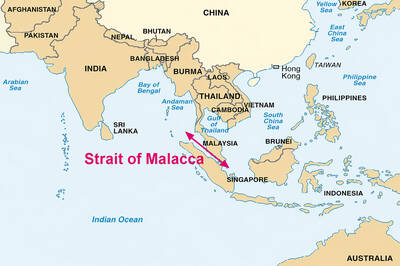
The closure of the Strait of Hormuz has forced policymakers in Asia to face questions over the security of other maritime chokepoints, including the Strait of Malacca, which is the world’s busiest waterway for international trade. WHAT IS THE MALACCA STRAIT? The 900km long Malacca Strait, bounded by Indonesia, Thailand, Malaysia and Singapore, provides the shortest sea route from East Asia to the Middle East and Europe. It carries nearly 22 percent of the world’s maritime trade, according to the Center for Strategic and International Studies (CSIS). This includes oil and gas shipments from the Middle East to the energy-hungry economies of China,
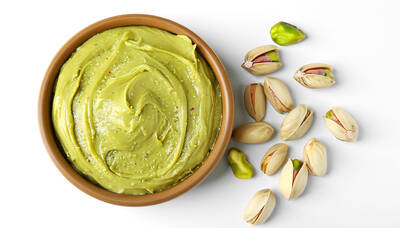
It seems like every year, new foods or drinks start trending and suddenly show up everywhere. A decade ago, avocado __1__ restaurant menus, while oat milk became the must-have addition to your coffee in cafes around five years back. The latest trend to hit this list is the pistachio. This flavorful green nut now features in everything from chocolate bars to Indian curries. While pistachios have long played a central role in certain regional cuisines, their recent global __2__ can be traced to Dubai. There, a specialty chocolate shop went __3__ on TikTok for one of its chocolate bars
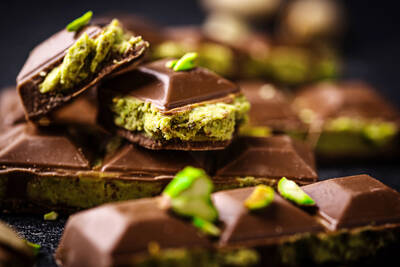
One reason pistachios have taken the food world by storm compared to other nuts is their soft, green color. When ground down into a cream or butter, the green hue __6__ nicely with golden pastries or dark-brown chocolate, making it perfect for Instagram photos and TikTok videos. Their labor-intensive cultivation and __7__ also contribute to their image as a premium ingredient. Thus, buying a pistachio-based product often feels like a __8__ treat. Pistachios also stand out for their distinct flavor and health __9__. They have a subtle, sweet, earthy flavor that goes well with both sweet desserts and


 RSS
RSS