


European colonization of the Americas resulted in the killing of so many native people that it transformed the environment and caused the Earth’s climate to cool down, new research has found.
Settlers killed off huge numbers of people in conflicts and also by spreading disease, which reduced the indigenous population by 90 percent in the century following Christopher Columbus’s initial journey to the Americas and Caribbean in 1492.
This “large-scale depopulation” resulted in vast tracts of agricultural land being left untended, researchers say, allowing the land to become overgrown with trees and other new vegetation.
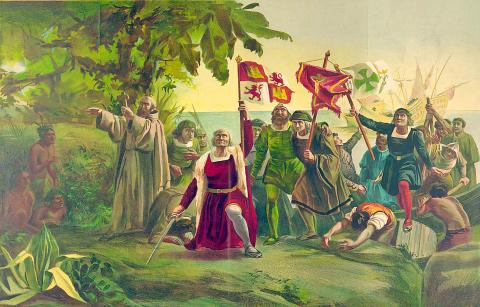
Photo: Wikimedia Commons
照片:維基共享資源
The regrowth soaked up enough carbon dioxide from the atmosphere to actually cool the planet, with the average temperature dropping by 0.15 degrees Celsius in the late 1500s and early 1600s, the study by scientists at University College London (UCL) found.
“The great dying of the indigenous peoples of the Americas resulted in a human-driven global impact on the Earth system in the two centuries prior to the Industrial Revolution,” wrote the UCL team of Alexander Koch, Chris Brierley, Mark Maslin and Simon Lewis.
The drop in temperature during this period is known as the “Little Ice Age,” a time when the River Thames in London would regularly freeze over, snowstorms were common in Portugal and disrupted agriculture caused famines in several European countries.
The UCL researchers found that the European colonization of the Americas indirectly contributed to this colder period by causing the deaths of about 56 million people by 1600. The study attributes the deaths to factors including introduced disease such as smallpox and measles, warfare and societal collapse.
Researchers then calculated how much land indigenous people required and then subsequently fell into disuse, finding that around 55 million hectares, an area roughly equivalent to France, became vacant and was reclaimed by carbon dioxide-absorbing vegetation.
The revegetation of the Americas after European arrival aided declines of global carbon content in the air, dropping by around seven to 10 parts of carbon dioxide for every million molecules of air in the atmosphere (ppm). This compares to the 3ppm of carbon dioxide that humanity is currently adding to the atmosphere every year through the burning of fossil fuels.
(The Guardian)
新的研究發現,歐洲人對美洲的殖民導致土著人民大量死亡,人數多到改變了環境,並導致全球氣溫下降。
哥倫布在一四九二年初次抵達美洲和加勒比海地區,隨後來到的殖民者透過殺戮和疾病傳染,造成大量原住民死亡,使得美洲的原住民人口在一個世紀內減少了百分之九十。
研究人員表示,這種「大規模的人口減少」導致大片農地荒蕪,讓土地長滿樹木和其他不同的植被。
這項研究是由倫敦大學學院所進行,科學家發現這些取而代之的植被,從大氣中吸收了大量的二氧化碳,吸收的量多到讓全球氣溫下降,使得十六世紀末和十七世紀初的全球平均溫度降低了攝氏零點一五度。
「美洲原住民的大量死亡,讓工業革命開始前兩世紀,就發生人為因素對地球系統的影響」,倫敦大學學院研究團隊成員科賀、布里耳利、馬斯林和路易士寫道。
這段時期氣溫下降,被稱作「小冰河時期」,此時期倫敦泰晤士河經常冰封,葡萄牙常有暴風雪,被擾亂的農業生產,導致數個歐洲國家發生飢荒。
研究團隊發現,到了西元一六○○年,歐洲人對美洲的殖民已造成約五千六百萬人死亡,間接導致此時期較冷的溫度。造成這些死亡的因素,該研究歸因於天花和麻疹等疾病的傳入、戰亂,以及社會崩潰。
研究人員接著計算原住民所需、其後逐漸廢耕的土地面積,發現約有五千五百萬公頃土地(約相當於法國國土面積)荒廢,而被會吸收二氧化碳的植被重新覆蓋。
歐洲人來到美洲後,美洲植被的重新覆蓋促使全球空氣碳含量下降,使大氣中的二氧化碳濃度下降了約七至十ppm(百萬分濃度)〔即空氣中每百萬分子中有七至十分子的二氧化碳〕。放眼今日,人類社會燃燒化石燃料,每年使大氣增加三ppm的二氧化碳含量。
(台北時報林俐凱編譯)
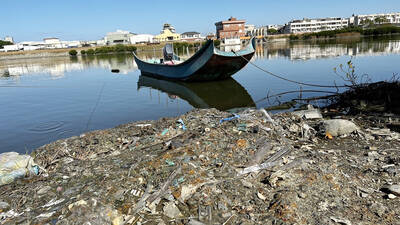
Many consumers are guilty of filling drawers or closets with old laptops, cellphones, fitness trackers and other electronic devices once they are no longer needed. It’s hard to know where to recycle such items, or it seems costly and inconvenient to do so. The world generates millions of tons of electronic waste — also called e-waste — each year. According to the UN’s most recent estimate, people worldwide produced 62 million metric tons of e-waste in 2022, and only about 22 percent of it was properly recycled. The US’ Environmental Protection Agency estimates that less than a quarter of e-waste is
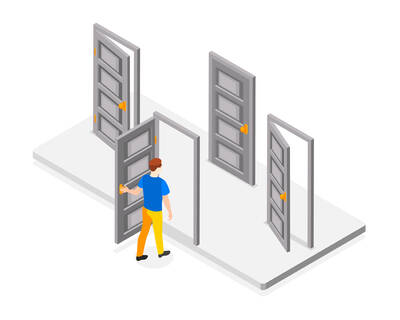
You’re sitting in class when a classmate asks to borrow a pencil. It seems like a small favor, so you agree without hesitation. The following week, the same classmate asks to share your notes. Later, they request help with a group project. You agree each time — after all, you helped out the first time — but before you know it, it has become automatic. This scenario demonstrates the “foot-in-the-door technique,” a psychological concept that shows how agreeing to small, acceptable demands makes it easier to accept larger ones later on. The name for this strategy comes from door-to-door

A: The four-day Tomb Sweeping Day long weekend begins Friday and will run until Monday. Are you going to sweep your ancestors’ tombs? B: I did in advance last weekend, so I can go to Kaohsiung to see the musical “The Phantom of the Opera.” A: Wow, is “Phantom” touring Taiwan again? It debuted in 1986, so this year marks the 40th anniversary of the show. B: And it’s not just touring Kaohsiung starting March 31, but also Taipei starting April 21 and Taichung starting May 26. A: “Phantom” is one of the world’s Four Major Musicals. I’ve seen all of them, except “Les

Dos & Don’ts — 想想看,這句話英語該怎麼說? 1. 我們很早到達電影院。 ˇ We arrived at the theater very early. χ We arrived the theater very early. 註︰arrive 為不及物動詞,後面如果有受詞要用 at 或 in。例如:They arrived in Taipei yesterday.。一般大地方,如國家、省、大城市等前面用 in,凡小地方城鎮、學校等則用 at。 2. 開車半小時以後,我們到達了海灘。 ˇ After half an hour’s drive, we got to the beach. χ After half an hour’s drive, we got the beach. 註︰come, go, get(來、去、到達)某地時,在表示地點的名詞前面應該用 to,如 go to school, go to Taipei, come to Shanghai 等。如果這些動詞後面所跟的是 here, there, home 等副詞,則不用 to。 3. 明天我會回辦公室。 ˇ I will be back in the office tomorrow. χ I will be back to office tomorrow. 註︰to be back 一語裡的 back 是副詞,不是介詞,所以後面要用 at (the market) 或 in (the office)。 假如假期結束,要回學校上課了則可說: ? Kids will be back


 RSS
RSS