


Chinese Practice
曇花一現
(tan2 hua1 yi2 xian4)
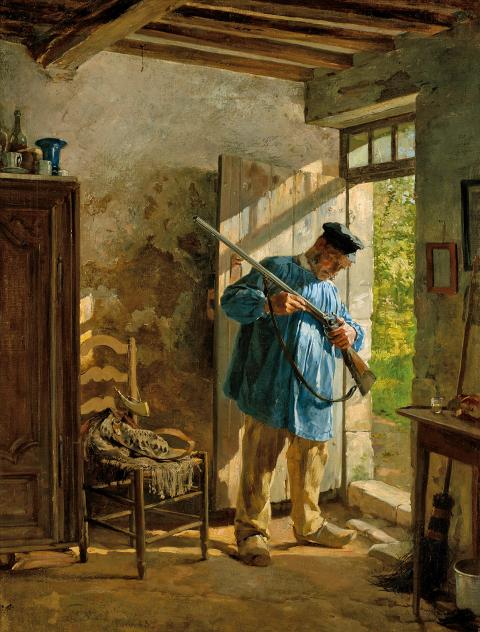
Photo: Wikimedia Commons
照片:維基共享資源
a single blooming of the udumbara flower
曇花的英文是「the Dutchman’s pipe」(荷蘭人的煙斗),是一種很少開花的仙人掌科植物,它在夜晚開花,且持續的時間很短,到了黎明時分,曇花就會凋謝了。這種植物出現在成語「曇花一現」中,而此成語被用來描述有幸成功一次的人或事,這成功或許主要是因為運氣好,且無法複製。
此成語是出自一部早期的佛經,但實際指的是一種完全不同的花:印度無花果樹,或中文譯名「優曇缽華」,這個譯名中也有「曇」字。
印度無花果樹的梵語名稱是「udumbara」。在佛教中,「udumbara」被認為每三千年才開花一次,因此象徵著極為罕見的事件。在《妙法蓮華經》中,「udumbara」這種花用來表示佛陀罕見的現身於世──佛陀說的佛法,為世所希有,就如三千年才開一次的曇花般珍貴。
《妙法蓮華經》第二十七章〈妙莊嚴王本事品〉提到一則故事,說遠古時代一位國王的兒子請求拜見佛祖。因為「佛難得值,如優曇缽羅華,又如一眼之龜,值浮木孔。」(佛祖難得見到,就像優曇缽羅花,又好像獨眼的烏龜把頭正好套進在水中浮動的木塊上的洞。)這獨眼烏龜的比喻頗難理解,它典出早期佛教經典《相應部》第十五章,其中提到一隻盲眼的烏龜,非常高壽,一百年才把頭伸出海面一次;另外還有一個只有一個洞的木塊,漂浮在同一片海洋中。經文中問道,「這烏龜和木塊碰到的機會有多大?」人們只能設想答案是「無限小」。
在《妙法蓮華經》的第二章〈方便品〉中,佛陀的弟子舍利弗三次向佛陀請求講解佛法,佛陀最後答應了,說道:「如是妙法,諸佛如來時乃說之,如優曇缽華時一現耳」(我現在要說的美妙佛法,為世所希有,就如三千年才開一次的優曇缽花般珍貴)。這句話即為成語「曇花一現」的出處,但這花指的是優曇缽花,而不是曇花。
在英語中,我們可以用「flash in the pan」(火藥池中的火花),來指出乎意料但無法複製的成功。「flash」指的是火藥被點燃後的明亮火花,「pan」指的是燧發槍的火藥池,用來擊發彈藥。扣下燧發槍的扳機時,燧石會引燃火藥池內的少量火藥,然後這火花會進一步點燃槍膛裡的火藥,推動子彈從槍管發射出去。如果這火花無法順利讓火藥點燃,那麼只會有火藥池閃過的一絲火花,而子彈卻不會發射出去。
(台北時報林俐凱譯)
股價上週止跌回升,我們以為又回到了過去的榮景,沒想到這只是曇花一現,今天又是一瀉千里。
(Last week the stock price stopped falling and started rising again. We thought it would return to its former glory, but it was just a flash in the pan. Today it is falling again.)
這段感情有如曇花一現,來得快,去得快,他倆翻臉比翻書還快。
(It was a fleeting emotion, which disappeared as quickly as it had arrived. The expression flickered across their faces.)
英文練習
a flash in the pan
The Dutchman’s pipe — tanhua (曇花) in Chinese — is a cactus that blooms only rarely, with flowers that appear at night and that last only a short time: By dawn, they will have wilted. The Chinese name 曇花 appears in 曇花一現, an idiom used to describe a person’s surprise achievement or a one-off event, occurring more through luck, that is unlikely to be repeated.
The original source of the idiom, an early Buddhist sutra, actually refers to a different flower altogether, however: the Indian fig tree, or youtan bohua (優曇缽華) to give its Chinese translation. This name also has the 曇 character.
The Sanskrit name for the Indian fig tree is the udumbara. In Buddhism, the udumbara was believed to bloom only once every 3,000 years, and therefore symbolizes an extremely rare event. In the Saddharma Pundarika Sutra (Sutra of the Lotus Flower of the Wonderful Dharma, often simplified in English to the Lotus Sutra), the udumbara flower is used to convey the rare appearance of the Buddha and his teachings in the world.
Chapter 27 of the Lotus Sutra tells the story of how the sons of a king in the far ancient past ask for permission to visit a buddha, because “a buddha is as hard to meet as an udumbara flower, or as the one-eyed tortoise meeting the hole in the floating log.” That last — rather obscure — simile is a reference to Chapter 15 of the early Buddhist work Samyutta Nikaya (Connected Discourses), which mentions a blind tortoise, infinite eons old, that swims in the ocean and rises to the surface once a century, and a log with only one hole, floating on the same ocean. The text asks, “What are the chances of the two meeting?” The answer, one can only presume, is “infinitesimally small,” at least within a given time period.
In Chapter 2 of the Lotus Sutra, Sariputta, a disciple of the historical Buddha, asks three times for instruction on the Buddha’s teachings before the Buddha finally relents, saying — in the Chinese translation of the sutra — 如是妙法,諸佛如來時乃說之,如優曇華時一現耳 (Such a wonderful Law as this is only preached by the buddha-tathagatas on rare occasions, just as the udumbara flower is seen but once in long periods.) It is this sentence that gives us the idiom 曇花一現. Thus, the 曇花 refers to the udumbara flower, not the Dutchman’s pipe.
In English, we can talk of an unexpected yet unreplicated success as a “flash in the pan.” The flash refers to the bright spark of ignited gunpowder; the pan refers to the priming pan of a flintlock firearm. When the trigger was pulled the flint would ignite a small amount of gunpowder in the pan, and this spark would then ignite the gunpowder in the main part of the mechanism, which would then propel the bullet from the barrel. If the spark failed to ignite the gunpowder, there would simply be a flash of powder in the pan, but the bullet would stay put.
(Paul Cooper, Taipei Times)
Everyone was hoping we would be able to replicate the success of the product, but it turns out to have been a flash in the pan.
(大家都希望我們可以複製那產品成功的模式,但結果證明那次成功只不過是曇花一現。)
I am determined to prove that I can get another hit song, and that I am not just a flash in the pan.
(我決心要證明我可以再創一首暢銷曲,我不是只有曇花一現。)

In 2023, an 80-year-old woman in Taipei suffocated her paralyzed son after over five decades of caring for him. Turning herself in immediately, she confessed that worsening health and anxiety about who would care for him after her death had driven her to act. The court, acknowledging her difficult situation, sentenced her to two-and-a-half years in prison while recommending a presidential pardon. This rare judicial recommendation drew a complicated social response. Supporters argue that the mother’s half-century of caregiving renders her deserving of compassion instead of incarceration, believing that allowing her to live her final years in dignity and
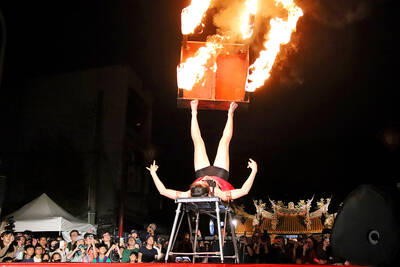
A: Over 130,000 college graduates are about to enter the workforce upon graduation. B: According to a survey, the top 10 most desired careers among Taiwanese are: independent content creator, civil servant, information engineer, financial professional, medical worker, content planner, flight attendant, news anchor, designer and fitness trainer. A: What are the “dream jobs” for young Gen Zers? B: The top three for men are YouTuber, pro gamer and engineer. For women, they are writer, social media editor and YouTuber. A: Every profession has its champion. Just look at Taiwanese fire dancer Yang Li-wei — who was on fire

★ Bilingual Story is a fictionalized account. 雙語故事部分內容純屬虛構。 The mango looked perfect. It sat on the fruit stand like a small sunset, red on one side and gold on the other. “I’ll take this one,” said Daniel. The fruit seller shook her head. “Not that one.” Daniel was surprised. “Why not? It looks beautiful.” “Yes,” she said, “but beautiful is not always ready.” She picked up another mango and held it near his nose. “First, smell here.” Daniel smelled the top of the mango. It was sweet and warm. “Good mangoes have a smell,” she said. “Next, feel the weight.”

1. 他非常討厭偽君子。 ˇ He has a deep hatred for hypocrites. χ He has a deep hatred to hypocrites. 註︰表示「對某人懷著愛、恨」等, 常用 have a love for/of, have a hatred for/of。 例如: We have a love for/of science. The working people have a hatred for/of all forms of exploitation. 2. 問題的答案其實不難找。 ˇ The answer to this question is not difficult to find. χ The answer of this question is not difficult to find. 註︰中文中的「的」在英語中不一定都用 of 來表示,有時須用 to。其他的例子如下: 我把房間的鑰匙弄丟了。 I lost the key to the room. 中間矗立著烈士紀念碑。 In the center stands the monument to the martyrs. 這部電影的續集你看過沒有? Have you seen the sequel to the movie? 3. 比起那家餐廳,他更喜歡這家。 ˇ He prefers this restaurant to that one. ˇ He likes


 RSS
RSS