


In Taiwan, which variety of toilet paper currently sells the best? The answer may not be the one you were expecting. Household sanitary paper manufacturers have this year discovered that 3-ply toilet tissue has emerged as a force to be reckoned with within the market, with sales volumes jumping 20 percent. Toilet tissue impregnated with balsam and forest-friendly, recycled alternatives have all exhibited strong sales performance. The industry is speculating that Taiwan is gradually moving toward becoming an M-shaped society, as consumer purchasing power becomes more polarized.
Household sanitary paper manufacturers have discovered that 3-ply loo paper is selling like hot cakes. For example, for US wholesaler Costco, in addition to its own-brand Kirkland toilet paper, other 3-ply offerings from Kleenex and established brand May Flower, have all been selling well. According to papermaking conglomerate YFY, although 2-ply toilet paper still constitutes the bulk of the market, sales volumes of 3-ply have been gradually increasing, with some lines becoming best-sellers. Papermakers are now rushing to ramp up production and supply of 3-ply.
According to YFY, in 2016 sales revenue for 3-ply toilet paper totalled NT$870 million but broke the NT$1billion mark last year: a year-on-year increase of nearly 19 percent and 16 percent market share.
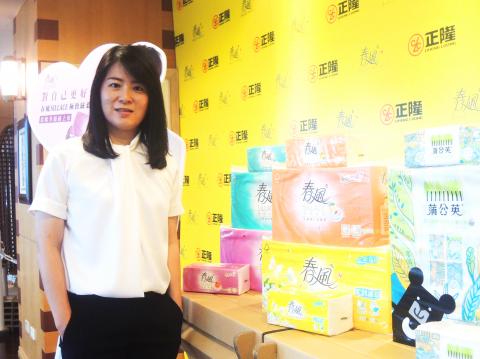
Photo: Lee Ching-hui, Liberty Times
照片:自由時報記者李靚慧
This year, YFY launched a premium 3-ply version of its flagship May Flower toilet paper to appeal to consumers who demand a superior quality feel and softness. Cheng Loong Corp, which markets a top-of-the-range 3-ply extra-thick, 50-percent-more-absorbent toilet paper under the Andante brand, has seen a 20 percent increase in sales of the product since the beginning of this year.
As for the cause of mushrooming sales of 3-ply toilet paper, the industry believes Taiwan’s consumer market is becoming “M-shaped.” Although many Taiwanese consumers still count every penny, consumers on the right lobe of the “M” curve attach a greater degree of importance to quality, the environment and functionality, and are willing to fork out more cash to buy products perceived to be of a higher quality.
(Liberty Times, translated by Edward Jones)
在台灣,現在哪一種衛生紙最好賣?答案可能跌破不少人眼鏡。家用紙業者發現,今年以來價格較高的三層衛生紙異軍突起,銷售量大增二成;添加乳霜的衛生紙、不砍樹的再生紙衛生紙,也都有不錯的銷售成績。業者推測,應與台灣走向M型社會,消費力逐漸兩極化有關。
家紙業者發現,「三層衛生紙超好賣」,以美式賣場好市多為例,除了自有品牌Kirkland外,目前銷售的舒潔以及先前銷售的五月花都相當受歡迎,這些都是「三層衛生紙」。永豐餘控股指出,雖然目前二層衛生紙仍是市場主流,但三層衛生紙的銷售額逐年成長,部分通路甚至是「三層衛生紙最好賣」,因此紙廠會儘可能將產能供應三層衛生紙。
永豐餘指出,二○一六年台灣市場三層衛生紙銷售金額僅八.七億元,二○一七年已突破十億元,年增近百分之十九,且在衛生紙產品的占比提升至百分之十六。
永豐餘今年就主打旗下「五月花」三層衛生紙,訴求高質感、柔軟的特性。正隆的「春風」三層衛生紙,則主打「三層厚手、吸水力提升百分之五十」,今年以來銷售量大增二成。
對於三層衛生紙銷售成長的主因,業者認為,台灣的消費市場出現M型化趨勢,雖然有不少消費者仍對價格錙銖必較,但在M型右方的消費者更重視品質、環保、功能等,願意花較多的錢買品質更好的產品。
(自由時報記者李靚慧)
Follow up讀後練習
M-shaped Society
The M-shaped Society is a term originally coined by the Japanese economist Kenichi Ohmae. Ohmae observed that Japanese society had become polarized into the extreme rich and the extreme poor, with a shrinking middle class caught in between, in what he termed an “M-shaped” distribution.
In a “normal” distribution pattern in a developed, modern society, the middle class generally forms the bulk of the society.
With the emergence of the M-shaped society, however, this middle class is much reduced, being assimilated into the two lobes of the M-shape either side of it, and gradually disappears. As a result of this process, the middle class no longer forms the bulk of the society.
Another feature of the M-shaped society, and one which contributes to the maintenance of the shape, is the difficulty for people in the middle class to ascend the social ladder and join the upper class. Most of them will gradually sink to the lower-income group.
(Edward Jones, Taipei Times)
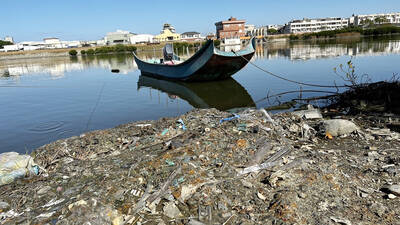
Many consumers are guilty of filling drawers or closets with old laptops, cellphones, fitness trackers and other electronic devices once they are no longer needed. It’s hard to know where to recycle such items, or it seems costly and inconvenient to do so. The world generates millions of tons of electronic waste — also called e-waste — each year. According to the UN’s most recent estimate, people worldwide produced 62 million metric tons of e-waste in 2022, and only about 22 percent of it was properly recycled. The US’ Environmental Protection Agency estimates that less than a quarter of e-waste is
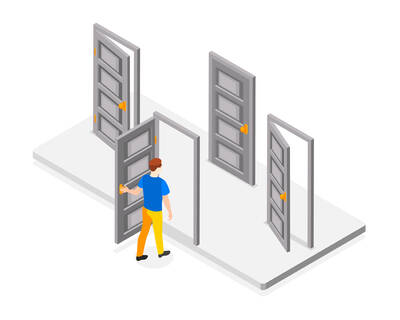
You’re sitting in class when a classmate asks to borrow a pencil. It seems like a small favor, so you agree without hesitation. The following week, the same classmate asks to share your notes. Later, they request help with a group project. You agree each time — after all, you helped out the first time — but before you know it, it has become automatic. This scenario demonstrates the “foot-in-the-door technique,” a psychological concept that shows how agreeing to small, acceptable demands makes it easier to accept larger ones later on. The name for this strategy comes from door-to-door

A: The four-day Tomb Sweeping Day long weekend begins Friday and will run until Monday. Are you going to sweep your ancestors’ tombs? B: I did in advance last weekend, so I can go to Kaohsiung to see the musical “The Phantom of the Opera.” A: Wow, is “Phantom” touring Taiwan again? It debuted in 1986, so this year marks the 40th anniversary of the show. B: And it’s not just touring Kaohsiung starting March 31, but also Taipei starting April 21 and Taichung starting May 26. A: “Phantom” is one of the world’s Four Major Musicals. I’ve seen all of them, except “Les

Dos & Don’ts — 想想看,這句話英語該怎麼說? 1. 我們很早到達電影院。 ˇ We arrived at the theater very early. χ We arrived the theater very early. 註︰arrive 為不及物動詞,後面如果有受詞要用 at 或 in。例如:They arrived in Taipei yesterday.。一般大地方,如國家、省、大城市等前面用 in,凡小地方城鎮、學校等則用 at。 2. 開車半小時以後,我們到達了海灘。 ˇ After half an hour’s drive, we got to the beach. χ After half an hour’s drive, we got the beach. 註︰come, go, get(來、去、到達)某地時,在表示地點的名詞前面應該用 to,如 go to school, go to Taipei, come to Shanghai 等。如果這些動詞後面所跟的是 here, there, home 等副詞,則不用 to。 3. 明天我會回辦公室。 ˇ I will be back in the office tomorrow. χ I will be back to office tomorrow. 註︰to be back 一語裡的 back 是副詞,不是介詞,所以後面要用 at (the market) 或 in (the office)。 假如假期結束,要回學校上課了則可說: ? Kids will be back


 RSS
RSS