


During one of his daily briefings about the relentless eruptions of the Kilauea volcano recently, Hawaii County Mayor Harry Kim noted the day had brought no eruptions, no lava, no ashfalls. “Pele has given the grace of quiet to us today,” Kim told residents, both native Hawaiians and those who moved there from abroad. He took it for granted they all knew he was talking about the legendary goddess that lives in the Halemaumau crater of Kilauea, which has been almost continuously active since 1983.
Living under one of the world’s most active volcanoes means learning to live with a fickle force of nature, personified by Pele. Pele oversees “any and all volcanic phenomenon: lava flow, steam, fumes, earthquakes,” says Bobby Camara, a retired Park Ranger at the vast Hawaii Volcanoes National Park. “She is the reason we are here. She made Hawaii,” he says, referring to the fact the Hawaii Islands were formed from undersea volcanic eruptions.
Paintings of her typically portray a women with long, flowing hair in the shape of a volcano, hands cupping a ball of fire or dressed in a fiery garment. A homage to Pele is usually featured in Hula dance performances on the Big Island.
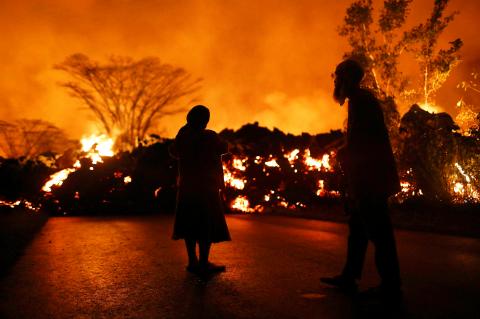
Photo: AFP
照片:法新社
Residents of Leilani Gardens, who were evacuated after lava fountains erupted from several fissures there, have placed offerings of flowers and ti leaves, used to make Leis, on the oozing lava flows.
They are allowed back into the neighborhood to check on their homes for a period each day. For some, it’s also a chance to watch the pyrotechnic eruptions. “This is my second experience of an amazing display of Pele’s power,” says Hannique Ruder, 65, “It’s devastating and beautiful at the same time. We’re all in fear of her power, and yet you have to see the creative force at work here as well.”
Glenn Canon, 61, a retired respiratory therapist, and his wife were also among those evacuated from Leilani Gardens. “We don’t want to leave. We settled in for our retirement and planned to stay right there. It looks like Madame Pele has other plans for us. This is her land and when she wants it back, she’ll take it from us.”
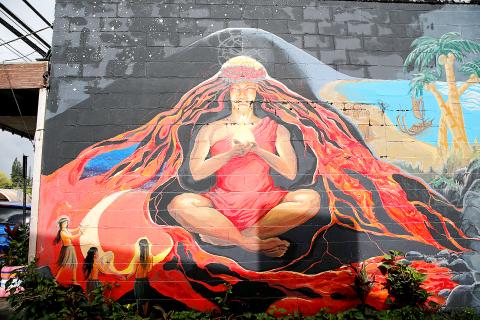
Photo: Reuters
照片:路透
(Reuters)
夏威夷郡首長哈利金,最近在一次關於幾勞亞火山持續噴發的每日簡報中,指出當天火山並沒有噴發、沒有新的熔岩湧出,也沒有降下火山灰。他告訴包括夏威夷原住民與外來移民在內的當地居民:「佩蕾今日賜予我們一份寧靜的恩典。」哈利金理所當然地認為,居民都知道他說的就是那位傳說中住在幾勞亞哈雷茂茂火山口裡的女神。從一九八三年至今,幾勞亞火山活動幾乎不曾停過。
在世界最活躍的一座火山下生活,意味著必須學習如何和大自然無常的力量──被擬人化的佩蕾──和平共處。曾在廣闊的夏威夷火山國家公園服務的退休公園巡守員巴比‧卡馬拉說,佩蕾掌管「所有的火山現象:熔岩流、蒸氣、煙霧、地震」。他說:「佩蕾女神是我們今天存在這裡的原因。她創造了夏威夷」,意指夏威夷群島形成自海面下火山噴發的事實。
以她為主題的畫作通常描繪一位女性,具流動感的長髮構成一座火山的形狀,雙掌捧著一顆火球,或穿著火焰般的服飾。夏威夷大島的草裙舞表演也經常對佩蕾女神致敬。
在熔岩從當地數道裂縫噴發出來後遭到撤離的雷拉尼莊園居民,在滲出的熔岩流上擺放以往用於製作花環的花朵與朱蕉葉,作為供品。
每天有一段時間,這些居民會獲准返回住家附近,確認家園安危。對其中一些人來說,這也是觀賞熔岩宛如煙花般噴發的大好機會。六十五歲的韓妮柯‧魯德說:「這是我第二次體驗到佩蕾令人驚嘆的力量展現。」她表示:「這既令人震撼卻又美不勝收。我們所有人都敬畏她的力量,但你也必須正視在此運作的創造力。」
六十一歲的葛倫‧卡農是一位退休的呼吸治療師,他與妻子也是從雷拉尼莊園撤離的居民,他說:「我們不想要離開。我們為了退休生活定居於此,而且打算繼續留在這裡。現在看起來,佩蕾女士對我們另有打算。這是她的土地,當她想拿回去時,是會從我們手中取走的。」
(台北時報章厚明譯)
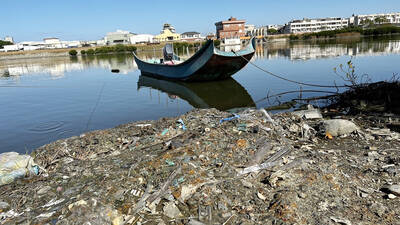
Many consumers are guilty of filling drawers or closets with old laptops, cellphones, fitness trackers and other electronic devices once they are no longer needed. It’s hard to know where to recycle such items, or it seems costly and inconvenient to do so. The world generates millions of tons of electronic waste — also called e-waste — each year. According to the UN’s most recent estimate, people worldwide produced 62 million metric tons of e-waste in 2022, and only about 22 percent of it was properly recycled. The US’ Environmental Protection Agency estimates that less than a quarter of e-waste is

You’re sitting in class when a classmate asks to borrow a pencil. It seems like a small favor, so you agree without hesitation. The following week, the same classmate asks to share your notes. Later, they request help with a group project. You agree each time — after all, you helped out the first time — but before you know it, it has become automatic. This scenario demonstrates the “foot-in-the-door technique,” a psychological concept that shows how agreeing to small, acceptable demands makes it easier to accept larger ones later on. The name for this strategy comes from door-to-door

A: The four-day Tomb Sweeping Day long weekend begins Friday and will run until Monday. Are you going to sweep your ancestors’ tombs? B: I did in advance last weekend, so I can go to Kaohsiung to see the musical “The Phantom of the Opera.” A: Wow, is “Phantom” touring Taiwan again? It debuted in 1986, so this year marks the 40th anniversary of the show. B: And it’s not just touring Kaohsiung starting March 31, but also Taipei starting April 21 and Taichung starting May 26. A: “Phantom” is one of the world’s Four Major Musicals. I’ve seen all of them, except “Les

Dos & Don’ts — 想想看,這句話英語該怎麼說? 1. 我們很早到達電影院。 ˇ We arrived at the theater very early. χ We arrived the theater very early. 註︰arrive 為不及物動詞,後面如果有受詞要用 at 或 in。例如:They arrived in Taipei yesterday.。一般大地方,如國家、省、大城市等前面用 in,凡小地方城鎮、學校等則用 at。 2. 開車半小時以後,我們到達了海灘。 ˇ After half an hour’s drive, we got to the beach. χ After half an hour’s drive, we got the beach. 註︰come, go, get(來、去、到達)某地時,在表示地點的名詞前面應該用 to,如 go to school, go to Taipei, come to Shanghai 等。如果這些動詞後面所跟的是 here, there, home 等副詞,則不用 to。 3. 明天我會回辦公室。 ˇ I will be back in the office tomorrow. χ I will be back to office tomorrow. 註︰to be back 一語裡的 back 是副詞,不是介詞,所以後面要用 at (the market) 或 in (the office)。 假如假期結束,要回學校上課了則可說: ? Kids will be back


 RSS
RSS