


What is spring tea?
During the period from the Qingming Festival to the summer solstice (mid-March to early May), moderate temperatures, abundant rainfall, and the tea trees’ recuperation during autumn and winter make tea leaves particularly green and aromatic. Therefore, tea leaves harvested in the spring are called “spring tea,” and embody the refreshing taste unique to the season. April and May is the best time to taste spring tea.
Varieties and origins of spring tea
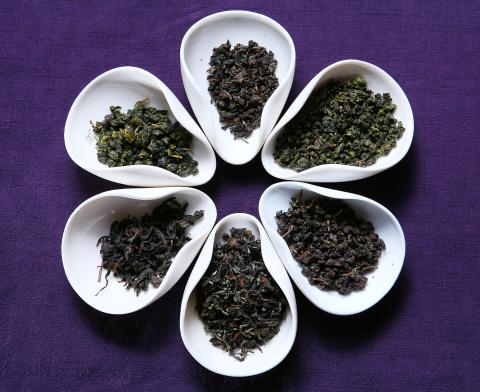
Photo: Liberty Times
照片:自由時報
Oolong tea: Lightly fermented and lightly roasted, it retains more of the original taste and light floral fragrance of the leaves. Dong Ding Oolong tea, produced in Nantou County’s Lugu Township, is one of the best-known varieties of oolong tea.
High-mountain tea: The essence of high-mountain tea is that the tea tree absorbs the nutrients in the soil which produces a unique-tasting tea liquor. The specific composition of the soil of each area produces different-tasting teas. Tea grown at middle altitudes below 1000m has milder taste; while tea grown at altitudes higher than 1000m has a stronger flavor. The main tea varieties are Alishan high-mountain tea and Lishan high-mountain tea.
Pouchong tea: It is said to be the most typical of Taiwan’s specialty teas. Pouchong tea leaves have a striped appearance and are emerald green in color. It has a sweet and mellow aroma. Its most important quality is the aroma — the more aromatic the better the quality. The main product is Wenshan Pouchong tea grown in the north of Taiwan.
Sijichun tea: It is the most common tea variety in Taiwan, which has high chill resistance and a distinct aroma. Its name Sijichun (lit. four-season spring) comes from its short winter dormancy and seven-to-eight harvests per year. The main production areas of Sijichun are Taipei’s Muzha District, Nantou’s Mingjian Township.
Tieguanyin (Iron Goddess) tea: The complicated production process gives this kind of tea curled, tight, and heavy leaves with frost-like white traces. Tieguanyin tea has a strong and lasting aroma and the tea liquor has a rich golden color. New Taipei City’s Shimen District is the main growing area for Tieguanyin tea.
Oriental Beauty tea: It is Taiwan’s unique tea variety, also known as White Tip Oolong tea or Pom-fong tea. It is grown without pesticides to encourage a common pest, the tea green leafhopper, to suck the nutrient in the tips. The insect bites start the oxidation of the leaves and tips, and add a sweet note to the tea. The main places of origin are Hsinchu’s Beipu Township and Emei Township, and New Taipei City’s Shiding District and Pinglin District.
How to store tea
The main way to preserve tea leaves is to store them inside a sealed container. Places with moisture and smells are the worst place to store tea — such as in the refrigerator — which can damage the quality of the tea. Tea leaves are usually stored at room temperature in the airtight container that came with the tea when purchased, or in an aftermarket airtight tea container. It is best to finish the tea before the best before date.
(Liberty Times, translated by Lin Lee-kai)
春茶是甚麼?
從清明至夏至(三月中旬至五月上旬),由於溫度適中、雨量豐沛,加上茶樹經秋冬季的休生養息,使得茶葉色澤翠綠、香氣濃郁,因此在春天收成的茶,就叫做春茶,象徵一年初始,散發清新嫩綠、專屬於春天的味道。四月到五月是品嘗春茶最好的時機。
春茶種類和產地
烏龍茶:輕發酵輕焙火,保留較多茶葉的原始茶香口感,具有茶葉本身輕花香的特質。主要茶種有南投鹿谷的凍頂烏龍茶。
高山茶:高山茶的特色就是茶樹吸收土壤的養分,養成茶湯的味道,而每一個地區土壤的成分不同,養成的茶湯味道也就不同;海拔一千公尺以下所產的中海拔茶種味道較溫潤;一千公尺以上的茶味則比較濃厚。主要茶種有阿里山高山茶、梨山高山茶。
包種茶:堪稱是最道地的台灣特產,外觀呈條狀、色澤翠綠,滋味甘醇香氣清幽;最注重香氣,香氣越濃郁品質越高級。主要茶種為北部的文山包種茶。
四季春:台灣最常見的茶種,抗寒性高、香氣明顯,冬季休眠時間極短,一年可產七~八次,因此得名。主要產地為台北木柵區、南投名間鄉。
鐵觀音:繁瑣的制作過程,外觀捲曲緊結、沉重,色澤鮮潤帶白霜是特點,香氣濃郁持久,茶湯金黃濃厚。主要產地及茶種為台北石門鐵觀音。
東方美人茶:台灣特有茶種,又稱白毫烏龍茶、膨風茶;成長時不施農藥,讓小綠葉蟬吃茶菁裡的養分,咬過的地方便會氧化,使茶葉有特殊的甜香。主要產地有新竹北埔、峨嵋,台北的石碇、坪林。
茶葉怎麼保存?
茶葉的保存以密封為主,最忌諱濕氣和有雜味的地方,比如冰箱就很容易破壞茶葉的品質,不適合拿來保存茶葉。一般茶葉多半放在原本設計的密封茶葉罐裡,或是市面上特製的茶葉密封專屬保存盒,然後放置室溫底下,在賞味期限內把它喝完最恰當。
(自由時報)
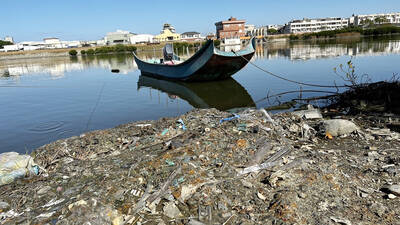
Many consumers are guilty of filling drawers or closets with old laptops, cellphones, fitness trackers and other electronic devices once they are no longer needed. It’s hard to know where to recycle such items, or it seems costly and inconvenient to do so. The world generates millions of tons of electronic waste — also called e-waste — each year. According to the UN’s most recent estimate, people worldwide produced 62 million metric tons of e-waste in 2022, and only about 22 percent of it was properly recycled. The US’ Environmental Protection Agency estimates that less than a quarter of e-waste is
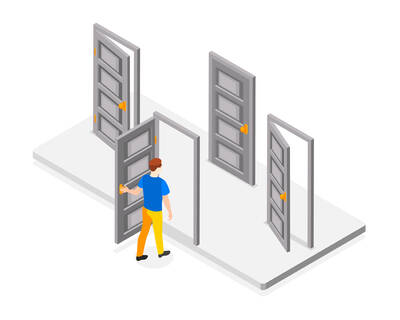
You’re sitting in class when a classmate asks to borrow a pencil. It seems like a small favor, so you agree without hesitation. The following week, the same classmate asks to share your notes. Later, they request help with a group project. You agree each time — after all, you helped out the first time — but before you know it, it has become automatic. This scenario demonstrates the “foot-in-the-door technique,” a psychological concept that shows how agreeing to small, acceptable demands makes it easier to accept larger ones later on. The name for this strategy comes from door-to-door

A: The four-day Tomb Sweeping Day long weekend begins Friday and will run until Monday. Are you going to sweep your ancestors’ tombs? B: I did in advance last weekend, so I can go to Kaohsiung to see the musical “The Phantom of the Opera.” A: Wow, is “Phantom” touring Taiwan again? It debuted in 1986, so this year marks the 40th anniversary of the show. B: And it’s not just touring Kaohsiung starting March 31, but also Taipei starting April 21 and Taichung starting May 26. A: “Phantom” is one of the world’s Four Major Musicals. I’ve seen all of them, except “Les

Dos & Don’ts — 想想看,這句話英語該怎麼說? 1. 我們很早到達電影院。 ˇ We arrived at the theater very early. χ We arrived the theater very early. 註︰arrive 為不及物動詞,後面如果有受詞要用 at 或 in。例如:They arrived in Taipei yesterday.。一般大地方,如國家、省、大城市等前面用 in,凡小地方城鎮、學校等則用 at。 2. 開車半小時以後,我們到達了海灘。 ˇ After half an hour’s drive, we got to the beach. χ After half an hour’s drive, we got the beach. 註︰come, go, get(來、去、到達)某地時,在表示地點的名詞前面應該用 to,如 go to school, go to Taipei, come to Shanghai 等。如果這些動詞後面所跟的是 here, there, home 等副詞,則不用 to。 3. 明天我會回辦公室。 ˇ I will be back in the office tomorrow. χ I will be back to office tomorrow. 註︰to be back 一語裡的 back 是副詞,不是介詞,所以後面要用 at (the market) 或 in (the office)。 假如假期結束,要回學校上課了則可說: ? Kids will be back


 RSS
RSS