


Polished pates and thinning thatches may one day be a thing of the past, thanks to Japanese scientists who have developed a way to grow hair follicles at a record rate.
The study used two kinds of cells placed in silicone containers to cultivate “hair follicle germs” — the sources of the tiny organs that grow and sustain hair.
Led by professor Junji Fukuda at the Yokohama National University, the team managed to cultivate 5,000 within just a few days, enough to replenish hair.
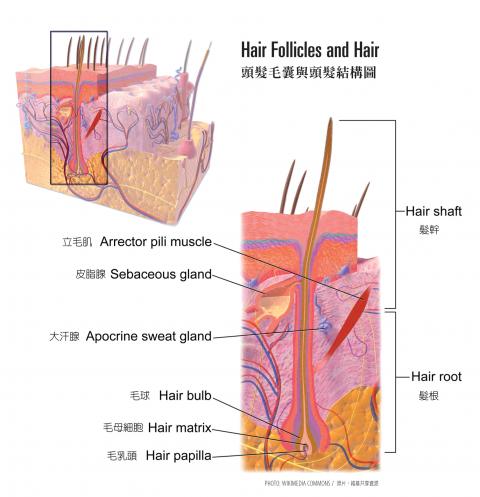
Photo: Wikimedia Commons
照片:維基共享資源
The method is a massive step up from existing laborious techniques that can create just 50 or so “germs” at once.
While human tests might not be on the cards for another five years, ultimately researchers believe the technique could be used to generate luscious new locks.
The technology could also help cancer patients and others with medical conditions that cause hair loss, said Fukuda, whose research was published in the journal Biomaterials.
“Beauty clinics currently often use hair from the occipital region [back of the head] and plant them to frontal areas with hair loss. A problem with this is that it doesn’t increase the total volume of hair,” Fukuda said.
Existing medication can slow hair loss, but it does not necessarily reverse the problem, he added.
New treatment using the technique may be available in 10 years, the professor said.
While the study offers hope for the hairless, Fukuda debunked some rather optimistic reports suggesting McDonald’s fries could help cure baldness.
The silicone used in his study, dimethylpolysiloxane, is reportedly used by the fast food giant in its oil fryers, but consuming the substance alone offers no fringe benefits.
Fukuda said he was baffled by the readers’ misinterpretation of his research.
“I have seen online comments asking, ‘how many fries would I have to eat to grow my hair?’” he told AFP.
“I’d feel bad if people think eating something would do that!” (AFP)
光亮的頭頂、日漸稀疏的髮撮,這些讓人苦惱的禿髮狀況或許某天將成為過去式──日本科學家日前研發出一種新方法,創下頭髮毛囊發育速度的新紀錄。
這份研究將兩種不同的細胞放置在矽膠培養皿中,以培育「頭髮毛囊胚芽」。毛囊是負責頭髮生長並維持毛髮健康的微小人體組織,而頭髮毛囊胚芽則是毛囊的起源。
由橫濱國立大學福田淳二教授率領的研究團隊,在短短幾天內成功培育出五千個頭髮毛囊胚芽,數量足夠讓頭髮恢復豐盈。
今日的生髮技術經常必須煞費苦心,才能一次生成僅僅五十個左右的毛囊胚芽。相較之下,這個新方法無疑是巨大的進步。
雖然未來五年之內可能還無法進展到人體實驗的階段,不過研究員都相信這個技術最終能夠用來生成茂盛蓬勃的嶄新秀髮。
福田教授表示,這個新技術也能幫助癌症患者以及因為治療其他疾病而導致掉髮的病人。目前這份研究已刊登在學術期刊《生物材料》上。
福田教授指出:「目前美容診所大多使用枕骨部位(後腦勺)的頭髮,把它們移植到掉髮患者的前額部位。這個方法的問題在於,頭髮移植基本上並不會增加頭髮的總數量。」
福田教授補充說,現有的藥物治療可以減緩掉髮速度,卻不必然能夠讓頭髮重新長回來。
使用這個新技術的治療方法有望在十年內面市,他說。
儘管這份研究為童山濯濯的人們帶來新希望,福田教授卻駁斥某些過於樂觀的誇張報導,其中不少報導甚至暗指麥當勞的薯條有可能幫助治癒禿髮。
福田在研究中使用的矽材料──聚二甲基矽氧烷──據說被這間速食店龍頭用在油炸鍋裡面,但是單純攝取這類化學物質,並不會帶來一絲絲好處。
福田教授表示,這些讀者對研究結果的錯誤詮釋讓他無言以對。
他告訴法新社記者說:「我看到不少網路評論在問『我要吃多少根薯條才能夠長頭髮?』」。
「如果民眾真的相信光靠吃某些東西就能長出頭髮的話,我會感到很難過。」
(台北時報章厚明編譯)
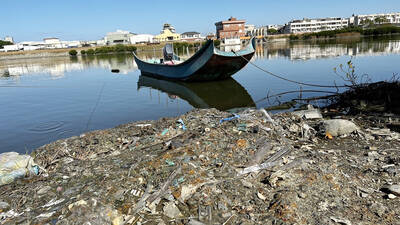
Many consumers are guilty of filling drawers or closets with old laptops, cellphones, fitness trackers and other electronic devices once they are no longer needed. It’s hard to know where to recycle such items, or it seems costly and inconvenient to do so. The world generates millions of tons of electronic waste — also called e-waste — each year. According to the UN’s most recent estimate, people worldwide produced 62 million metric tons of e-waste in 2022, and only about 22 percent of it was properly recycled. The US’ Environmental Protection Agency estimates that less than a quarter of e-waste is
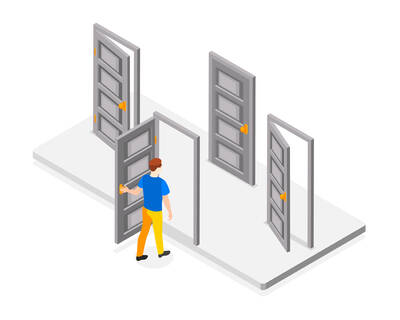
You’re sitting in class when a classmate asks to borrow a pencil. It seems like a small favor, so you agree without hesitation. The following week, the same classmate asks to share your notes. Later, they request help with a group project. You agree each time — after all, you helped out the first time — but before you know it, it has become automatic. This scenario demonstrates the “foot-in-the-door technique,” a psychological concept that shows how agreeing to small, acceptable demands makes it easier to accept larger ones later on. The name for this strategy comes from door-to-door

A: The four-day Tomb Sweeping Day long weekend begins Friday and will run until Monday. Are you going to sweep your ancestors’ tombs? B: I did in advance last weekend, so I can go to Kaohsiung to see the musical “The Phantom of the Opera.” A: Wow, is “Phantom” touring Taiwan again? It debuted in 1986, so this year marks the 40th anniversary of the show. B: And it’s not just touring Kaohsiung starting March 31, but also Taipei starting April 21 and Taichung starting May 26. A: “Phantom” is one of the world’s Four Major Musicals. I’ve seen all of them, except “Les

Dos & Don’ts — 想想看,這句話英語該怎麼說? 1. 我們很早到達電影院。 ˇ We arrived at the theater very early. χ We arrived the theater very early. 註︰arrive 為不及物動詞,後面如果有受詞要用 at 或 in。例如:They arrived in Taipei yesterday.。一般大地方,如國家、省、大城市等前面用 in,凡小地方城鎮、學校等則用 at。 2. 開車半小時以後,我們到達了海灘。 ˇ After half an hour’s drive, we got to the beach. χ After half an hour’s drive, we got the beach. 註︰come, go, get(來、去、到達)某地時,在表示地點的名詞前面應該用 to,如 go to school, go to Taipei, come to Shanghai 等。如果這些動詞後面所跟的是 here, there, home 等副詞,則不用 to。 3. 明天我會回辦公室。 ˇ I will be back in the office tomorrow. χ I will be back to office tomorrow. 註︰to be back 一語裡的 back 是副詞,不是介詞,所以後面要用 at (the market) 或 in (the office)。 假如假期結束,要回學校上課了則可說: ? Kids will be back


 RSS
RSS