


Chinese Practice
殃及池魚
(yang1 ji2 chi2 yu2)
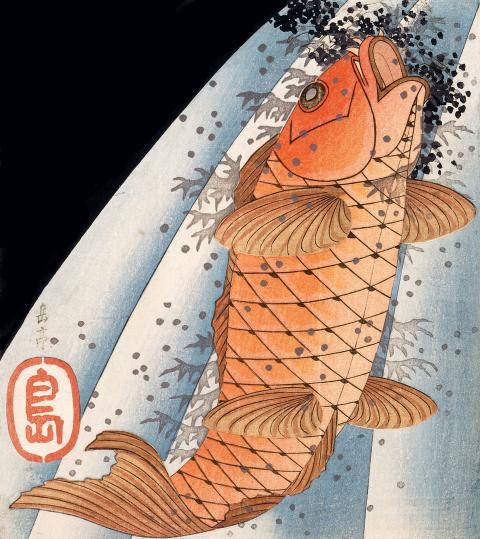
Photo: Wikimedia Commons
照片:維基共享資源
disaster brought upon fish in the pond
在東周春秋時期的小國宋國,有一位名叫桓魋的富人,擔任司馬的官職。桓魋得罪了宋景公(在位時間為西元前五一六至四六九年),因此逃出宋國。宋景公聽聞桓魋有一顆珍貴的寶珠,便派人向他打聽珠寶的下落。桓魋回答說他已經把珠寶丟到池塘裡了。宋景公便派人去打撈,結果直到水池乾涸,都沒有找到寶珠,而原先池塘裡的魚都死了。
以上這個故事,是出自戰國時期有百科全書性質的《呂氏春秋》的〈孝行覽〉,也就是成語「殃及池魚」的由來。該成語字面意思為「為池裡的魚帶來災難」。池裡的魚隱喻了無辜者,被他人所造成的災禍牽連。若在句中將此成語當名詞來用,也可以寫作「池魚之殃」。
東漢的應劭於西元一九五年所寫的《風俗通義》中載有另一個有趣的版本。該章節雖已佚失,部分內容卻透過其他文獻的節錄而保存下來。在這個版本中,一個名叫池魚的守門人,因撲救失火的城門而被燒死了。另外一個較為可信的版本是說,宋國附近的城門失火了,人們紛紛由護城河中舀水救火,結果河水舀乾之後魚都死了,而這些魚最後也被人抓去吃了。
在英語中意思相近的說法是「to get caught in the crossfire」(被捲入他人的交火中)。由此片語所勾勒的意象,我們彷彿可以看見在兩方火併中,一個無辜的第三方無端被捲入其中。
(台北時報編譯林俐凱譯)
我們還是等到天亮再發動攻擊好了,以免殃及池魚,傷害到無辜老百姓。
(We’ll mount the attack at dawn, so innocent civilians don’t get caught in the crossfire.)
兩大公司削價競爭,卻讓小本經營的店家遭到池魚之殃,紛紛倒閉。
(Those two companies are locked in a price war, and small stores are feeling the brunt, with many of them going under.)
英文練習
caught in the crossfire
During the Spring and Autumn Period of the Eastern Zhou Dynasty in the small state of Song, there lived a wealthy military officer named Huan Tui. At one point, Huan offended Song’s ruler, Duke Jing (ruled 516 BC-469 BC), and was forced to flee. The duke wanted a precious jewel he knew Huan owned, and sent somebody to ask about its whereabouts. Huan told him he had thrown it into his pond. Duke Jing sent men to find it, and they dredged that pond until it was dry. They failed to find the jewel, but they did succeed in killing all the fish.
The story, which is found in the Filial Conduct chapter of the Warring States period encyclopedic text lushi chunqiu (Spring and Autumn Annals of Master Lu), gives us the idiom 殃及池魚. The phrase literally means “bringing disaster on the fish in the pond,” the fish in the pond being a metaphor for the innocent that get caught up in a turmoil not of their own making. Another version of the idiom exists that can be used as a noun: 池魚之殃 (the disaster of the pond fish).
A quotation from a now-missing chapter of the Compendium on Popular Cutoms, written in 195 AD by Ying Shao of the Eastern Han, has a rather interesting slant on the story. According to this version, a gatekeeper named Chi Yu (池魚: lit. “pond fish”) died attempting to put out a fire at the gate house. A more likely version, found elsewhere, relates how a gatehouse around Song catches fire and people scoop out all the water in the moat to put out the fire. The fish, left at the bottom of a dry moat, perish, and everyone eats them.
The English equivalent is “to get caught in the crossfire,” which evokes the image of an innocent party being caught in a fire fight between two warring sides.
(Paul Cooper, Taipei Times)
The boss came into the office, guns blazing, furious with the sales department, but we all got caught in the crossfire. We had nothing to do with their mistake.
(老闆進到辦公室,火冒三丈,對行銷部門大發雷霆,大家都被颱風尾掃到了,可是他們犯的錯跟我們一點關係都沒有。)
The two of them are arguing again. It’s best not to get involved. You’ll only get caught up in the crossfire.
(他們倆又在吵架了。你最好不要介入,不然只會無端遭殃。)
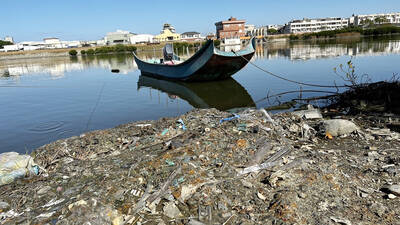
Many consumers are guilty of filling drawers or closets with old laptops, cellphones, fitness trackers and other electronic devices once they are no longer needed. It’s hard to know where to recycle such items, or it seems costly and inconvenient to do so. The world generates millions of tons of electronic waste — also called e-waste — each year. According to the UN’s most recent estimate, people worldwide produced 62 million metric tons of e-waste in 2022, and only about 22 percent of it was properly recycled. The US’ Environmental Protection Agency estimates that less than a quarter of e-waste is
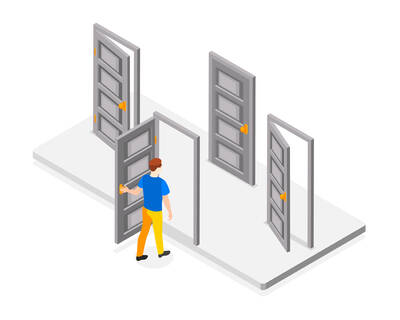
You’re sitting in class when a classmate asks to borrow a pencil. It seems like a small favor, so you agree without hesitation. The following week, the same classmate asks to share your notes. Later, they request help with a group project. You agree each time — after all, you helped out the first time — but before you know it, it has become automatic. This scenario demonstrates the “foot-in-the-door technique,” a psychological concept that shows how agreeing to small, acceptable demands makes it easier to accept larger ones later on. The name for this strategy comes from door-to-door

A: The four-day Tomb Sweeping Day long weekend begins Friday and will run until Monday. Are you going to sweep your ancestors’ tombs? B: I did in advance last weekend, so I can go to Kaohsiung to see the musical “The Phantom of the Opera.” A: Wow, is “Phantom” touring Taiwan again? It debuted in 1986, so this year marks the 40th anniversary of the show. B: And it’s not just touring Kaohsiung starting March 31, but also Taipei starting April 21 and Taichung starting May 26. A: “Phantom” is one of the world’s Four Major Musicals. I’ve seen all of them, except “Les

Dos & Don’ts — 想想看,這句話英語該怎麼說? 1. 我們很早到達電影院。 ˇ We arrived at the theater very early. χ We arrived the theater very early. 註︰arrive 為不及物動詞,後面如果有受詞要用 at 或 in。例如:They arrived in Taipei yesterday.。一般大地方,如國家、省、大城市等前面用 in,凡小地方城鎮、學校等則用 at。 2. 開車半小時以後,我們到達了海灘。 ˇ After half an hour’s drive, we got to the beach. χ After half an hour’s drive, we got the beach. 註︰come, go, get(來、去、到達)某地時,在表示地點的名詞前面應該用 to,如 go to school, go to Taipei, come to Shanghai 等。如果這些動詞後面所跟的是 here, there, home 等副詞,則不用 to。 3. 明天我會回辦公室。 ˇ I will be back in the office tomorrow. χ I will be back to office tomorrow. 註︰to be back 一語裡的 back 是副詞,不是介詞,所以後面要用 at (the market) 或 in (the office)。 假如假期結束,要回學校上課了則可說: ? Kids will be back


 RSS
RSS