


Over six months after the government announced that toilet paper should be flushed down the pan, the Consumers’ Foundation released a survey on Aug. 11 showing that certain toilet papers available on the market are still marked as insoluble, while nearly 50 percent of the public find the information on the packaging unclear.
Environmental Protection Administration (EPA) Minister Lee Ying-yuan said in the legislature in December that, as bathroom habits are changing, the EPA is encouraging people to flush their used toilet paper. Lee said that in the past Taiwanese used to dispose of used toilet paper in trash cans to avoid having a blocked toilet, but this could lead to hygiene issues such as foul odors and the creation of potential hotbeds for flies and mosquitoes. Developed countries have been flushing toilet paper for years, reducing the amount of waste and odor.
Sanitary ware manufacturers say that as long as a toilet is CNS verified it should have no problem dealing with used toilet paper. The problem lies in the paper’s material, and most people cannot tell the difference between toilet paper and facial tissue. Toilet paper is generally made of short fibers, which are water-soluble and do not block toilets, while facial tissues or napkins are made of long fibers and are not easily soluble in water, and so tend to clog pipes.
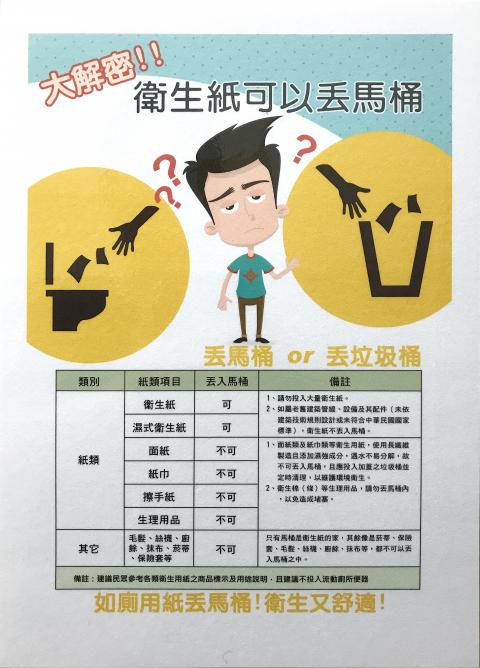
Photo: Chen Ping-hung, Liberty Times
照片:自由時報記者陳炳宏攝
The Consumers’ Foundation suggests the government regulate packaging of toilet paper and facial tissues, requiring clear indication of flushability, so the public is no longer confused about whether to flush or not to flush.
(Liberty Times, translated by Lin Lee-kai)
衛生紙用後丟入馬桶之政策宣傳推動逾半年,消基會八月十一日公布問卷調查發現,市面上仍有衛生紙標示不溶於水,且有近五成民眾認為衛生紙標示不清楚,資訊仍不明。
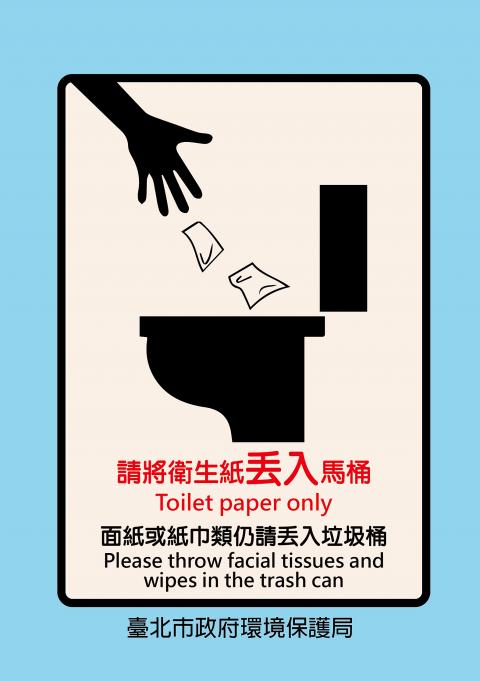
Photo courtesy of Department of Environmental Protection, Taipei City Government
照片:台北市環保局提供
環保署長李應元去年十二月於立法院備詢時表示,社會生活型態已經改變,將推動衛生紙丟馬桶政策。李應元說,過去國人習慣把如廁衛生紙丟垃圾桶以避免馬桶堵塞,但此做法容易產生異味及導致蚊蠅細菌孳生等衛生問題。而世界先進國家實施此政策已經多年,有效減少垃圾及異味。
衛浴設備業者表示,馬桶只要通過CNS檢驗標準,衛生紙丟進馬桶沒有問題,但問題在於紙張材質差異,因為一般民眾常搞不清楚衛生紙跟面紙的差異,衛生紙多屬於短纖維、易溶於水,不會有堵塞問題;面紙或餐巾紙則屬於長纖維、不易溶於水,因此容易造成排水管堵塞。
消基會建議政府,應規範衛生紙、面紙皆須明確標示可否丟入馬桶,並充分向民眾宣導什麼紙可以丟馬桶、什麼不能丟。
(自由時報綜合報導)
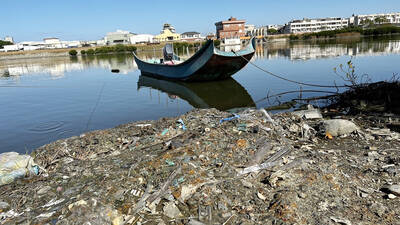
Many consumers are guilty of filling drawers or closets with old laptops, cellphones, fitness trackers and other electronic devices once they are no longer needed. It’s hard to know where to recycle such items, or it seems costly and inconvenient to do so. The world generates millions of tons of electronic waste — also called e-waste — each year. According to the UN’s most recent estimate, people worldwide produced 62 million metric tons of e-waste in 2022, and only about 22 percent of it was properly recycled. The US’ Environmental Protection Agency estimates that less than a quarter of e-waste is
Travel fever is back, and it’s contagious. After years of being kept home during the COVID-19 pandemic, people are once again eager to explore the world. Rather than just book any trip, travelers are getting smarter about how they scratch that travel itch. Microcation Defined as four days or fewer and over 160km away from home, the microcation perfectly matches the post-pandemic mindset. After long periods of remaining indoors, people are making up for lost time by taking short, frequent getaways throughout the year. These brief trips avoid the work-life imbalance that comes with long absences. With only a few days away, one’s

You’re sitting in class when a classmate asks to borrow a pencil. It seems like a small favor, so you agree without hesitation. The following week, the same classmate asks to share your notes. Later, they request help with a group project. You agree each time — after all, you helped out the first time — but before you know it, it has become automatic. This scenario demonstrates the “foot-in-the-door technique,” a psychological concept that shows how agreeing to small, acceptable demands makes it easier to accept larger ones later on. The name for this strategy comes from door-to-door
Continued from yesterday(延續自昨日) https://www.taipeitimes.com/News/lang Gig Tripping “Gig tripping” combines concerts with travel. People fly to see their favorite artists perform — usually abroad—and spend a few days sightseeing before or after the show. While die-hard fans have done this since the 1960s, the post-pandemic travel boom changed the game. Even people who aren’t superfans are now booking international concert trips because they want to make the most of travel opportunities. This trend exploded in the US, as the math makes sense. Domestic concert tickets are so costly that flying abroad for the show plus tourism expenses often matches or even beats the price


 RSS
RSS