


In the war-torn Syrian city of Aleppo, ambulance driver and paramedic Mohammad Alaa Aljaleel has been caring for homeless animals since 2013 in what was rebel-held eastern Aleppo. Aljaleel has become known as the “Cat Man of Aleppo” —a symbol of resilience and compassion amid war and devastation.
When people fled their neighborhoods, Aljaleel says, the cats started to come to his area, as he was already feeding strays. Fleeing families would drop their cats off with him before leaving the city in search of safety. Over time, the number of cats grew from six or seven to more than 170 felines.
Aljaleel said his aim was originally to protect, feed and keep the animals healthy, but then children would come to play with them, too. It was not just cats, either: Aljaleel would also take care of stray dogs, feeding them and providing them basic veterinary care.
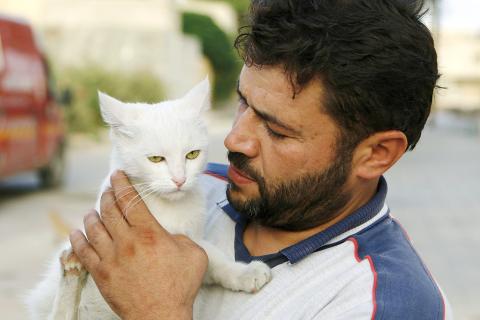
Photo: Reuters
照片:路透社
Then, in November, bombs struck the shelter, and most of the cats inside were killed. Aljaleel was forced to flee the city with just a handful of the survivors, and rebuilt the shelter in the countryside west of Aleppo.
His new house is home to about 25 cats. But for Aljaleel and the people who visit it, it is more than just a cat sanctuary. “It seeks to erase the war from children’s minds,” he said. “Caring for the cats is a gateway to bringing goodwill to the country and build it around being more merciful.”
(Liberty Times, translated by Lin Lee-kai)
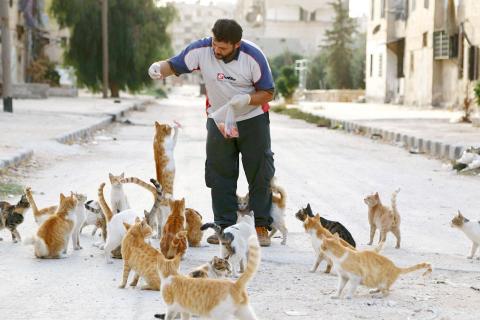
Photo: Reuters
照片:路透社
敘利亞大城阿勒坡屢遭戰火摧殘,一名救護車司機及護理人員艾力賈里,從二○一三年開始,就在阿勒坡東部照料無家可歸的流浪動物,持續至今餵養過無數貓咪,因此他被譽為「阿勒坡貓男」,在戰爭和破壞中展現出人類的韌性和善良。
艾力賈里說,當烽火連天時,人們陸續逃離社區,但貓咪卻聚集到他的社區來,因為他之前已經在餵食一些流浪貓。要逃離阿勒坡的家庭也會把貓咪託他看顧。接著貓兒數量從六、七隻,增加到驚人的一百七十多隻。
他的目標是保護、飼養和照顧貓咪,小孩們也會來庇護所與貓兒玩耍。除了喵星人之外,艾力賈里也收留了流浪狗,日常餵食之外還幫牠們做了一些基本的獸醫護理。
然而,去年十一月庇護所遭炸彈襲擊,大部分的貓咪都罹難了。艾力賈里被迫離開,跟倖存的幾隻貓搬到阿勒坡西部的一處農村,重建動物庇護所。
艾力賈里現在和貓兒的新家共有二十五隻喵星人,他認為這裡不僅是一個貓的保護區,更可以「讓兒童消除心中的戰爭陰影」他說,「照顧貓咪是一個帶來良善的方式,讓這個國家更充滿慈悲」。
(自由時報)

Many consumers are guilty of filling drawers or closets with old laptops, cellphones, fitness trackers and other electronic devices once they are no longer needed. It’s hard to know where to recycle such items, or it seems costly and inconvenient to do so. The world generates millions of tons of electronic waste — also called e-waste — each year. According to the UN’s most recent estimate, people worldwide produced 62 million metric tons of e-waste in 2022, and only about 22 percent of it was properly recycled. The US’ Environmental Protection Agency estimates that less than a quarter of e-waste is

You’re sitting in class when a classmate asks to borrow a pencil. It seems like a small favor, so you agree without hesitation. The following week, the same classmate asks to share your notes. Later, they request help with a group project. You agree each time — after all, you helped out the first time — but before you know it, it has become automatic. This scenario demonstrates the “foot-in-the-door technique,” a psychological concept that shows how agreeing to small, acceptable demands makes it easier to accept larger ones later on. The name for this strategy comes from door-to-door

A: The four-day Tomb Sweeping Day long weekend begins Friday and will run until Monday. Are you going to sweep your ancestors’ tombs? B: I did in advance last weekend, so I can go to Kaohsiung to see the musical “The Phantom of the Opera.” A: Wow, is “Phantom” touring Taiwan again? It debuted in 1986, so this year marks the 40th anniversary of the show. B: And it’s not just touring Kaohsiung starting March 31, but also Taipei starting April 21 and Taichung starting May 26. A: “Phantom” is one of the world’s Four Major Musicals. I’ve seen all of them, except “Les

Continued from yesterday(延續自昨日) https://www.taipeitimes.com/News/lang Gig Tripping “Gig tripping” combines concerts with travel. People fly to see their favorite artists perform — usually abroad—and spend a few days sightseeing before or after the show. While die-hard fans have done this since the 1960s, the post-pandemic travel boom changed the game. Even people who aren’t superfans are now booking international concert trips because they want to make the most of travel opportunities. This trend exploded in the US, as the math makes sense. Domestic concert tickets are so costly that flying abroad for the show plus tourism expenses often matches or even beats the price


 RSS
RSS